


Imagine standing at your HDB corridor at 11 PM with a heavy grocery bag in one hand and a sleeping toddler in the other, only to realize your mechanical key is buried at the bottom of your bag. It's a common frustration that led over 15,000 Singaporean homeowners to upgrade their door security last year alone. However, once you start browsing, you're often hit with confusing terms like mortise, rim, and fire-rating compliance. Knowing exactly what to look for in a digital lock is the difference between a seamless daily routine and a costly mistake that fails to meet SCDF safety regulations.
We understand that you want a premium security setup without the headache of technical jargon or the fear of a dead battery locking you out. You've likely felt the pressure to find a device that looks sleek but also stays reliable for the long haul. This ultimate 2026 guide will help you master the essential security features and hardware types needed to select the perfect digital lock for your HDB, condo, or landed property. We'll explore how to sync your door with your metal gate for a truly keyless lifestyle and ensure you get the professional installation and local warranty you deserve for total peace of mind.
Key Takeaways
- Match the right lock anatomy—mortise, deadbolt, or rim—to your door type to ensure a seamless fit without unnecessary drilling.
- Learn exactly what to look for in a digital lock by comparing advanced 3D facial recognition against AI-enhanced fingerprint sensors for your home.
- Navigate Singapore-specific requirements, including HDB fire-safety certifications and the efficiency of dual-syncing your gate and main door.
- Protect your investment by evaluating essential after-sales factors like 24/7 local technical assistance and comprehensive warranty coverage.
- Identify potential hidden costs, such as installation fees and smart hub requirements, before you make your final purchase.
Understanding the Basics: What is a Digital Lock in 2026?
A digital lock is a keyless entry system that replaces traditional physical keys with electronic authentication. By 2026, these devices have evolved from basic PIN pads into sophisticated security hubs. Modern systems now utilize AI-driven biometrics, such as 3D facial recognition and palm vein scanning, to grant access. To understand what a smart lock is, you must look at how electronic authentication replaces the traditional mechanical pin tumbler to provide ultimate peace of mind.
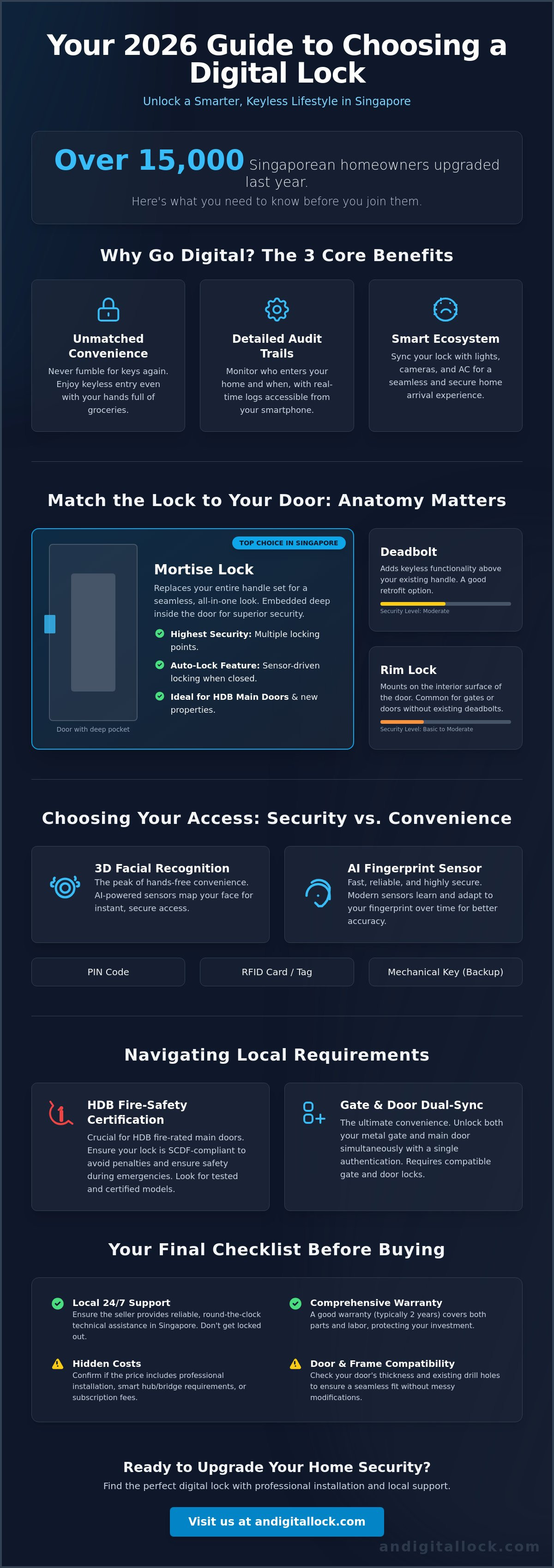
Knowing what to look for in a digital lock starts with understanding how technology has shifted. In 2026, over 90% of new HDB BTO homeowners in Singapore prioritize these systems for their main entrance. Traditional keys are no longer the primary choice; they serve only as a secondary emergency backup. This shift is driven by three main benefits:
- Unmatched Convenience: You'll never worry about losing keys or fumbling with bags at your doorstep again.
- Detailed Audit Trails: Your lock keeps a precise log of who entered your home and at what time, accessible via your smartphone.
- Smart Ecosystem Integration: Your lock now communicates with your lights, air conditioning, and security cameras to create a seamless home-entry experience.
Digital Lock vs. Smart Lock: Knowing the Difference
Digital locks focus on localized electronic access. They use PIN codes, RFID cards, or fingerprints without requiring an internet connection. Smart locks take this further by connecting to your home Wi-Fi or Zigbee network. This allows for remote unlocking and real-time mobile notifications. When deciding what to look for in a digital lock, focus on hybrid models. These "Smart-Digital" solutions provide the local reliability of a digital lock with the advanced remote features of a smart system, ensuring your home stays secure even if your internet goes down.
The Core Components of a Secure Lockset
A premium lockset consists of three main parts: the front body, the back body, and the internal mortise. The front body houses the user interface, while the back body contains the battery compartment and manual override. The mortise is the actual locking mechanism hidden inside your door. For maximum durability, choose materials like high-grade zinc alloy, aerospace-aluminum, or scratch-resistant tempered glass. The clutch mechanism serves as the heart of lock longevity by managing the engagement between the handle and the internal latch. Investing in a lock with a robust clutch ensures your handle remains firm and responsive after years of daily use in Singapore's humid climate.
Lock Anatomy: Mortise, Deadbolt, or Rim Lock?
Choosing the right hardware is the first step in deciding what to look for in a digital lock. You don't want to buy a premium device only to find it doesn't fit your door's existing preparation. Professional installers in Singapore often see homeowners struggle with mismatched locks that require messy drilling or ugly patch plates. Matching the lock type to your door's current holes preserves the door's structural integrity and ensures a seamless, professional look. It's about finding a balance between modern technology and your door's physical constraints.
Ergonomics play a massive role in your daily routine. You'll interact with this device at least 4 to 8 times a day. Modern designs offer two main styles that change how you enter your home. Lever handles are traditional and familiar, requiring a downward turn to open. They're reliable but can be difficult to use if your hands are full of groceries. Push-Pull handles are the gold standard for 2026. They allow for a one-motion entry where you simply push to enter or pull to exit. It's an intuitive, premium experience found in top-tier brands like Philips and Kaadas that makes a huge difference in convenience.
Why Mortise Locks Rule the Singapore Market
Mortise locks are the most popular choice for hdb main doors because they replace the entire handle set. They provide superior security with multiple locking points that are physically embedded into a deep pocket within the door. This makes them significantly harder to bypass compared to simple latches. Most mortise models include a robust auto-lock feature. This sensor-driven mechanism ensures your door locks the moment it closes, so you'll never worry about an unlatched door again. This setup offers the ultimate peace of mind for busy families who want a sleek, all-in-one security solution.
When to Choose a Rim or Deadbolt Lock
Rim locks and deadbolts serve as excellent cost-effective solutions for specific needs. If you're securing a bedroom door or a rental property, these offer high security without a massive investment. A rim lock sits on the surface of the door, making it perfect for thinner secondary doors where a full mortise lock won't fit. Installation is fast, often taking under 45 minutes with minimal modification to the frame. These are also ideal as add-on security if you want to keep your existing mechanical handle but add a layer of digital convenience. If you're looking to upgrade your secondary entrance, you can browse our latest rim lock collections to find a trusted fit for your home.
Access Modes: Choosing the Right Security Level
Deciding how you enter your home is the most critical part of what to look for in a digital lock. By 2026, Singapore homeowners expect more than just a basic keypad. You need a system that balances speed with unhackable security for your HDB or condo. Modern locks offer a variety of entry methods, but the best models combine at least three different modes to ensure you're never stranded outside.
Biometric Advancements in 2026
Biometrics are now the gold standard for premium home security. 3D facial recognition technology uses infrared sensors to map 30,000 unique points on your face. This ensures a high-resolution photo or a video can't trick the system. It's the perfect hands-free solution when you're carrying heavy groceries or parcels into your apartment. AI-enhanced fingerprint sensors have also seen a massive upgrade. Unlike older optical sensors that simply take a visual image, 2026 models use semiconductor sensors. These measure the electrical charge of your skin, making them nearly impossible to spoof with fake prints.
- Semiconductor Sensors: These are safer against fake silicone prints compared to older optical versions.
- AI Learning: Modern sensors "learn" your fingerprint as it changes due to aging or seasonal dryness.
- Recognition Speed: Top-tier locks from brands like Kaadas or Philips now unlock in under 0.3 seconds.
Connectivity: Matter, Zigbee, and Wi-Fi
Smart home integration is a major factor when deciding what to look for in a digital lock. The Matter protocol is the new industry standard for 2026. It allows your lock to integrate seamlessly with Apple Home, Google Home, and Samsung SmartThings without requiring complex hubs. Connectivity also affects your daily maintenance. While pure Wi-Fi locks offer easy remote access, they often drain batteries within 4 to 6 months. Zigbee and Bluetooth models are much more efficient, often lasting 10 to 12 months on a single set of batteries. These connections allow you to generate one-time PINs for delivery personnel or cleaners directly from your smartphone, providing ultimate peace of mind.
Don't overlook the security of your PIN codes. Always choose a lock with a scramble code feature. This allows you to enter random digits before or after your actual PIN. It prevents intruders from guessing your code by looking at fingerprint smudges on the screen. For elderly family members, RFID and NFC tags remain a reliable "tap-and-go" option. However, a high-security mechanical key is still a non-negotiable requirement. Even with the best electronic systems, a physical backup ensures you have a fail-safe entry method during a rare hardware malfunction or total battery drain.
The 'Singapore Factor': Local Constraints and Requirements
Singaporean homeowners face a unique set of challenges when upgrading their home security. From strict fire safety codes to the high humidity of our tropical climate, knowing what to look for in a digital lock requires more than just picking a stylish model. You need a solution that fits the specific architecture and environmental conditions of HDB flats and private apartments. Buying a lock that isn't optimized for the local market often leads to hardware failure or legal issues with building authorities.
Navigating HDB and Condo Regulations
Most HDB main doors are fire-rated for 30 minutes or 60 minutes. If you install a lock that hasn't been tested with your specific door type, you risk voiding your fire safety certification. This is why you must use an authorised digital lock singapore installer who understands SCDF requirements. They ensure the installation doesn't compromise the door's integrity or the functionality of the fire seal.
For condo dwellers, MCST rules often limit how much you can change your door's external appearance. Always check if your chosen hardware matches the estate's aesthetic guidelines before purchase. Additionally, ensure your lock doesn't interfere with the hydraulic door closer. This is a common issue in newer developments where space around the door frame is extremely tight, requiring slim-profile locks that don't hit the frame when the door swings shut.
The HDB Gate Lock Dilemma
The standard Singaporean entrance consists of a metal gate followed by a wooden main door. In the past, this meant carrying two sets of keys or managing two separate digital systems. Modern 2026 standards have solved this through synchronisation. You can now find BTO lock bundles that link both devices wirelessly. Scanning your fingerprint at the gate automatically unlocks the main door, allowing you to walk straight in with a single touch.
- Dual-Sided Access: Metal gates require locks with fingerprint or PIN pads on both the front and back. This prevents unauthorized persons from reaching through the gate bars to press the internal "unlock" button.
- Weatherproofing: If your unit faces an open corridor, your lock will face driving rain and 90% humidity. Look for hardware with an IP64 rating or higher to prevent circuit corrosion and sensor malfunctions.
- Emergency Power: Premium locks in 2026 have moved away from bulky 9V battery jump-starts. Look for USB-C emergency ports. These let you power the lock with a standard power bank if you ignore the low-battery warnings for too long.
Don't leave your home security to chance. Contact our experts today to find the perfect fire-rated bundle for your HDB or condo.
Final Checklist: Before You Tap 'Buy Now'
You've compared the tech and narrowed down your style. Now you need to verify the logistics. Understanding what to look for in a digital lock goes beyond the fingerprint sensor; it's about long-term support. You must check the warranty terms before paying. Ensure the brand offers local 24/7 technical assistance. If your lock malfunctions at midnight, a global support email won't help you get inside your home.
Don't ignore the potential hidden costs that can inflate your budget. Always clarify these four items before finalizing your purchase:
- Installation Fees: Some "cheap" online deals exclude the labor cost, which can be substantial for complex mortise locks.
- GST: Verify if the displayed price includes the prevailing 9% GST in Singapore.
- Smart Hubs: Certain Zigbee or Z-Wave locks require a separate bridge or gateway to enable remote Wi-Fi features.
- Brand Reputation: Stick to established giants like Philips and Zigbang, or proven niche innovators like Solity and Kaadas who have local service centers.
Physical fit is the most common dealbreaker. Measure your door thickness and the stile width. The stile is the vertical section of the door where the lock sits. If it's too narrow, the lock body won't fit properly. Most 2026 models require a door thickness between 35mm and 60mm. If you have a gate, ensure the lock doesn't hit the door handle when both are closed.
Why Professional Installation Matters
DIY installation is risky. Misaligned latches are the leading cause of motor burnout. If the bolt rubs against the strike plate, the motor works twice as hard to retract. A professional installer ensures a seamless fit. They also provide on-site tutorials so every family member knows how to use emergency features. Always ask if the installer provides a 2-year on-site warranty. This coverage is vital if the hardware fails or the door alignment shifts over time.
Experience Peace of Mind with AN Digital Lock
We've built our reputation on being an efficient, trustworthy expert for Singaporean families. Our commitment is backed by over 3,700 five-star reviews from homeowners in HDBs, condos, and landed properties. We take a full-service approach. This starts with a free consultation and ends with expert installation and reliable after-sales care. You don't have to guess what to look for in a digital lock when you can see the technology in action. Visit our showrooms to test the latest 2026 models from Philips, Solity, and Kaadas. It's the easiest way to experience the build quality firsthand before you commit.
Ready to upgrade? Browse our 2026 Digital Lock Collection today and secure your home with the best in the market.
Step Into the Future of Home Security
Choosing the right security for your property is a vital step toward a smarter lifestyle. You now understand exactly what to look for in a digital lock, from selecting the correct mortise anatomy to identifying the best access modes for your daily routine. It's essential to factor in local Singapore requirements to ensure a seamless fit for your HDB or condo door. Since 2013, AN Digital Lock has operated as a premier industry expert, helping thousands of residents achieve a modern, keyless experience. As an authorised dealer for global leaders like Philips, Zigbang, and Solity, we provide authentic products backed by professional support. Our track record includes 3,700+ verified 5-star reviews from satisfied customers who value our direct, service-oriented approach. You don't have to navigate these technical choices alone. Trust a team that combines technical expertise with a commitment to your safety. It's time to upgrade your entrance with a solution that offers both style and substance.
Secure your home with 2026's top-rated digital locks at AN Digital Lock
Your journey toward ultimate peace of mind starts with a single tap. We're ready to help you find the perfect match for your home today.
Frequently Asked Questions
What happens to my digital lock if the battery dies?
You can use an external 9V battery or a power bank to jumpstart the lock if the power fails. Most premium models from brands like Philips also include a physical mechanical key for emergency entry. You'll usually get a low-battery alert 2 to 3 weeks before the power actually runs out. This ensures you have plenty of time to swap out the 4 or 8 AA batteries for continued peace of mind.
Can a digital lock be hacked easily?
No, premium digital locks use AES-128 or AES-256 bit encryption which is the same security standard used in global online banking. These devices are designed to resist electronic interference and forced entry attempts. Statistics show that physical lock-picking is 85% more common than digital hacking attempts. Choosing a trusted brand ensures your smart home stays protected with the latest firmware and security protocols.
Are digital locks waterproof for Singapore's humid weather?
Most digital locks are designed with an IP54 or IP64 rating to withstand Singapore's 84% average humidity and occasional rain splashes. These ratings mean the internal circuits are protected against dust and water spray from any direction. While they aren't meant to be submerged, they're perfectly suited for HDB corridors or sheltered condo entrances. This durability ensures a hassle-free experience regardless of the tropical weather conditions.
Do I need to change my entire door to install a digital lock?
You don't need to replace your entire door because 95% of existing HDB and condo doors are compatible with retrofit digital locks. Our professional installers can usually fit a new system onto your current timber or metal door in under 2 hours. We'll check your door's thickness and the distance between the door and gate to ensure a seamless fit. This makes upgrading your home security a quick and efficient process.
Is fingerprint or PIN code access more secure?
Fingerprint access is more secure than a PIN code because it uses 3D semiconductor sensors that are nearly impossible to replicate. When you're deciding what to look for in a digital lock, prioritize biometric sensors with a False Acceptance Rate (FAR) of less than 0.0001%. PIN codes can be shoulder-surfed or guessed, but your unique fingerprint provides a seamless and highly personal layer of security for your Singapore home.
How long does a digital lock's battery typically last?
A standard set of alkaline batteries typically lasts between 10 to 12 months based on an average of 10 entries per day. Factors like Wi-Fi connectivity or heavy usage might reduce this to about 8 months. You'll receive a warning sound and a light indicator on the lock face once the power drops below 20%. Replacing the batteries once a year is a simple way to maintain your ultimate peace of mind.
What is the 'dual-sync' feature for HDB doors and gates?
Dual-sync technology allows you to unlock both your metal gate and main wooden door simultaneously with a single fingerprint or PIN. This feature saves you about 10 seconds every time you return home and eliminates the need for two separate actions. It's a premium convenience that's becoming a standard requirement for 70% of new HDB homeowners. This synchronized system offers a truly modern and sleek way to enter your residence.
Does installing a digital lock void my fire-rated door certification?
Installing a digital lock won't void your fire-rated door certification as long as the lock itself is fire-rated and installed correctly. Safety is a critical factor in what to look for in a digital lock, especially for HDB main doors that require a 30 or 60 minute fire rating. Always check for the SS 332:2018 standard certification to ensure your home stays compliant with local SCDF fire safety regulations.