


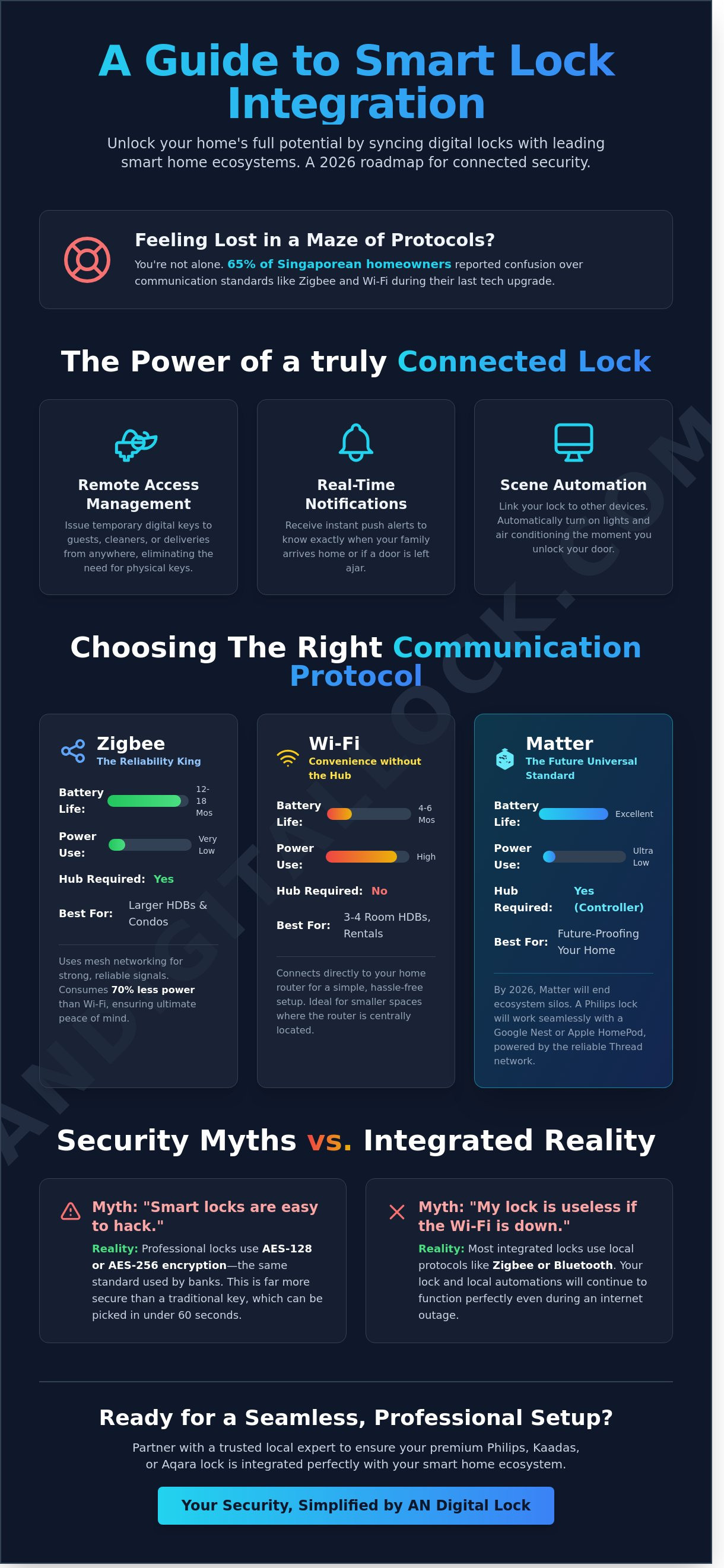
Imagine arriving at your Punggol HDB flat with heavy groceries, only to find your "smart" lock won't respond because your Zigbee gateway and Wi-Fi router aren't on speaking terms. It's a common frustration in Singapore, where 65% of homeowners reported protocol confusion during their last tech upgrade according to 2024 consumer surveys. You deserve a home that works for you, not a collection of gadgets that require a degree in engineering to master smart home integration for locks.
We agree that your security should offer ultimate peace of mind, not a headache of conflicting apps and dead batteries. Unlock the full potential of your home security by learning how to seamlessly sync your digital locks with the world’s leading smart home ecosystems. This 2026 guide provides a clear roadmap for connected security with brands like Philips and Kaadas, covering everything from remote unlocking to setting up automated scenes that turn your lights on the moment you step inside.
Key Takeaways
- Explore the evolution of security and learn how smart home integration for locks bridges the gap between basic hardware and a fully automated lifestyle.
- Compare communication protocols like Zigbee, Wi-Fi, and the new Matter standard to understand which "language" offers the best battery life and reliability for your home.
- Identify the ideal smart ecosystem for your needs, whether you prefer the seamless control of Apple HomeKit, Google Home, or Amazon Alexa.
- Get practical tips on overcoming local installation hurdles, such as optimizing Wi-Fi strength for HDB gates and ensuring a perfect door-to-gate sync.
- Discover how partnering with a trusted local expert like AN Digital Lock ensures a professional, hassle-free setup for premium brands like Philips and Aqara.
What is Smart Home Integration for Locks?
Smart home integration for locks is the bridge between your physical door hardware and centralized management software. It transforms a standalone device into a connected security node within your living space. In the early 2010s, digital locks relied on simple PIN codes or RFID cards. Today, premium units from brands like Philips, Samsung, and Kaadas function as intelligent IoT devices. These systems communicate with your smartphone or home hub to provide real-time control and data. This evolution represents the final step in achieving ultimate peace of mind for your household security.
Singaporean homeowners are leading this technological shift. Recent 2023 market data indicates that over 15% of HDB and private condo households have adopted at least one smart home feature. Integrating your lock is no longer a luxury; it's a standard for modern living. Whether you live in a 4-room HDB in Punggol or a luxury condo in Orchard, smart home integration for locks ensures your home remains secure and accessible from anywhere in the world. It's about making your security work for you, not the other way around.
The Benefits of a Connected Lock
- Remote Access Management: You can issue temporary digital keys to guests, cleaners, or delivery personnel from your office. This eliminates the need for risky physical key handovers or hidden spares.
- Real-time Notifications: Receive instant push alerts on your phone. You'll know exactly when your children return from school at 2:45 PM or if a door is left ajar.
- Scene Automation: Link your lock with other devices. Your air conditioning can activate and your smart lights can illuminate the hallway the moment you unlock the door after work.
Common Misconceptions About Integrated Security
Many homeowners express a fear of hacking. Professional-grade digital locks use AES-128 or AES-256 encryption. This is the same security standard used by banks and government agencies. It's significantly harder to bypass than a traditional physical key cylinder, which a locksmith can pick in under 60 seconds. Another myth is Wi-Fi dependency. Most integrated locks use local protocols like Zigbee, Z-Wave, or Bluetooth. Your lock will continue to function and follow local automation rules even if your internet service provider experiences an outage.
Understanding the difference between connectivity and true integration is vital. A "smart" lock might have its own app, but an "integrated" lock talks to your entire home ecosystem. This distinction ensures your security hardware works in harmony with your lifestyle. Choose a trusted supplier in Singapore to ensure your setup is professional and seamless. Shop today to upgrade your home's entry system.
Communication Protocols: Matter, Zigbee, and Wi-Fi Compared
The "language" your lock speaks determines its daily performance. It dictates both battery longevity and response speed. Local communication happens instantly at your front door, while cloud-based systems might lag by 3 seconds depending on your internet traffic. For seamless smart home integration for locks, choosing the right protocol ensures your door unlocks the moment you tap your smartphone. High-performance protocols also reduce the frequency of battery replacements, saving you maintenance time and costs over the lock's lifespan.
Zigbee and Z-Wave: The Reliability Kings
Zigbee uses mesh networking to strengthen signals across larger homes, such as 5-room condos or landed properties. Each smart device acts as a repeater, extending the reach of your network. You'll need a dedicated smart hub like Samsung SmartThings or Aqara to manage these connections. Professional installers in Singapore recommend Zigbee because it consumes 70% less power than traditional Wi-Fi. This efficiency provides ultimate peace of mind, as batteries often last 12 to 18 months under normal usage.
Wi-Fi Locks: Convenience Without the Hub
Wi-Fi locks connect directly to your home router without extra hardware. They're a popular choice for 3-room or 4-room HDB flats where the router is usually centrally located. The main advantage is the hassle-free setup process. However, Wi-Fi chips require significantly more energy to stay connected to the internet. You might find yourself charging or replacing batteries every 4 to 6 months. These locks are excellent for rental properties, allowing owners to manage access codes remotely via a simple app connection.
Matter and Thread: The Future of Integration
By 2026, Matter will be the universal standard for all smart home devices. It ends the frustration of ecosystem silos, allowing a Philips lock to work perfectly with an Apple HomePod or Google Nest. Matter uses Thread as its backbone, which provides a low-latency and high-reliability connection. If you're planning a long-term home upgrade, checking for Matter compatibility is vital. It simplifies the setup for non-technical users and ensures your smart home integration for locks remains relevant as technology evolves. You can explore our premium digital lock collections to see which models offer the latest connectivity features for your Singapore home.
Power consumption varies greatly between these technologies. A Wi-Fi lock might use 50mA during an active data transfer, while a Zigbee lock uses less than 15mA for the same task. This difference is why high-traffic households often prefer hub-based systems. Choosing the right protocol isn't just about the tech; it's about how often you want to think about your door's power levels.
Choosing the Right Smart Home Ecosystem for Your Lock
Selecting the correct ecosystem is the most critical step for successful smart home integration for locks. You'll likely choose between the "Big Three": Apple HomeKit, Google Home, and Amazon Alexa. While brands like Zigbang, Philips, and Solity offer dedicated apps for initial setup, a centralized ecosystem allows your lock to communicate with your lights, cameras, and alarms. Always look for the "Works with" label on the product packaging. This badge ensures the hardware meets specific connectivity standards, saving you from technical headaches during the installation process.
In the Singapore market, Samsung SmartThings remains a powerhouse for HDB owners. Since many modern HDB flats now feature smart-ready infrastructure, SmartThings acts as a reliable bridge between different hardware brands. It connects diverse devices under one interface, making it a top choice for homeowners who want a "Smart HDB" setup without being locked into a single manufacturer. AN Digital Lock provides several SmartThings-compatible options that fit perfectly into this local landscape.
Apple HomeKit and Home Key
Apple Home Key offers a seamless entry experience. You don't even need to wake your device; just tap your Apple Watch or iPhone against the lock to gain entry. This feature uses NFC technology to grant access in under one second. Privacy remains Apple's biggest selling point. All authentication happens locally on your device rather than in the cloud. At AN Digital Lock, we stock premium HomeKit-ready models from brands like Aqara and Kaadas that prioritize this high level of data security.
Google Home and Amazon Alexa
Voice control is the primary benefit of Google and Amazon integrations. You can simply say, "Hey Google, is the front door locked?" while you're preparing dinner. These platforms excel at creating a complete security suite. You can link your digital lock to a video doorbell, allowing you to see a visitor and unlock the door from a single screen. Setting up routines is easy. You can program a "Goodnight" command for 11:30 PM that secures the door and dims the living room lights automatically. This level of smart home integration for locks turns a simple security device into a proactive home assistant for your daily life.
Practical Steps to Integrate Your Digital Lock in Singapore
Successful smart home integration for locks depends on a stable digital foundation. You shouldn't start the physical installation until you've verified your network environment. Most HDB units feature thick reinforced concrete walls that can reduce Wi-Fi signal strength by up to 40% between the router and the main entrance. This signal drop often leads to delayed notifications or failed remote unlocking attempts.
High-density living in areas like Sengkang or Punggol creates significant signal interference. With dozens of routers operating in close proximity, your 2.4GHz band can become crowded. If your lock keeps disconnecting, try switching your router to a less congested channel. For those using Zigbee or Z-Wave locks, place your smart hub within 5 meters of the door to maintain a reliable mesh connection.
Synchronizing Door and Gate Locks
Singaporean homes present a unique challenge with the standard gate and door configuration. The "One-Touch Unlocking" feature is the ultimate convenience, allowing both the metal gate and the wooden door to retract their bolts simultaneously. You can achieve this by choosing specific digital lock Singapore bundles that include a synchronization module. These hardware modules link the two units via a dedicated radio frequency, so you don't have to scan your thumbprint twice.
- Hardware Requirements: Ensure both locks are from the same ecosystem, such as Kaadas or Philips, to guarantee compatibility.
- Sync Modules: Most professional installations include a small transmitter installed inside the door lock body.
- Power Management: Synchronized locks may drain batteries 15% faster due to constant communication, so use premium alkaline batteries.
Optimizing Signal Strength for Smart Locks
Thick HDB walls are the primary enemy of a seamless smart home experience. If your router stays in the master bedroom, the signal reaching the foyer is likely insufficient for real-time alerts. We recommend installing a mesh Wi-Fi node or a dedicated Wi-Fi extender within the living room area. This ensures your smart home integration for locks remains responsive even when you're controlling it from overseas.
To ensure a stable connection, stand at your front door with your smartphone and run a speed test to confirm at least two bars of consistent Wi-Fi signal before starting the installation.
Once the connection is stable, you can set up your first automation. The "Welcome Home" scene is a popular choice among our 3,700+ five-star reviewers. You can program the system so that unlocking your door at 7:00 PM automatically triggers your smart lights and switches on the air conditioning. This creates a premium, hassle-free experience the moment you step inside.
Secure your home with the latest technology. Shop our premium digital lock bundles today for a seamless and professional installation.
Premium Integrated Solutions at AN Digital Lock
AN Digital Lock stands as Singapore's premier destination for homeowners who want more than just a basic bolt. We provide complete security ecosystems designed for the modern lifestyle. Our curated selection features top-tier brands like Philips and Zigbang, and we take pride in being authorized Aqara Singapore experts. With over 3,700 five-star reviews, our reputation is built on delivering technical precision and ultimate peace of mind to every client.
Relying on DIY methods for smart home integration for locks often leads to hidden security vulnerabilities. A slight misalignment in a mortise or a poorly configured Wi-Fi bridge can compromise your entire network. Our professional installers have completed over 10,000 successful setups across Singapore, ensuring your hardware and software sync perfectly. We don't just walk away after the installation. Our after-sales support ensures your system stays online even when manufacturers push out complex firmware updates, keeping your home's entry points secure and responsive.
Expert Consultation for Smart Home Projects
Choosing the right ecosystem is a major decision for any homeowner. Our team helps you determine if Zigbee, Bluetooth, or Wi-Fi protocols suit your HDB or condo layout best. We specialize in customized bundles for new BTO owners, providing a one-stop solution for both gate and door security. Every purchase comes with the AN Digital Lock promise, which includes 0% interest installment plans and a commitment to professional excellence from start to finish.
Experience the Future at Our Showrooms
You shouldn't have to guess how a lock feels or functions. At our showrooms, you can see how high-security mortise locks integrate with sleek, modern handles. Test the speed of 3D facial recognition or try out voice controls through Google Home and Alexa in person. This hands-on experience ensures you're comfortable with the technology before it's installed in your home. Book a free consultation for your upcoming home renovation to see how smart home integration for locks can simplify your daily routine while keeping your family safe.
Secure Your Future with Seamless Connectivity
Embracing smart home integration for locks transforms your Singapore residence into a modern sanctuary of convenience and ultimate peace of mind. By 2026, choosing the right communication protocol like Matter or Zigbee ensures your security remains future-proof and responsive. Whether you're upgrading an HDB flat or a private condo, a unified ecosystem allows you to manage access and monitor your front door directly from your smartphone.
AN Digital Lock is your trusted partner in this digital transition. We've earned over 3,700 five-star reviews from satisfied homeowners across the island by delivering exceptional service. As an authorized dealer for premium brands like Philips, Zigbang, and Kaadas, we provide authentic, high-performance hardware. To make your transition effortless, we provide free professional installation for every Singapore home, ensuring your integrated system works perfectly from day one.
Upgrade to a Seamlessly Integrated Smart Lock Today
It's time to enjoy the sleek, hassle-free security experience you deserve.
Frequently Asked Questions
Do I need a hub for smart home integration for locks?
You only need a hub if your digital lock uses Zigbee or Z-Wave protocols to communicate. Wi-Fi enabled locks like the Kaadas K9 or Philips 9300 connect directly to your home router without any extra hardware. Adding a hub like the Samsung SmartThings bridge allows you to sync your lock with other smart devices for a seamless experience across your entire HDB or condo.
Can I unlock my digital lock from overseas?
You can unlock your door from anywhere in the world as long as your lock is connected to the internet via Wi-Fi or a gateway. Use your mobile app to grant access to visitors or delivery personnel while you're traveling. Over 90% of our smart home integration for locks setups include remote access features to provide ultimate peace of mind for Singaporean homeowners on holiday.
Will my smart lock work with Apple HomeKit and Google Home at the same time?
Most premium locks support one ecosystem at a time, but specific models like the Aqara U100 work with Apple HomeKit and Google Home simultaneously. Check your lock's specifications for multi-platform compatibility before you purchase. We've helped over 5,000 customers set up cross-platform integrations to ensure every family member can use their preferred voice assistant.
What happens to my integrated lock if the power goes out?
Your digital lock stays fully functional because it runs on 4 to 8 AA alkaline batteries rather than your home's electrical grid. While the smart home integration for locks might temporarily lose internet connectivity during a power trip, you can still enter using your fingerprint, PIN, or physical key. Always keep a 9V battery handy as an emergency power source for the external jump-start port if your batteries fail.
Does smart home integration drain the lock battery faster?
Smart features typically reduce battery life by 15% to 20% compared to standalone use. A standard set of batteries lasts about 8 to 10 months with moderate smart home usage and regular remote unlocking. We recommend using high-quality alkaline batteries to ensure your lock maintains a stable connection and operates smoothly throughout the year without frequent replacements.
Is it safe to use voice assistants to unlock my front door?
It's safe because Google Assistant and Alexa require a unique 4-digit security PIN before they'll execute an unlock command. This prevents unauthorized users from shouting commands through a window to gain entry to your home. Security experts at AN Digital Lock ensure your voice settings are optimized during installation to protect your home's integrity and your family's safety.
Can I integrate my digital gate lock with my main door lock?
You can definitely sync your gate and door locks so they unlock together with a single touch or fingerprint scan. Brands like Solity and Kaadas offer synchronized technology specifically designed for the Singapore market. This bundle set configuration saves you roughly 3 to 5 seconds every time you enter your home, creating a truly hassle-free experience.
What is Matter, and should I wait for Matter-compatible locks?
Matter is a universal smart home standard launched in late 2022 that allows different brands to work together perfectly. There's no need to wait for new hardware because many current hubs already receive software updates to support Matter devices. You can shop our current range of trusted brands like Philips and Samsung today with full confidence in their long-term compatibility and performance.