


A full renovation isn’t always the first step to stronger rental appeal. If you’re weighing the best home security upgrade to increase my property’s rental yield, start at the entrance: a reliable digital lock can simplify access, while a suitable security door or gate can strengthen the home’s first line of protection. These upgrades may support tenant appeal, but they don’t guarantee higher rent.
Look beyond the headline rent. Installation and upkeep affect your net return, and the right choice depends on the property, its condition and the tenants you want to attract in Singapore.
This guide explains how remote access, security doors, motion lights and alarm systems may affect rental income and maintenance, then weighs those options against broader renovations and property value. You’ll also see where entrance upgrades fit, when a larger refresh may make more sense, and how to assess each improvement against the rent and costs it could realistically support.
Key Takeaways
- Compare each upgrade’s cost and upkeep with the rental appeal it may add before committing to a renovation.
- Consider remote access where it can simplify tenant entry and reduce avoidable maintenance visits.
- Inspect doors and windows, then weigh security doors, motion lighting and alarms against the property’s needs.
- Prioritise renovations that improve everyday usefulness and presentation, such as refreshed flooring, lighting or storage.
- For entrance improvements, explore how digital door locks, wooden doors or metal gates could suit your rental property.
1. How can I increase rental property income?
Start by improving features tenants notice and use, then measure whether they support higher rent. A Rently survey found 65% of renters were willing to pay extra for smart features. That finding signals potential appeal, not a guaranteed premium for every Singapore property. Local demand, unit condition, location, and competing listings all influence what tenants will pay.
Singapore landlords typically achieve gross rental yields of 3-4%. Protect that return by comparing each upgrade’s cost with the rent it could reasonably support. Smart-home technology can make a unit feel more convenient, but installing devices adds purchase, setup, and upkeep costs. A renovation should solve a clear tenant need, rather than simply add gadgets. For example, keyless entry can simplify access, while a poorly configured device can create support requests.
Measure the impact of smart-home features before and after installation. Record current rent, vacancy periods, maintenance calls and recurring device costs. Introduce one upgrade at a time, such as a smart lock or thermostat. At renewal, compare the same measures and note tenant feedback. This makes it easier to distinguish the effect of an upgrade from changes in season, demand or the property’s overall condition.
Air conditioning is a practical starting point for energy management. Smart-home controls can help tenants manage comfort and energy use. Programmable thermostats let occupants set schedules around work or sleep, while smart thermostats make temperature settings easier to adjust. Before installing one, confirm it works with the existing air-conditioning system and gives tenants clear, straightforward controls.
Smart locks and programmable thermostats meet different rental needs. A smart lock can simplify key handovers between tenancies, while a thermostat manages indoor temperatures. Choose based on a recurring inconvenience, such as arranging key exchanges or maintaining a comfortable temperature. Explain how to use the device at handover and keep setup instructions on file. Simple controls can support tenant satisfaction, but don’t promise higher rent.
Privacy and property rules matter when planning connected devices. For landlord-installed CCTV in Singapore, tell tenants and visitors about the cameras, aim them only at relevant entrances, restrict access to footage and set a retention period. Avoid capturing neighbours’ doors or private interiors. HDB requirements, condo MCST rules and tenancy terms may restrict cameras, smart locks or alarms, particularly when installations affect shared areas or building systems.
Keep the financial test simple: compare additional rent and avoided vacancy or maintenance costs against installation and ongoing expenses. Singapore Courts states the Small Claims Tribunal limit is $20K. A clear record of rent, costs, tenant feedback, and service issues helps you judge whether an upgrade is improving the property’s performance.
2. Remote access and maintenance costs
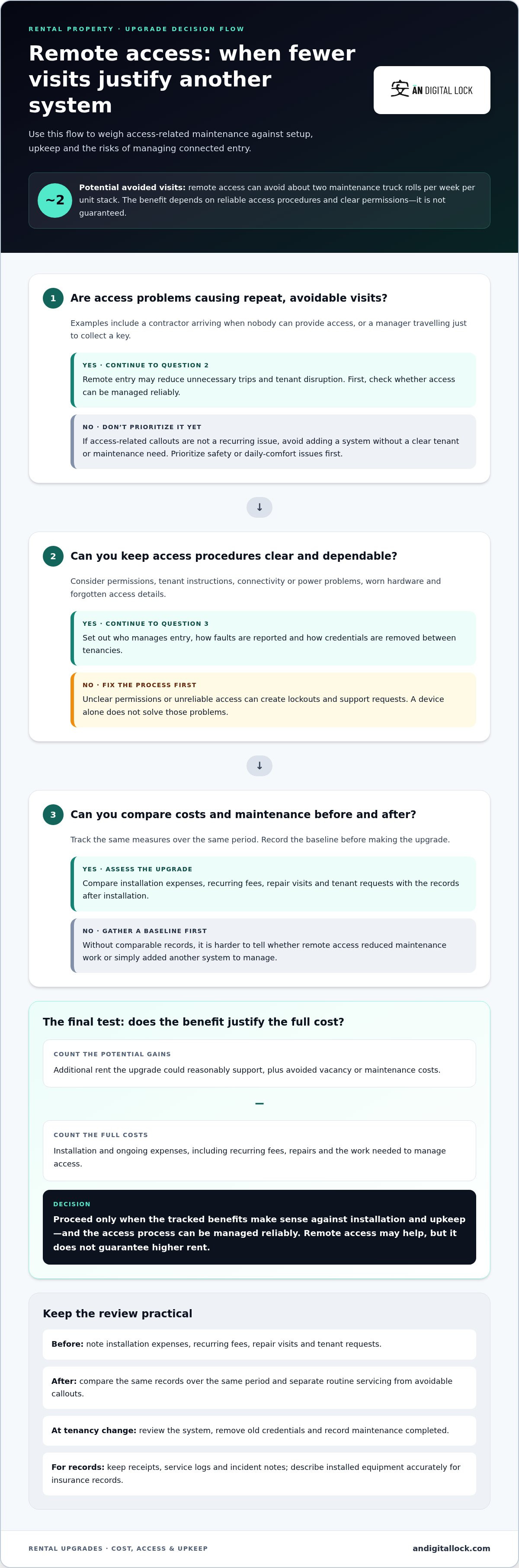
Remote access can avoid about two maintenance truck rolls per week per unit stack. Fewer unnecessary visits can reduce disruption for tenants and free up time for urgent repairs. For example, a manager could use remote entry to let a technician reach a shared service area without travelling just to collect a key. The benefit depends on reliable access procedures and clear permissions, not technology alone.
Base each investment decision on trackable costs. Record installation expenses, recurring fees, repair visits and tenant requests before making an upgrade, then compare those records over the same period afterward. Separate routine servicing from avoidable callouts, such as a contractor arriving when nobody can provide access. This helps show whether remote access reduces maintenance work or simply adds another system to manage.
Coordinate maintenance and upgrades. List equipment by function, condition and maintenance history, then address items affecting safety or daily comfort first. Modern, energy-efficient systems and appliances are designed to last longer and require less upkeep, which can reduce maintenance costs over time. For prospective renters, a well-maintained home can feel more appealing than one with newer features but unresolved faults.
Include the hot-water system in your maintenance plan. Note its condition, past repairs and any changes in performance. During routine inspections, look for visible leaks around the tank, connections and nearby surfaces. Even a small leak can damage cabinets or flooring if ignored. If the system shows a fault, arrange maintenance before advertising the property, so prospective renters see a home prepared for everyday use.
Landscaping also affects ongoing maintenance. Choose low-maintenance flowers or shrubs instead of plants that need frequent pruning or replacement. Keep paths and entrances clear, and specify who handles watering and trimming in the tenancy arrangements. A simple planting bed near the entry, for example, can look cared for without creating a demanding garden schedule—a balance that hospitality operators like Tanjung Inn often strike when managing nature-focused grounds and chalets. Lower upkeep leaves more time for essential repairs inside the unit.
Security upgrades bring risks as well as convenience. Remote systems can fail during connectivity or power problems, while worn hardware, forgotten access details or unclear tenant instructions can cause lockouts. Set out who manages access, how credentials are removed between tenancies and how faults are reported. For insurance records, describe installed equipment accurately and keep receipts, service logs and incident notes. A device alone doesn’t establish that a particular loss is covered; policy wording and claim circumstances determine coverage.
Review the system during each tenancy change and record any maintenance completed. If you’re weighing entrance access as part of the upgrade plan, explore rental property security planning alongside the maintenance needs of the whole home. Keep the decision practical: choose improvements that solve recurring problems, support energy management, or reduce avoidable visits, then compare their ongoing demands with their benefits.
3. Security doors, motion lights and alarm systems
Start with the entry points tenants use every day. Check that each door and accessible window locks properly, and repair loose hardware before advertising the unit. A security door or gate can add another barrier, while clear sightlines help occupants see who is approaching. In an HDB flat, condo or landed home, match improvements to the entrance layout and residents’ practical needs.
Good lighting makes entry points easier to use after dark. Keep the route to the front door, porch and parking area well lit, and remove anything blocking the way. Motion-sensor lights can switch on as someone approaches, helping renters see steps and locks without leaving lights on continuously. Position sensors to cover the path, not neighbouring windows or shared spaces.
Check existing fixtures before replacing them. A failed bulb, poor placement or outdated fitting may explain a dark entrance without requiring a full lighting redesign. LED lighting can use less energy than less efficient options, while replacement fixtures can improve visibility and presentation. Check whether the light is bright enough for the walkway and whether tenants can operate it easily.
Compare smart locks, CCTV and alarms by reliability, access management, maintenance needs and recurring service costs. Test each system during routine inspections, document faults and make sure tenants know how to use it. In Singapore, costs depend on equipment, installation complexity, connectivity, subscriptions and ongoing servicing, so compare total ownership costs, not just hardware prices.
Security needs vary between HDB flats, condos and landed homes. Prioritise secure doors and accessible windows in every property, then consider lighting and entry monitoring based on the layout. Condo owners should account for shared corridors and building rules; landed-home owners may also assess side entrances and parking access. These practical features can improve comfort and attract renters, but don’t assume they automatically justify higher rent.
Alarm systems can alert occupants to an intrusion, while CCTV records activity within its camera view. Both need upkeep: cameras require suitable placement and footage management, and alarms need testing and clear instructions. Smart locks have different requirements, including reliable access procedures and removing former tenants’ credentials at handover. Compare these tasks with the property’s actual security concerns before installing multiple systems.
Pay attention to lighting replacements during renovations and routine maintenance. If a parking area remains dim despite a working fixture, assess its position and coverage before choosing a replacement. Motion sensors suit routes used intermittently, while steady lighting may better serve a frequently used entrance. Choose durable fittings and keep the controls easy for tenants to understand.
For a rental home, take a joined-up approach: secure entry points, light the approach and maintain any installed alarm or camera. Record inspection dates, repairs and tenant instructions in one property file. This helps you spot recurring problems, keep equipment working and judge which improvements genuinely enhance the home’s appeal.
4. How renovations may increase rental income and property value
Renovations can support rental income when they solve visible problems or improve everyday use. Start with defects that could cause damage, such as leaking bathroom fittings, worn flooring or damaged kitchen surfaces. Repairing these issues can prevent small faults from undermining a viewing. Then prioritise improvements tenants can see and use, rather than choosing finishes solely to suit your personal taste.
A typical residential condo example illustrates why owners should compare rent with total investment. A property purchased for $1.1 million and rented for $3,000 per month after upgrades might yield a 3.8% net return. Treat that as one example, not a forecast for another property. Location, purchase price, renovation scope, vacancy, and ongoing expenses all affect the result.
Renovation options range from a kitchen refresh to additional amenities. An upgraded kitchen, refreshed flooring, laundry facilities or a more functional bathroom may address practical tenant priorities. Furnished rentals can also appeal to occupants who prefer not to buy furniture upfront. Match each improvement to likely renters and the unit’s condition. A costly feature that tenants rarely use may add little rental value.
Exterior presentation matters too. Fresh exterior paint has been associated with an average 5% increase in property value. This does not mean every repaint produces that result; condition, workmanship, and local buyer demand shape the outcome. Choose neutral finishes that suit the building, and repair damaged surfaces before painting. A clean, maintained appearance can strengthen first impressions during viewings.
Some investors could increase rental income by 30 to 50 per cent through renovating and refreshing a property. That range is a broad market claim, not a promise for an individual home. Measure the likely return by comparing the property’s current rent and condition with the realistic post-renovation rent. Include vacancy time, ongoing maintenance, and the value of improvements when assessing net income.
Calculate amenity fees separately. If a building or optional service carries recurring charges, include them alongside rent rather than treating gross rental income as profit. Compare the tenant’s total monthly housing cost, including any applicable fees. If an amenity adds convenience, assess whether renters value it enough to support the asking rent without weakening demand.
Before work begins, define a short scope: document existing damage, identify improvements tenants will notice and estimate their likely effects on rent and upkeep. Review each item against the property and target renters. For example, installing modern solutions from AN Digital Lock and refreshed flooring may be more useful than decorative upgrades when security and easy cleaning matter. This step-by-step approach keeps renovation decisions tied to rental performance and property value.
5. Rental property security upgrades
For Singapore tenants, useful security improvements start with reliable entry points. Check entrance doors and accessible windows, then fix faulty latches or damaged frames. A quality deadbolt, secure window locks and a well-lit route from the lift or parking area can make daily access more convenient. In landed homes, include side entrances and gates in the inspection.
Match additional features to the home. Motion lights can illuminate a dark approach, while a security door or screen adds another barrier at the entrance. CCTV records activity within its view, and alarms alert occupants when triggered. Clear instructions and reliable operation matter more than installing several devices without a specific purpose.
Which security upgrades attract tenants most? Prioritise features that solve everyday concerns, such as secure entry, working window locks and lighting around the entrance. These improvements can strengthen a listing’s appeal, but there is no fixed rent increase for Singapore properties. The effect depends on location, condition, tenant demand and competing homes.
Use the tenancy changeover to review security. Inspect doors, windows, gates, lighting and existing devices. Repair faults and arrange selected installations before viewings. Then test each feature, update access credentials and prepare concise instructions for incoming tenants. Record equipment details and maintenance actions in the property file.
Account for the property type and shared spaces. In an HDB flat or condo, entrance improvements must suit the unit and its building arrangements. Avoid equipment that obstructs shared corridors or captures neighbours’ private areas. In landed homes, inspect perimeter access as well as the main entrance. Keep indoor camera views away from private rooms.
Choose improvements that protect the home and address a real tenant concern. A working lock may be more useful than a complex system residents find difficult to operate. Explain alarm controls, camera coverage and access procedures at handover. Between tenancies, check the equipment and remove former occupants’ credentials from systems that store user access.
To choose the best home security upgrade to increase my property's rental yield, compare maintenance demands with tenant feedback, rent achieved and vacancy between tenancies. The best home security upgrade to increase my property's rental yield is the one that suits the property’s vulnerabilities and makes daily life easier for its occupants. Track results rather than assuming any feature will justify higher rent.
Review rental entrance security options as part of your between-tenancy plan, then prioritise improvements that fit the property and simplify access.
Tenants feel safer when reliable security measures are in place. Tenants may pay a premium for safer homes. Consider high-quality deadbolt locks on entry doors, tamper-proof screen doors and locks, fences around single-family rentals, and smart or professionally monitored services with 24/7 monitoring.
AN Digital Lock: Digital Door Locks
AN Digital Lock offers Digital Door Locks for landlords upgrading a rental property’s entrance. A digital lock can support convenient access between tenancies and reduce reliance on physical key handovers. Pairing an entrance upgrade with a suitable Wooden Door or Metal Gate can help create a cohesive, secure entryway. Choose improvements based on the property’s existing door and gate, the tenant experience you want to provide, and the maintenance the upgrade will require. This is a practical next step when an entrance needs refreshing or key management has become cumbersome. Explore entrance options and discuss what suits your rental property. Visit AN Digital Lock.
Prepare your next rental refresh with confidence
Before your next tenancy, choose an entrance improvement that solves a clear problem. A lock that complicates handovers, a door that needs attention or a gate that no longer suits the home can guide your priorities. The best home security upgrade to increase your property's rental yield is the one that fits tenant needs and makes financial sense for your rental plan.
AN Digital Lock sells digital door locks, wooden doors and metal gates for rental entrances. Consider how these options might suit your property, then decide which improvement belongs in your next refresh. A focused plan helps you avoid spending on features that don’t serve the home or its occupants.
Contact AN Digital Lock to explore entrance options for your rental property. Take the next step toward a more convenient, welcoming home for future tenants.
Frequently Asked Questions
How can I increase rental property income?
Improve the property’s appeal to suitable tenants while controlling costs that reduce net income. Review comparable listings before setting rent, then consider whether furnishings, layout or access arrangements address a genuine tenant need. At renewal, use documented maintenance, vacancy and tenant feedback to decide what to improve next. Separating rental income from operating expenses gives you a clearer view of whether an upgrade is strengthening your overall return.
What is Rental Yield?
Rental yield measures the rent a property produces relative to its value. Gross yield is calculated by dividing annual rental income by the property’s value, then multiplying by 100. Net yield subtracts relevant property expenses before comparing the remaining income with the property’s value. For a useful comparison, apply the same method to each property and include the same types of costs, such as maintenance and periods without a tenant.
Which security upgrades offer the best return on investment for Singapore landlords?
Prioritise upgrades that address a specific weakness and are straightforward to maintain. Repairing a faulty entrance lock, for example, may be more valuable than adding a complex system tenants rarely use. Compare each option’s purchase, installation, maintenance and replacement needs with its likely benefits for tenants. A well-lit entrance or practical access feature may improve a listing’s appeal, but the rent impact depends on the property and local demand.