


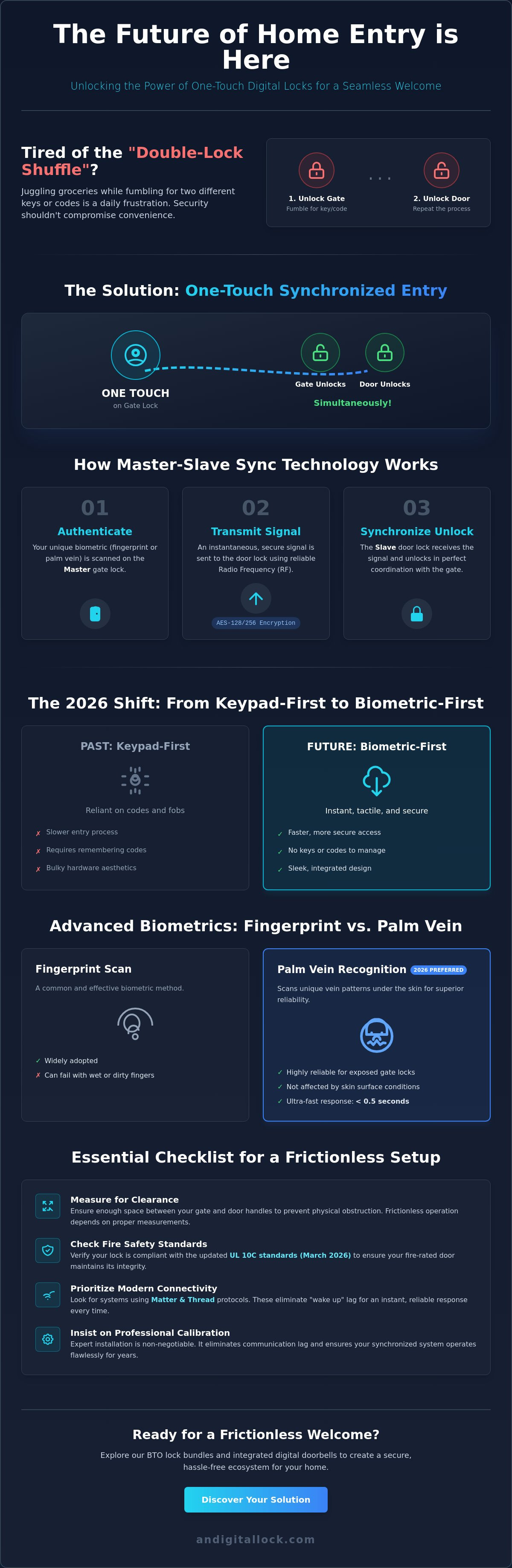
You arrive at your HDB corridor with two heavy bags of groceries, only to face the dreaded double-lock shuffle. First, you fumble for a key to the metal gate, then you repeat the struggle with your wooden door while your bags slip from your grip. It's a daily friction that makes coming home feel like a chore. You likely agree that security shouldn't come at the cost of your convenience, especially when facial recognition technology often fails to scan through gate mesh.
This guide shows you how a one-touch entry digital lock eliminates these hurdles by creating a seamless handshake between your entrance points. Discover how to achieve a true walk-in experience that reduces entry time and removes bulky hardware from your home's aesthetic. We will break down the latest 2026 biometric trends, including palm vein recognition and the updated UL 10C fire-rated safety standards. You'll learn how to choose the right BTO lock bundles and digital doorbells to create an integrated ecosystem that protects your family without the usual hassle.
Key Takeaways
- Learn how the 2026 shift toward biometric-first technology allows you to bypass traditional keypads for a faster, more secure entry.
- Understand the "Master-Slave" synchronization process that enables your metal gate to automatically unlock your wooden door.
- Compare leading brands like Philips and Zigbang to find the ideal one-touch entry digital lock for your specific property type.
- Discover the essential measurements required to ensure proper clearance between your gate and door handle for a frictionless installation.
- Identify why professional calibration is necessary to eliminate communication lag and ensure your synchronized system operates reliably.
The Evolution of Keyless Living: What is a One-Touch Entry Digital Lock?
A one-touch entry digital lock is a high-performance security system designed to grant access through a single physical interaction, such as a fingerprint scan or a proximity sensor. In the 2026 Singapore market, we've seen a decisive shift from "Keypad-First" designs to "Biometric-First" solutions. Homeowners no longer want to punch in codes or carry fobs. They want immediate, tactile results. This technology covers both the physical hardware, like a fingerprint sensor integrated directly into the handle, and the background software that manages device synchronization. The Evolution of Keyless Living has moved beyond simple deadbolts to integrated systems that handle your entire entrance with professional efficiency.
For HDB owners, the "Double-Lock" problem is a daily frustration that wastes time and energy. You currently have to unlock the metal gate, then fumble for a second key or code for the wooden door. One-touch systems solve this by linking both units. When you touch the gate lock, the main door unlocks simultaneously. This seamless coordination is why BTO lock bundles are now prioritizing synchronization over standalone features. It creates a modern, aesthetic entrance that removes the bulk of traditional hardware while evoking a sense of safety and contemporary refinement.
The Difference Between Fingerprint Entry and One-Touch Sync
A standard biometric lock only opens the specific device you touch. While this is a step up from traditional keys, it doesn't solve the multi-barrier entry common in local apartments. True synchronized systems use a master-slave relationship. Touching the gate sensor sends an encrypted signal to disarm the main door mortise instantly. In 2026, these systems have evolved to include palm vein recognition and 3D facial recognition. These advanced biometrics provide higher security grades and better reliability, even when scanning through the complex mesh of a metal gate.
Why 2026 is the Year of the Frictionless Entrance
The widespread adoption of Matter and Thread protocols has revolutionized how devices talk to each other. Older models often suffered from a "wake up" lag that forced you to wait for several seconds before the door would respond. Modern 2026 hardware eliminates this delay with low-power, high-speed connectivity. Security is also tighter than ever. New models now adhere to the updated UL 10C standards published in March 2026, ensuring that your fire rated door remains a solid barrier during emergencies. One-touch entry represents the convergence of biometric speed and multi-device coordination. It's an essential upgrade for anyone seeking a frictionless, secure lifestyle.
How One-Touch Sync Technology Works: Behind the Seamless Entry
The magic of a one-touch entry digital lock lies in its "Master-Slave" architecture. In this setup, your gate lock acts as the Master unit. When it successfully authenticates your biometric data, it sends an instantaneous, encrypted signal to the door lock, which acts as the Slave. This allows both barriers to retract their bolts in a coordinated sequence. When Comparing One-Touch Brands, you'll notice that the most reliable systems use proprietary Radio Frequency (RF) signals. These signals are preferred over standard Bluetooth Low Energy (BLE) because they offer faster transmission speeds and better penetration through metal gate frames.
Security is the foundation of this synchronization. To prevent "signal grabbing" or relay attacks, modern 2026 systems utilize AES-128 or AES-256 encryption. This is the same grade of security used by financial institutions. Power management has also seen a massive leap. Advanced hardware now uses ultra-low power standby modes. This ensures your synchronized system doesn't drain its battery in six months, even with the constant communication between the two units. If you're looking to upgrade your entire entrance, you can browse our latest BTO lock bundles to see these technologies in action.
Biometric Advancements: Fingerprint vs. Palm Vein
While fingerprint sensors are common, palm vein recognition is becoming the preferred one-touch method for gates in 2026. Palm vein technology scans the unique vein patterns beneath your skin using near-infrared light. It's significantly more reliable for gate locks that are exposed to the elements. These sensors boast an impressive response time of under 0.5 seconds. This technology overcomes common biometric failures such as wet fingers, worn-down prints in elderly users, or the rapidly changing prints of growing children. It's a robust solution that ensures your "walk-in" experience remains frictionless every single time.
The "Gate-First" Logic for Singapore HDBs
In a typical Singapore HDB setting, the gate lock must be the "brain" of your security ecosystem. Since the gate is your first point of physical contact, it dictates the flow of entry. This "Gate-First" logic solves a major pain point: facial recognition failing through gate mesh. By placing the primary sensor on the gate, the system identifies you before you even reach the door. This setup integrates perfectly with a high-quality hdb main door, ensuring that the heavy wooden leaf is already unlocked by the time you've pulled the gate open. It turns a clunky two-step process into one fluid motion.
Comparing One-Touch Brands: OneTouch vs. Philips vs. Zigbang
Choosing a one-touch entry digital lock requires more than just looking at a price tag. You need to consider how well the hardware survives Singapore's intense humidity and how fast the gate-to-door synchronization actually performs. Brands like OpenTouch have gained significant traction by specializing in the "Sync" ecosystem specifically for local HDB and condo layouts. Their systems are engineered to handle the unique spacing between a metal gate and a wooden door leaf, ensuring the "Master-Slave" communication mentioned earlier remains flawless. They focus on the local residential experience, making them a reliable choice for homeowners who want a specialized solution.
Philips Smart Locks offer a different value proposition focused on premium build quality and integrated security. Many of their models come with built-in video doorbells and their signature "EasyKey" handles. These handles are designed for ergonomic comfort. They allow you to scan your print and push the door open in one fluid motion. Zigbang, which acquired Samsung's smart lock business, remains the leader in high-end aesthetics. Their locks offer deep integration with global smart home ecosystems. This makes them a top choice for tech-savvy homeowners who want their entrance to be part of a larger automated home.
If you're looking for the "workhorses" of the industry, Solity and Hafele are excellent choices. They are known for being reliable, fast, and incredibly durable. These brands are frequently included in popular BTO lock bundles because they offer great performance at a more budget-friendly price point without sacrificing security grades. They prioritize the core function of the lock, ensuring that the biometric sensor works every time you arrive home.
Feature Showdown: Speed, App Support, and Reliability
The app interface is where these brands truly diverge. Philips and Zigbang provide sophisticated apps for remote monitoring. These apps allow you to see who entered your home in real-time or issue temporary PINs for visitors. Reliability also extends to emergency situations. Most 2026 models have moved away from old 9V battery jumpstarts in favor of USB-C power banks. This shift ensures you're never locked out due to a dead battery. For a deeper brand dive, check out our best digital lock singapore guide to see the top-rated picks for HDBs and condos this year.
Aesthetic Integration: Matching Your Gate and Door
Modern entrances are moving toward a minimalist look. Slim designs are now essential for narrow HDB gate frames to ensure the hardware doesn't look cluttered or bulky. You should also prioritize finishes that last. PVD (Physical Vapor Deposition) coating is superior to standard paint because it resists corrosion from salt and humidity. The "Hidden Sensor" trend is another 2026 favorite. These locks hide the biometric scanner within the handle or behind a sleek panel. This provides a luxury feel that complements a designer wooden door while maintaining a high level of security.
Buying Guide: Choosing the Right One-Touch Lock for Your Property
Selecting your one-touch entry digital lock requires a methodical approach to ensure compatibility with your specific property. You must first identify your door type. HDB units typically require a Fire Rated Door for the main entrance. In contrast, condos usually feature timber doors, while landed properties may have varied requirements for their external Metal Gates. Knowing your door material and function is the foundation of a secure installation. Follow these four essential steps to streamline your purchase:
- Step 1: Identify your door type. Verify if you need a fire-rated solution or a Waterproof Door for areas exposed to the elements.
- Step 2: Measure the clearance. Check the distance between your gate and your main door handle. Insufficient space can cause handles to clash, preventing the door from closing properly.
- Step 3: Decide on your primary biometric. Choose between fingerprint, 3D facial recognition, or palm vein sensors based on who will be using the lock daily.
- Step 4: Evaluate the need for a 'Sync' bundle. Determine if you want a coordinated "Master-Slave" system or two independent units that operate separately.
HDB and BTO Specific Considerations
HDB regulations are strict regarding fire safety. If your main door leads to a fire lift or lobby, you must install a certified fire-rated lock. This ensures the door maintains its integrity during an emergency according to the updated March 2026 UL 10C standards. You also need to examine your gate lock orientation. Some metal gates have vertical bars that require a slim-profile lock, while others with horizontal handles allow for larger hardware. For a complete breakdown of local requirements, read our digital lock singapore buying guide. This resource explains the latest 2026 regulations for BTO flats in detail.
Condo and Landed Property Needs
Weatherproofing is a critical factor for landed properties. If your gate is exposed to rain, you must choose a lock with a high IP rating, such as IP65 or higher. This protects the internal electronics from moisture and dust. Condo owners often look for integration with existing intercom systems. This allows you to grant access to visitors from your smartphone while maintaining a luxury feel. A one-touch entry digital lock is particularly beneficial for large families with multiple entry points. It eliminates the need for multiple fobs or keys, providing contemporary refinement to your home entrance. Ready to upgrade your home security? Explore our latest BTO lock bundles to find the perfect synchronized system for your property.
Installation and Maintenance: Ensuring Your One-Touch System Lasts
Professional installation is non-negotiable for a one-touch entry digital lock. Standalone units are simple to mount, but synchronized systems require a precise technical handshake between two separate devices. Our experts ensure the gate and door communicate without lag during the critical "Calibration" phase. If these units aren't perfectly aligned, the Master-Slave signal may fail, leaving you with a disjointed entry experience. We handle the complex wiring and signal testing so your "walk-in" remains fluid and reliable from day one.
Battery care is another vital factor for longevity in 2026. Modern locks are more power-efficient than ever, but they still require high-quality Alkaline or Lithium cells to function correctly. Never mix old and new batteries or use low-grade brands. These are prone to leakage, which can corrode the sensitive motherboards inside your premium hardware. AN Digital Lock provides 24/7 support and comprehensive warranty coverage for all our installations. This service-oriented approach gives you peace of mind, knowing that help is always available if you encounter technical hurdles.
The AN Digital Lock Installation Process
Your installation appointment typically takes about two hours. During this time, our technicians perform more than just a physical setup. We conduct a full on-site tutorial to help you register your family's biometric profiles. We also pay close attention to the mechanical fit. We ensure your mortise lock is perfectly aligned within the door frame. If the mortise isn't seated correctly, the auto-locking feature may fail to trigger, compromising your home's security. Our team verifies every latch and bolt before we consider the job done.
Troubleshooting and Long-Term Care
Synchronization drops are rare but can occur due to signal interference or low power. If your gate stops talking to your door, follow the "Reset" protocol outlined in your user manual to re-pair the devices. Long-term care involves simple, consistent habits:
- Clean your sensors: Use a dry microfiber cloth to wipe the biometric scanner weekly. This prevents oil buildup and ensures 0.5-second recognition speeds.
- Avoid harsh chemicals: Never use abrasive cleaners on the lock's surface, especially on PVD-coated finishes.
- Update firmware: Use the brand's mobile app to check for firmware updates. These patches are essential for defending your one-touch entry digital lock against new cybersecurity threats.
By following these steps, you ensure your contemporary entrance remains a secure and aesthetic asset for years to come. Our commitment to service continues long after the point of sale, providing you with a frictionless journey from inquiry to maintenance.
Step Into the Future of Effortless Home Access
The double-lock struggle is officially a thing of the past. By adopting a one-touch entry digital lock, you transform your HDB or condo entrance into a fluid, biometric-first gateway. You now understand how synchronized technology eliminates the need for separate gate and door keys. Advanced 2026 sensors provide access in under 0.5 seconds, while meeting the latest UL 10C fire safety standards ensures your home remains secure. It is about more than just convenience; it is about contemporary refinement and safety.
AN Digital Lock brings over 10 years of expertise in Singapore home security to your doorstep. As an authorized reseller for premium brands like Philips, Zigbang, and Solity, we've secured over 50,000 happy homeowners since 2013. Our professional team handles everything from precise calibration to long-term support. You don't have to settle for clunky hardware when you can enjoy a seamless "walk-in" experience every day.
Upgrade to a One-Touch Sync Bundle for your HDB today!
Your journey toward a frictionless, modern home starts with a single touch. We look forward to helping you secure your space with the latest in smart-home innovation.
Frequently Asked Questions
Is one-touch entry safe for HDB homes?
One-touch entry is exceptionally safe for HDB residences. These systems utilize bank-grade AES-256 encryption to prevent signal hacking or unauthorized relay attacks. Additionally, reputable models sold in Singapore comply with the March 2026 UL 10C fire safety standards. This ensures your fire rated door remains a protective barrier during emergencies. The biometric sensors used are far more difficult to duplicate than traditional physical keys, providing your family with contemporary refinement and peace of mind.
What happens to the one-touch sync if my Wi-Fi goes down?
Your lock continues to function perfectly without an active internet connection. Most 2026 one-touch entry digital lock systems use proprietary Radio Frequency (RF) or Bluetooth for local synchronization between the gate and door. Wi-Fi is only required for remote app features like real-time notifications or remote unlocking. You don't have to worry about being locked out during a service outage because the local handshake between your devices is independent of your home network.
Can I install a one-touch lock on an existing HDB gate?
Yes, you can install these locks on most existing HDB metal gates. Our installation team conducts a thorough assessment of your gate frame and the clearance between the gate and your wooden door. We ensure that the slim-profile hardware fits within the narrow bars of typical Singaporean gates. If your current gate is too old or damaged, we also offer a variety of new metal gates designed specifically for digital lock integration.
Does one-touch entry work for children and the elderly with faded fingerprints?
Yes, modern 2026 sensors are designed to overcome these challenges. While traditional fingerprint scanners might struggle with faded prints, many one-touch systems now include palm vein recognition. This technology scans the unique vein patterns beneath the skin, which don't change with age or skin condition. 3D facial recognition is another excellent alternative for children and the elderly, providing a true walk-in experience without the need for a perfect fingerprint scan.
How long do the batteries last in a synchronized gate and door lock system?
Batteries in a synchronized system typically last between 10 to 12 months with normal residential use. The Master-Slave communication uses ultra-low power standby modes to preserve energy. It's essential to use high-quality Alkaline or Lithium cells to prevent leakage that could damage the internal electronics. Most locks provide an audible low-battery warning weeks before they run out of power, giving you plenty of time to replace them.
What is the difference between OneTouch and OpenTouch brands in Singapore?
The primary difference lies in their market focus and synchronization capabilities. OneTouch is a prominent international brand, whereas OpenTouch is a specialized ecosystem designed specifically for the Singaporean residential market. OpenTouch excels in coordinating the entry between HDB metal gates and main doors. They've engineered their hardware to handle the specific signal penetration needs required for local building materials, ensuring a more reliable sync experience for HDB and BTO owners.
Can I still use a physical key with a one-touch digital lock?
Yes, almost every professional-grade one-touch entry digital lock includes a mechanical override key. This physical key acts as a fail-safe backup for emergencies, such as a total electronic failure or a completely drained battery. The keyhole is usually discreetly hidden to maintain the lock's aesthetic appeal. We recommend keeping these emergency keys in a safe location outside your home, such as a trusted relative's house or your car, for maximum security.
Is there a monthly subscription fee for the app features?
Most major brands, including Philips and Zigbang, don't charge a monthly subscription fee for their standard app features. You can register users, track entry logs, and manage PIN codes for free. Some models with an integrated digital doorbell or digital door viewer might offer optional paid cloud storage for video history, but the core security and one-touch synchronization functions never require an ongoing financial commitment.