

You can choose a modern gate design for your HDB flat in your preferred colour and style, provided it complies with HDB’s façade guidelines. A custom-sized gate can also suit an entrance that’s wider or narrower than usual. The key is balancing the look you want with practical needs such as privacy, airflow and space.
A gate is more than a finishing touch. Its panel layout and material affect airflow, visibility and overall cost. It also needs to work comfortably with your main door and the space around the entrance.
This guide compares HDB gate styles for different privacy and ventilation needs, explains key design choices and outlines how materials affect your decision. Use the comparisons to narrow down options such as open bars, half-panel or louvre-style designs, and glass or other panels that suit your home and daily routine.
Key Takeaways
- Choose a gate layout by balancing privacy, airflow and the space available at your entrance.
- Custom colours and sizing can suit your flat, but the design must follow HDB façade guidelines.
- Compare open bars, solid panels and glass inserts for the right mix of visibility, light and privacy.
- Weigh mild steel, wrought iron, stainless steel and aluminium by their finish, durability and upkeep needs.
- Understand how measurements, material choice and fabrication affect the path from selecting a gate to installation.
1. Half-panel gates for privacy and ventilation
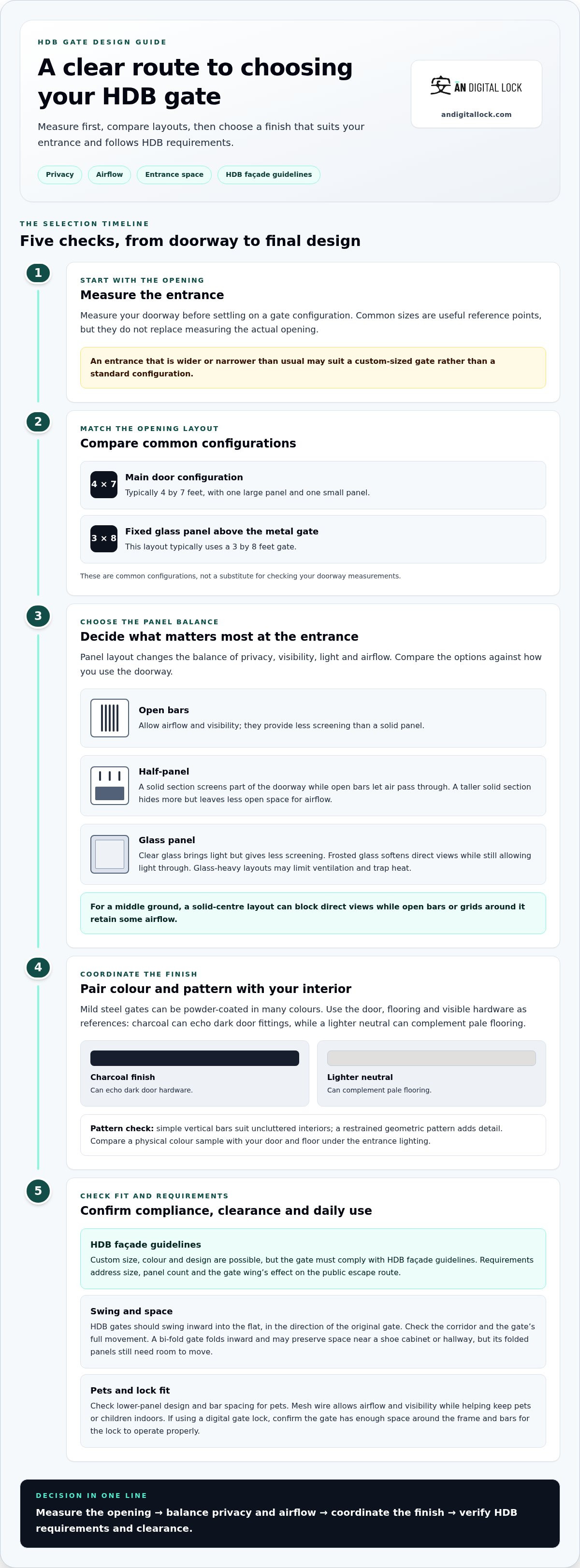
A half-panel gate offers a practical middle ground for an HDB entrance: a solid section screens part of the doorway, while open bars allow airflow. It suits households seeking less direct visibility without fully closing off the entrance. For example, a solid lower panel can screen shoes and household items while upper bars let air pass through when the main door is open.
Compare the panel height with your privacy and airflow needs. A taller solid section hides more of the interior but leaves less open space for air to pass. A shorter panel keeps more of the gate open. Vertical-bar mild steel gates create a clean, modern look and allow airflow, while horizontal bars create a different visual pattern that can complement strong horizontal lines in the home. Choose a pattern that works with your main door and flooring.
For a narrow entrance, a bi-fold gate folds inward rather than needing one wide swing. This can preserve usable space near a shoe cabinet or hallway, but the folded panels still need room to move. HDB gates should swing inward into the flat, in the direction of the original gate. Consider the corridor and the gate’s full movement before choosing a layout.
Match the gate’s finish and lines to your interior. A dark mild steel gate can echo black door hardware, while a lighter finish can complement pale flooring. Simple vertical bars suit uncluttered interiors; a half-panel with a restrained geometric pattern adds detail without overwhelming the doorway. Compare a physical colour sample with your door and floor under the entrance lighting.
For pets, check the lower section and spacing between bars. Narrower spacing near the bottom can help prevent a small pet from slipping through, while a solid lower panel can discourage a dog from dashing outside. Mesh wire allows airflow and visibility for pets or children while helping keep them indoors. Make sure the gaps and panel arrangement suit your pet’s size and behaviour.
Digital-lock gates differ from traditional HDB gates mainly in their locking setup: a digital gate lock uses electronic access, while a conventional gate lock uses a physical key. The gate must suit the chosen lock, with enough space around the frame and bars for it to operate properly. Check the lock position against the gate design before deciding.
2. Can I choose any colour and design for my HDB gate?
You can customise an HDB gate’s size, colour and design, but there are limits. In Singapore, the design must comply with HDB’s façade guidelines. These rules matter because gates face shared corridors and form part of the block’s exterior appearance. A bold colour or distinctive pattern may suit your home, but the overall design still needs to meet the guidelines. Personalisation means choosing within the requirements, not selecting any design without restriction.
Start by measuring the entrance and comparing its layout with common gate configurations. HDB gates typically come in a 4 by 7 feet size for main doors with one large and one small panel. Units with a fixed glass panel above the metal gate typically use a 3 by 8 feet size. These are common configurations, not a replacement for measuring your doorway. For an entrance wider or narrower than normal, a custom-sized gate can provide a closer fit.
Colour is another way to customise a gate. Mild steel gates can be powder-coated in many colours, allowing you to coordinate the finish with the main door, flooring or visible hardware. Charcoal, for example, can echo dark door fittings, while a lighter neutral shade can complement pale flooring. These are styling ideas, not required or officially preferred colours. Compare a sample with your entrance materials, since lighting and nearby surfaces affect how a finish appears.
When choosing a modern gate design for a Punggol HDB flat, consider how the panels and colour look together from inside and along the corridor. A simple pattern can keep a distinctive colour from dominating the doorway, while a detailed feature may work better beside plain walls and flooring. HDB gate requirements also address size, panel count and the gate wing’s effect on the public escape route, so the design must not obstruct it.
Use this sequence to narrow your options: measure the entrance, identify its layout, then select a finish and pattern that complement your interior. If the opening is unusually wide or narrow, consider a custom size instead of forcing a standard gate into place. A modern gate design for Punggol HDB flat entrances should also suit the shared corridor and comply with HDB façade guidelines. Explore gate design options to compare finishes for your entrance.
3. Glass-panel and privacy gate designs
Glass-panel gates can bring natural light into the entrance, while open sections preserve visibility. A clear insert brightens the doorway but provides less screening than a frosted panel. Frosted glass softens direct views while still allowing light through. Compare the panel’s appearance from inside the flat and from the shared corridor, and consider how much privacy you need when the main door is open.
For greater screening, consider a solid-centre layout. Its central panel blocks direct views, while open bars or grids around it retain some airflow. This can suit a household that wants a private centre without choosing a fully closed gate. A frosted panel is another option when you want light without a clear view indoors. Choose based on whether privacy, brightness or airflow matters most at your entrance.
Glass and acrylic inserts need careful consideration because either material can break. Think about how the entrance is used and who moves through it before choosing an insert. Glass gates can also trap heat, and limited ventilation may make the home feel warmer. If your flat relies on natural airflow, compare glass-heavy layouts with open-bar styles. Households that frequently use air-conditioning may prefer a glass look, while still weighing heat and ventilation.
HDB gate requirements cover the gate’s size, number of panels and amount of gate wing, with the public escape route in mind. Typical configurations include a 4 by 7 feet gate for main doors, with one large and one small panel. Units with a fixed glass panel above the metal gate typically use a 3 by 8 feet gate. These common sizes help frame your options, but the existing entrance layout remains important when choosing a replacement.
Check how the open gate sits in the corridor, not just how it looks when closed. The gate’s panels and wing should not create an obstruction to the public escape route. A simple grid can provide a lighter appearance, while a solid-centre design gives more screening. For an affordable choice, compare the practical layout and material alongside the visual style, rather than judging by glass coverage alone. The number and type of panels influence both appearance and the design decision.
Compare these features side by side before choosing: clear glass provides visibility and daylight, frosted glass softens views, and solid-centre panels provide stronger screening. Then weigh heat, airflow, corridor clearance and panel layout together. This helps you choose a privacy style that suits your entrance instead of selecting by appearance alone.
4. HDB gate materials and their trade-offs
HDB gates in Singapore are available in mild steel, wrought iron, stainless steel and aluminium. Material affects the gate’s weight, finish, upkeep and visual character. Compare these practical differences before choosing a design for your main door. A vertical-bar layout can look clean and modern, but its material still affects how the gate handles everyday use.
Mild steel is commonly used for HDB gates and can resist rust when treated with the right finish. It is lighter than wrought iron, which can make it practical for a frequently used entrance. Mild steel gates can also be powder-coated in many colours, giving you options to match dark door hardware, pale flooring or a more distinctive interior palette.
Lock compatibility is another consideration with mild steel. These gates can support different types of lock systems, but the gate design and chosen lock need to work together. Check the frame and bar arrangement around the intended lock position. Closely spaced vertical bars, for example, may affect where the lock can sit compared with a broad solid section.
Aluminium offers a different balance. It does not rust, but may dent more easily than steel. That trade-off matters at a busy entrance where bags, bicycles or household items pass near the gate. Consider everyday use, not just colour or appearance. A smooth aluminium finish may suit a simple design, while a steel gate offers powder-coated colour options.
Wrought iron and stainless steel are also available for HDB gates. Mild steel is lighter than wrought iron, which is worth considering when comparing how different gates feel to use. Do not judge stainless steel by its name alone: compare the complete design, finish and intended use. Material alone does not determine privacy or airflow; the layout matters too.
Use these material comparisons to narrow your shortlist:
- Mild steel: treated finishes can resist rust, powder coating offers colour choices, and the material supports different lock systems.
- Aluminium: it does not rust, but may dent more easily than steel.
- Wrought iron: compare its heavier weight with lighter mild steel when considering daily gate movement.
- Stainless steel: compare its finish and design with the other available materials before deciding.
Assess the gate as part of the entrance, including its opening movement and corridor position. HDB gates should swing inward into the flat, in the direction of the original gate. Keep the public escape route in mind when comparing materials and layouts. A suitable choice balances appearance, movement, finish and lock arrangement rather than relying on material alone.
5. How much does an HDB gate cost in Singapore?
An HDB gate’s cost depends on its material, dimensions, design, finish and installation requirements. A custom-sized entrance or detailed panel layout can affect fabrication, so compare the complete specification rather than material alone.
For Punggol homeowners, the relevant considerations are Singapore’s HDB gate requirements, including inward swing and corridor clearance. Check the requirements for your replacement and make sure the gate does not obstruct corridor access. For flats along a common corridor, an open gate must leave at least 0.6 metres between its edge and the corridor parapet wall.
The guidance here does not identify separate Punggol-specific gate rules. Apply Singapore HDB criteria to the entrance, corridor and gate movement. Corner-unit owners must also avoid a swing that hits or blocks a neighbour’s window.
Plan the work in practical stages. A gate installation typically starts with a home visit to measure the entrance, helping the replacement fit the opening. Choose the design and material with the measurement in hand, then allow for fabrication before installation. Mild steel, wrought iron and aluminium gates take approximately 10 working days to fabricate; stainless steel gates require 15 working days. Installation takes about 1 hour per gate.
Compare fabrication time for your chosen material before planning a replacement. Stainless steel, mild steel, wrought iron and aluminium have different fabrication requirements. The finish, size and pattern also shape the specification. If the gate will be used with a digital lock, factor compatibility into the design so the lock and gate work smoothly together.
After installation, some gate providers offer adjustments or minor fixes, sometimes covered by a warranty. Support arrangements vary, so understand what applies to the installation. For routine upkeep, check that hinges and locks move smoothly, clean the gate with a damp cloth and touch up small paint chips before rust sets in.
When choosing an installer, focus on practical risks: incorrect measurements can leave a poor fit, and an incompatible gate can prevent a digital lock from working properly. Poor swing clearance can obstruct the corridor or a neighbour’s window. HDB gate installation guidance advises engaging contractors from the Directory of Renovation Contractor. Include the layout, clearance, lock fit and finishing in the installation plan.
Ready to plan a replacement around your entrance and preferred design? Explore metal gate options and consider how the material, finish and digital lock requirements work together.
AN Digital Lock: Digital Door Locks
AN Digital Lock offers Digital Door Locks for homeowners planning a more convenient entrance setup. If you are choosing a metal gate, consider how its frame and lock position will work with a digital lock before finalising the design. This lets you assess both the gate’s appearance and the practical fit of the locking arrangement.
AN Digital Lock also offers Metal Gates, so you can consider gate and lock choices together for your HDB entrance. A Digital Doorbell or Digital Door Viewer can complement the setup by helping you see or identify visitors. Choose products that address your household’s needs rather than adding features you will not use.
For help exploring entrance options, contact AN Digital Lock or visit andigitallock.com.
Plan an entrance that works as one
Your gate is part of a wider entrance, so treat appearance and access as connected decisions. Before choosing, consider how you want the entrance to look and how it needs to work each day. A modern gate design for a Punggol HDB flat can complement your home’s character without feeling like a standalone feature.
AN Digital Lock offers Metal Gates and Digital Door Locks, helping you consider the gate and access arrangement together. Its Wooden Doors can also help coordinate the wider entrance. Focus on the combination that suits your household rather than choosing each element in isolation.
Ready to explore options for your entrance? Contact AN Digital Lock about gate options and take the next step toward a design that feels right for your home.
Frequently Asked Questions
Can I choose any colour and design for my HDB gate?
You can customise the colour and design, but the gate must comply with HDB’s façade guidelines. Powder-coated mild steel, for example, allows a range of colour choices, while the panel layout affects the entrance’s appearance and airflow. Keep the overall design suitable for the block façade and shared corridor. A distinctive finish is possible as long as the design meets the applicable requirements.
How much does an HDB gate cost in Singapore?
There is no single price for every HDB gate. The final cost depends on material, size, design details, finish and installation requirements. A custom-sized gate or elaborate panel layout can affect fabrication needs. For a meaningful comparison, assess gates with the same material, dimensions and design features. This gives you a more useful like-for-like comparison than choosing by appearance alone.
Do I need HDB approval to install or replace my HDB gate?
For a like-for-like gate replacement, check the applicable requirements before proceeding. A customised design still needs to comply with HDB façade guidelines, including requirements for gate size, panels and the gate wing’s effect on the public escape route. The gate should also swing inward, in the same direction as the original HDB-issued gate. These criteria help distinguish a compliant replacement from a design that changes the entrance layout.
Do I need a permit to install a gate at my HDB recess area?
The no-permit rule stated here applies to a like-for-like replacement, not automatically to a new gate installation in a recess area. Treat a new installation and a replacement as separate situations. Any proposed gate must respect HDB façade guidelines and avoid obstructing the public escape route. Its opening direction and corridor clearance also matter when assessing the layout.
Do I need an HDB permit to replace my main entrance metal gate?
Permit requirements may depend on the nature of the gate work, so check the applicable requirements before proceeding. Keep the new metal gate’s dimensions and panel arrangement appropriate to the existing entrance, and ensure its design follows HDB façade guidelines. The gate should swing inward like the original. Also consider the corridor: an open gate must leave at least 0.6 metres between its edge and the parapet wall in a common-corridor flat.
What is the process and timeline after ordering an HDB gate?
The process typically begins with a home visit to measure the entrance. Mild steel, wrought iron and aluminium gates take approximately 10 working days to fabricate; stainless steel gates require 15 working days. Installation takes about 1 hour per gate. After fitting, check that the gate swings smoothly, the hinges and lock operate properly, and the design sits correctly in the entrance.
What modern HDB gate designs are popular in Singapore?
Common modern choices include vertical-bar gates, half-panel layouts, louvred designs, bi-fold gates and gates with frosted or glass inserts. Open bars allow airflow; frosted panels soften direct views while admitting light. Bi-fold panels fold inward and can suit entrances where a wide swing is inconvenient. Compare styles by privacy, ventilation and available space rather than assuming one design suits every home.
What gate designs suit Punggol HDB flats and common corridor layouts?
For a Punggol flat with a shared corridor, choose a layout that swings inward and preserves corridor clearance. An open gate must leave at least 0.6 metres between its edge and the corridor parapet wall. A bi-fold layout can help where a wide swing is awkward, while open-bar or half-panel designs retain airflow. Corner-unit owners should also avoid a gate swing that hits or blocks a neighbour’s window.