


Will your brand-new door still close properly after a single humid Singapore monsoon season? With 13,500 HDB flats reaching their Minimum Occupation Period in 2026, thousands of homeowners are currently debating the laminate door vs solid wood door dilemma. You likely want the premium look of natural timber but worry about warping wood or unsightly scratches from pets and children. It's a common concern when you're trying to build a modern, hassle-free home that lasts.
This guide provides the clarity you need to make a smart investment for your property. You'll discover how to choose a door that combines high-end aesthetics with the durability to handle Singapore's high humidity levels. We promise to simplify the latest HDB fire-rating regulations and explain why a 40% surge in digital lock installations is shifting the market toward solid-core laminates. From comparing the S$849 starting price of laminate main doors to ensuring your 30-minute fire-rated assembly is fully certified, we cover everything you need for ultimate peace of mind.
Key Takeaways
- Understand the structural differences between natural timber and high-pressure laminate (HPL) to determine which material fits your aesthetic goals.
- Compare the laminate door vs solid wood door in terms of scratch resistance and stability against Singapore's high humidity levels.
- Learn why a solid-core construction is vital for the secure installation of premium digital locks from brands like Kaadas or Philips.
- Identify mandatory HDB fire-rating requirements to ensure your main door choice complies with SCDF safety standards for 2026.
- Evaluate your lifestyle needs to decide between the high-maintenance prestige of solid wood or the sleek, antibacterial surfaces of modern laminates.
Understanding the Basics: What Defines Laminate and Solid Wood Doors?
Choosing between a laminate door vs solid wood door isn't just about looks; it's about material science and how it interacts with Singapore's climate. Solid wood doors are traditional, heavy, and carved from pieces of natural timber. Laminate doors use a multi-layered approach, bonding a decorative skin over a manufactured core. In 2026, the lines have blurred with the rise of "solid core" laminate hybrids. These offer the weight of wood with the durability of modern synthetics. Your choice here dictates your maintenance schedule for the next decade.
The Anatomy of a Solid Wood Door
Real timber doors carry a prestige that synthetic materials struggle to replicate. In Singapore, Nyatoh is the standard choice for its reddish-brown hue and relative affordability compared to premium Teak. These doors are prized for their unique grain patterns; no two doors are identical. Because they are dense and heavy, they provide natural soundproofing. This makes them excellent for bedrooms where privacy is a priority. However, being a natural material, timber "breathes." It expands and contracts based on moisture levels in the air. If the wood isn't seasoned correctly, this leads to the common Singaporean headache: a door that won't close during the rainy season.
The Engineering Behind Modern Laminate
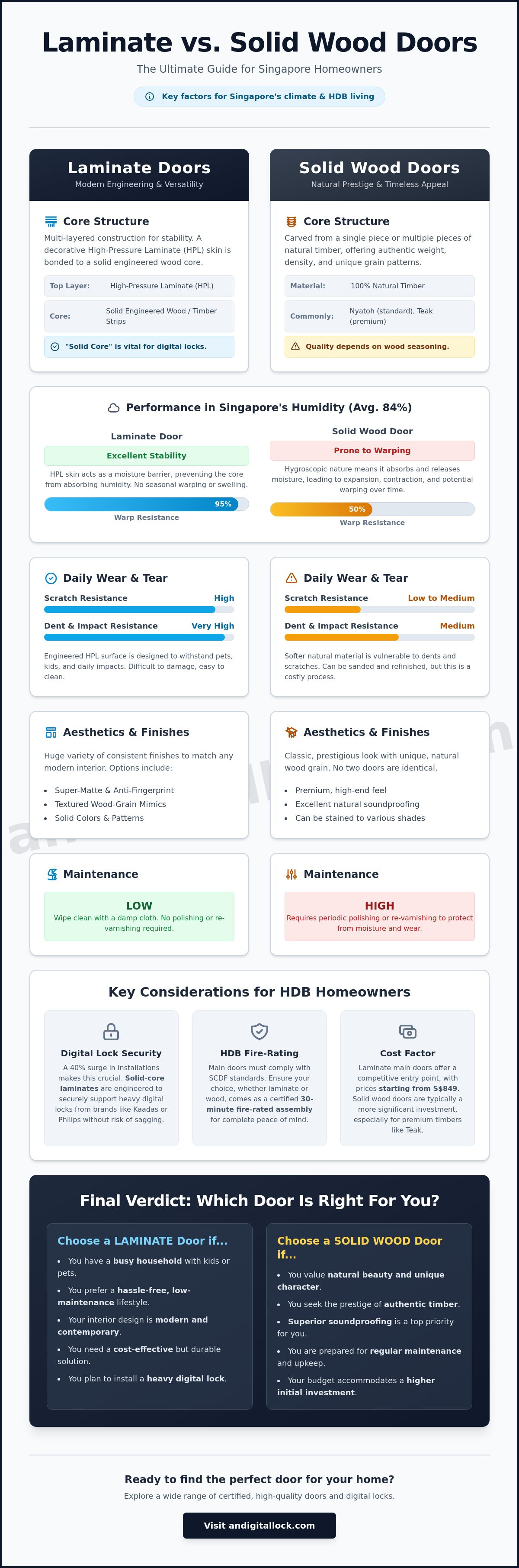
Modern laminate doors are marvels of engineering. They feature a High-Pressure Laminate (HPL) skin. This skin is created by fusing layers of resin and paper under intense heat and pressure. This surface is then bonded to a core, often made of Engineered Wood Explained as a mix of wood fibers and adhesives. This construction makes the door remarkably stable. Unlike natural timber, it doesn't warp when the humidity hits 90%. You can choose from a massive variety of finishes designed for modern living:
- Super-Matte: For a sleek, contemporary look that hides smudges.
- Textured Wood-Grain: Surfaces that mimic the tactile feel of real timber.
- Anti-Fingerprint: High-tech coatings that resist oily marks from frequent use.
The "Solid Core" version is the 2026 gold standard for HDB and condo owners. Unlike cheap hollow-core doors, solid-core laminates use timber strips or high-density boards inside. This extra mass is crucial for your renovation budget. It ensures the door is sturdy enough to support heavy digital locks without sagging or cracking over time. It's a professional-grade solution that offers a premium feel without the high cost of full-grain hardwood. Whether you are looking for a fire-rated main door or sleek bedroom doors, understanding these core differences is your first step toward a hassle-free home.
Durability and Maintenance: The Singapore Humidity Test
Singapore averages 84% relative humidity year-round. This is the ultimate test for any building material. When comparing a laminate door vs solid wood door, durability isn't just about physical strength; it's about dimensional stability. You need a door that won't stick to the frame during the rainy season or develop unsightly cracks during drier months. Your choice will determine how much time and money you spend on upkeep over the next decade.
Warping and Swelling in Tropical Climates
Natural wood is hygroscopic. It constantly absorbs and releases moisture from the air. This causes timber doors to swell in the morning and shrink in the evening. Over several years, this repetitive cycle often leads to warping. You might notice your solid wood door becoming difficult to latch or requiring "planing" (shaving off the edges) to fit the frame again. High-pressure laminate (HPL) solves this by sealing the core. The synthetic skin acts as a permanent moisture barrier. Technical research on Wood-Based Composites and Panel Products confirms that these engineered materials maintain superior stability compared to raw timber in high-humidity environments.
Daily Wear and Tear: Pets, Kids, and Scratches
Life in a busy HDB household involves flying toys, heavy school bags, and enthusiastic pets. Solid wood, particularly softer species like Nyatoh, is vulnerable to dents and deep scratches. While some homeowners feel these marks add character, they can look messy in a sleek, modern apartment. Laminate doors are significantly harder. The HPL surface is specifically engineered to resist impact and sharp objects. While you can technically sand and revarnish a solid wood door to fix damage, it's a dusty and expensive process. Laminate is harder to repair if deeply gouged, but its initial resistance makes such damage much less likely.
- Solid Wood Maintenance: Requires periodic varnishing or oiling to prevent the grain from drying out or rotting.
- Laminate Maintenance: Non-porous surfaces only need a quick wipe with a damp cloth to remove oils and dust.
- Hygiene: Many modern laminates come with antibacterial coatings, making them safer for nurseries and kitchens.
Cleaning is another major differentiator. Wood grain is porous and traps dust and oils over time. This often requires specific wood soaps to keep the finish from looking dull. In contrast, laminate is entirely non-porous. It doesn't harbor bacteria or allergens. For homeowners who want a low-maintenance, "set it and forget it" solution, choosing a high-quality laminate door from a trusted supplier ensures your home looks pristine with minimal effort. A well-installed laminate door can easily last 15 years in a high-traffic household without ever needing a fresh coat of paint.
Aesthetic Versatility vs. Natural Prestige
When evaluating a laminate door vs solid wood door, the visual impact is often the first thing people notice. It’s the difference between a high-tech, curated look and a classic, raw aesthetic. While previous sections focused on durability, your final choice often comes down to how a door complements your interior design. In 2026, Singaporean homeowners are increasingly prioritizing a seamless look that connects their entryway to their living space furniture.
Achieving the Designer Look with Laminate
Laminate doors have evolved far beyond basic wood imitations. You can now choose from textures that mimic stone, fabric, or even brushed metallics. This versatility allows you to match your door perfectly to your vinyl flooring or built-in wardrobes. One of the biggest trends for 2026 is the use of fluted panels. These vertical grooves create a sense of height and luxury. Because laminate is pre-finished, you get 100% consistency across every room. If you order three bedroom doors, the grain pattern and color will be identical. Understanding different door core materials helps you see why these engineered surfaces can support such intricate designs without the risk of the finish peeling or fading over time.
The Timeless Appeal of Solid Timber
There’s an undeniable prestige that comes with natural wood. Many homeowners still prefer the tactile feedback and the heavy "thud" of a solid timber door closing. It feels substantial and expensive. Solid wood also offers a level of customization that laminate cannot match. If you decide to change your home’s color palette in five years, you can sand down and restain a wood door to a different shade. This flexibility is a long-term benefit for those who enjoy refreshing their decor.
- Resale Value: High-quality timber doors are often viewed as a premium asset. However, a dated or poorly maintained wood door can actually detract from a flat's appeal.
- Tactile Warmth: Real wood feels warmer to the touch, which can make a home feel more inviting.
- Bespoke Carvings: Solid wood allows for traditional recessed panels and intricate carvings that laminates can only mimic.
If you're leaning toward a more traditional look but want to ensure it fits modern security standards, check our guide to choosing an HDB main door. Whether you choose the sleek, anti-fingerprint surfaces of modern laminate or the organic beauty of Nyatoh timber, your door serves as the first impression of your home. In the competitive Singapore property market, a well-chosen door isn't just a functional item; it’s a design statement that reflects your personal style and attention to detail.
The Digital Lock Factor: Security and Installation
With the 40% increase in digital lock installations across Singapore reported in 2024, your choice of a laminate door vs solid wood door is now a critical security decision. High-tech locks from brands like Philips, Kaadas, or Solity require more than just a sleek surface; they need a structurally sound foundation. If you choose a door based solely on price without considering the internal core, you risk a failed installation or a compromised entrance. Modern smart security demands a door that can handle precision drilling and heavy hardware without losing its integrity.
Why Solid Core Matters for Smart Security
A heavy-duty mortise lock requires significant cavity space inside the door body. Hollow-core doors, often found in budget laminate options, lack the internal support to hold these mechanisms securely. Without a solid core, the lock body may shift over time, causing the fingerprint scanner or keypad to misalign. Solid wood doors naturally provide this strength, but they can be prone to slight shifts due to humidity. Modern solid-core laminate doors are engineered to handle the 3kg to 5kg weight of premium digital hardware. This density prevents the material from cracking during the drilling process, ensuring a flush, professional fit that keeps your home secure.
HDB Main Door Security Bundles
Security is most effective when treated as a single, integrated system. For HDB owners, this means coordinating your fire-rated main door with a compatible digital lock. In 2026, many homeowners are opting for BTO bundles that include both the door and the lock to ensure full compliance with SCDF regulations. This approach ensures that the door's mandatory 30-minute fire rating isn't voided by an uncertified lock installation.
- Reinforced Hinges: We ensure hinges are upgraded to support the combined weight of solid-core materials and smart hardware.
- Alignment Precision: A solid core prevents the door from sagging, which is the leading cause of digital lock "auto-lock" failures.
- Seamless Integration: AN Digital Lock provides a "hassle-free experience" by matching the door's technical specs to the lock’s requirements before installation begins.
You don't want a door that drags or a lock that jams after just a few months. While solid wood is prestigious, laminate doors with a solid timber core often provide the best balance of weight and structural stability for smart home technology. To see the most reliable setups for your home, explore the best digital lock Singapore options available today. Ready to upgrade your home security? Shop our door and digital lock bundles today for ultimate peace of mind and professional installation.
Final Decision: Which Door is Right for Your Singapore Home?
Making the final call on a laminate door vs solid wood door requires a logical approach based on your specific property type and lifestyle. You should prioritize safety and compliance first, followed by your long-term maintenance capacity. In 2026, the majority of the 13,500 HDB households reaching their MOP are choosing solid-core laminate for its balance of security and ease of use. However, the right choice for you depends on four distinct steps.
HDB Fire-Rating Regulations
Your first step is checking the physical location of your unit. HDB and SCDF regulations mandate a fire-rated main door if your entrance is located within 3 meters of a staircase or lift lobby. In these cases, you must install a door with a half-hour (FD30) fire rating. This assembly, including the frame and self-closing mechanism, must carry a certification label from recognized bodies like TUV SUD PSB or SETSCO. While your main door must meet these strict safety standards, your bedroom doors do not require fire ratings. This allows you to mix materials; many homeowners choose a high-security fire-rated laminate main door while opting for matching non-rated laminate or solid wood doors for the interior.
Cost Comparison: HPL vs. Timber
Budgeting for 2026 involves looking at both the upfront price and the "hidden" lifetime costs. A solid core laminate main door typically ranges from S$849 to S$1,949 depending on the design and fire-rating requirements. For bedroom doors, laminate options are highly affordable, with single doors starting around S$429 or bundle deals available for multiple rooms.
Solid wood doors like Nyatoh timber may have a lower "supply only" price of approximately S$223, but you must factor in additional costs. Professional varnishing, disposal of your old door (often S$15 per set), and transport fees for non-lift landings can quickly close the price gap. Over ten years, the cost of revarnishing wood to prevent rot or warping makes laminate the more economical "set and forget" investment. To get the best value for your renovation, browse our BTO door and digital lock bundles which include professional installation and full compliance checks.
- Choose Laminate if: You want a scratch-resistant, antibacterial surface that requires zero maintenance and matches modern digital locks perfectly.
- Choose Solid Wood if: You prioritize the prestige of natural timber, desire the ability to restain the door in the future, and don't mind periodic oiling or varnishing.
Finalizing your decision comes down to your commitment to upkeep. If you have a busy household with pets and children, the durability of high-pressure laminate (HPL) provides ultimate peace of mind. If you are a purist who loves the organic feel of real grain, solid wood remains a classic choice. Whatever you decide, ensure your door core is solid to support your smart security needs. This ensures a seamless, professional finish that enhances your home’s value for years to come.
Secure Your Home with the Right Foundation
Choosing between a laminate door vs solid wood door involves balancing long-term maintenance with your desired aesthetic. While solid wood offers natural prestige, modern solid-core laminates provide the stability needed to handle Singapore's 84% average humidity without warping. Most importantly, ensuring your door has the structural integrity to support a heavy-duty digital lock is vital for your family's safety. You now know that a solid core prevents sagging and ensures your smart security remains perfectly aligned for years to come.
At AN Digital Lock, we specialize in making this transition seamless. We've earned over 3,700 5-star reviews by providing professional guidance and hassle-free installation by local experts for HDB and condo owners. Whether you need a fire-rated main door or a sleek bedroom upgrade, we offer 0% interest installment plans to make your renovation budget-friendly. Our team handles every detail, from technical advice to the final lock configuration, ensuring a smooth experience from start to finish.
Upgrade your home security with our Door + Digital Lock Bundles today for ultimate peace of mind. Your perfect home entrance is just one smart choice away.
Frequently Asked Questions
Is a laminate door better than a solid wood door for HDB bedrooms?
Laminate doors are generally the superior choice for HDB bedrooms because they offer better moisture resistance and design flexibility. Unlike natural wood, they don't warp in Singapore's humidity; this ensures the door always fits the frame perfectly. Many homeowners choose solid-core laminate for bedrooms to gain better sound insulation for hybrid work setups. This provides a peaceful environment without the high maintenance required by natural timber.
Do laminate doors scratch easily compared to solid timber?
High-pressure laminate (HPL) surfaces are significantly more scratch-resistant than natural solid timber. The resin-bonded outer layer is engineered to withstand impacts from toys, pet claws, and heavy bags. While solid wood like Nyatoh is durable, it is a softer material that dents easily under pressure. Choosing a laminate door vs solid wood door ensures your entryway stays looking new without the need for periodic sanding or revarnishing.
Can I install a digital lock on a laminate door?
You can absolutely install a digital lock on a laminate door, as long as it features a solid core. The internal density is crucial for supporting heavy mortise locks from brands like Philips or Kaadas. Avoid hollow-core doors for main entrances as they cannot support the weight of smart hardware. Our team ensures the door material and lock choice are perfectly compatible before installation begins for a seamless, secure fit.
What is the price difference between laminate and solid wood doors in Singapore?
Laminate main doors typically cost between S$849 and S$1,949, while a basic Nyatoh solid wood door starts at approximately S$223.45 for the supply only. It is important to factor in additional costs for solid wood, such as installation, disposal of old doors, and varnishing. Laminate doors often provide better long-term value because they are pre-finished and don't require expensive maintenance or repair work after the initial purchase.
How do I maintain a solid wood door in high humidity?
Maintaining a solid wood door in Singapore’s 84% average humidity requires periodic oiling or varnishing to prevent the timber from drying out or rotting. You should wipe down the surface regularly with a dry cloth to prevent moisture buildup in the grain. If the wood begins to swell and stick to the frame, professional "planing" might be necessary. This high-maintenance routine is why many homeowners now prefer the moisture-barrier protection of laminate.
Are laminate doors fire-rated for HDB main entrances?
Yes, many laminate doors are specifically certified as fire-rated for HDB main entrances. These doors must meet the mandatory 30-minute fire resistance standard (FD30) required by SCDF. They include a solid fire-core and are tested by bodies like TUV SUD PSB. When you purchase a fire-rated door from us, it comes with the required certification label and a self-closing mechanism to ensure your home remains fully compliant with safety rules.
Can I repaint a laminate door if I change my home decor?
You cannot easily repaint a laminate door because the non-porous HPL surface is designed to repel liquids and stains. Standard wood paint will not bond correctly to the synthetic skin; this leads to peeling and a messy finish. It is much better to select a finish you love from the start. With the wide variety of stone, wood-grain, and matte textures available in 2026, you can find a timeless look that lasts.
How long does it take to install a new door and digital lock bundle?
A standard installation for a new door and digital lock bundle typically takes between 2 to 4 hours to complete. Our local experts handle the entire process, including the removal of your old door and the precision drilling for your new smart lock. We aim for a hassle-free experience that minimizes disruption to your daily routine. Once the physical installation is done, our team will guide you through setting up your fingerprint and pin codes.