


Even a rust-resistant gate needs upkeep. In Singapore, clean a metal gate every one to three months, check it visually monthly, and inspect hinges, alignment and fittings every three to six months. Choosing a rust-resistant gate for Singapore’s rainy season helps, but regular cleaning and timely coating repairs matter too.
Singapore’s mean annual relative humidity is around 82%, according to Meteorological Service Singapore, so moisture deserves attention even when a gate looks sound. Stainless steel resists rust better than mild steel, but it can still corrode. Material choice and protective coatings make a difference, but neither removes the need for care.
This guide compares aluminium, mild steel, wrought iron and stainless steel gates, including what to check in their protective coatings. It also provides a practical cleaning and inspection routine, explains how to spot early rust, and shows how regular maintenance can support a gate’s long-term value.
Key Takeaways
- Set a regular cleaning and inspection routine, and adjust it to your gate’s exposure to dust, traffic and moisture.
- Compare aluminium, mild steel, wrought iron and stainless steel by rust resistance, weight and maintenance needs.
- Look for intact metal-appropriate coatings, and address scratches or peeling paint before moisture reaches the metal.
- Watch for early signs such as rust spots, loose fittings, hinge wear and gate misalignment.
- Factor upkeep and coating condition into your gate decision to support its long-term value.
Is stainless steel maintenance-free in Singapore's climate?
No. Stainless steel resists corrosion better than mild steel, but performance depends on the grade, exposure and upkeep. Match the material to the gate’s location, then keep the surface clean and check regularly for early signs of corrosion.
The mean annual relative humidity is around 82%, according to Meteorological Service Singapore. Singapore’s humid conditions make moisture a practical consideration, while coastal exposure adds salt that can increase corrosion risk. No steel grade makes a gate completely maintenance-free.
-
Assess Humidity and Coastal Exposure
Consider the gate’s exposure before choosing a material. A sheltered entrance and a gate exposed to sea air face different moisture and salt conditions. Coastal salt can settle on stainless steel, so a corrosion-resistant surface is not corrosion-proof. Check whether rain reaches the gate directly, water lingers around joints, or salt and dirt collect on exposed sections.
-
Compare Stainless Steel Corrosion Resistance
Compare the stainless-steel grade, not just the material label. SS316 contains molybdenum, which improves resistance to chlorides compared with less corrosion-resistant stainless grades. That makes SS316 worth considering for coastal exposure, but it can still corrode when salt or contaminants remain on its surface. Plan to clean it and inspect joins, corners and fittings for deposits or damage.
- Match the material and grade to the gate’s exposure. For an entrance near the coast, weigh resistance to salt more heavily than appearance alone. In a sheltered location, consider how much rain reaches the gate and how easy it is to clean. Check whether seams or fittings could collect dirt and moisture. These areas need attention even when the main surface looks clean.
- Factor heat and monsoon rain into your maintenance routine. Stainless steel can withstand outdoor conditions, but heat does not prevent corrosion from salt or surface contamination. Rain may wash away some deposits, but water can remain around joints and hardware. After heavy rain, check for trapped moisture or residue and wipe affected areas dry. Don’t assume rainfall cleans the entire gate.
- Plan for regular maintenance before deciding stainless steel is the best fit. Use mild soap and water to remove dust, salt residue and pollutants, then dry the surface. Inspect welds, edges and moving fittings for rust marks or buildup. If the gate is near the coast, pay particular attention to salt deposits. Regular care helps preserve corrosion resistance, but cannot eliminate all risk.
Yes. Applicable requirements can affect gate design or installation, particularly near fire escape routes or emergency access. For these locations, verify requirements with the Singapore Civil Defence Force or relevant building authority. Follow applicable HDB conditions when selecting a gate for an HDB flat.
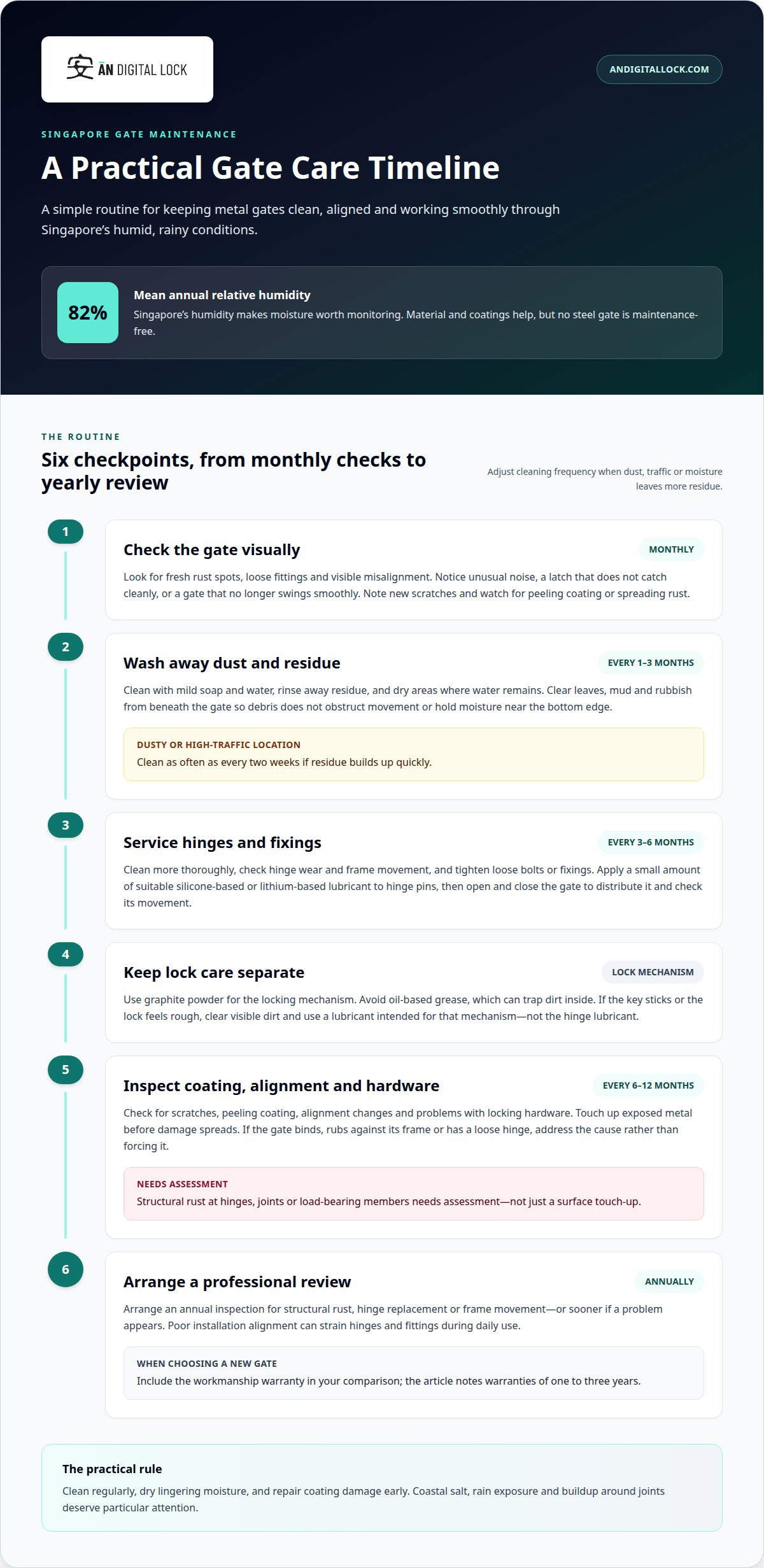
Suggested inspection and maintenance intervals
Use a simple routine to catch wear before it affects the gate’s movement or locking. Adjust how often you clean it if dust, traffic or exposure leaves more residue. Maintaining a rust proof gate for Singapore's rainy season means keeping up with small tasks rather than waiting for visible damage.
- Check the gate monthly for fresh rust spots, loose fittings, visible misalignment and unusual noise when opening or closing it. Notice whether the latch catches cleanly and the gate swings smoothly. A consistent checklist makes small changes easier to spot. If you find a new scratch, note its location and monitor the coating for peeling or spreading rust.
- Clean the gate every one to three months with mild soap and water. Monthly cleaning is practical in a clean area; near heavy traffic or dust, clean it every two weeks. Rinse away residue and dry surfaces where water remains. Clear leaves, mud and rubbish from beneath the gate so debris doesn’t obstruct movement or hold moisture near the bottom edge.
- Every three to six months, clean the gate more thoroughly, lubricate its hinges and tighten bolts and fixings. Check for hinge wear, movement in the frame and loose screws. Apply a suitable silicone-based or lithium-based lubricant sparingly to hinge pins, then open and close the gate to distribute it and check that it swings smoothly.
- Maintain the lock separately from the hinges. Use graphite powder for the locking mechanism, because oil-based grease can trap dirt inside. Don’t apply the same lubricant to every moving part. If the key sticks or the lock feels rough, clear visible dirt first, then use a lubricant intended for that mechanism. This helps prevent residue from building up inside the lock.
- Every six to twelve months, inspect the coating, alignment and locking hardware. Touch up exposed metal before peeling or scratches spread. If the gate binds, rubs against its frame or has a loose hinge, address the cause rather than forcing it. Structural rust at hinges, joints or load-bearing members needs assessment, not just a surface touch-up. These checks help keep a rust proof gate for Singapore's rainy season in serviceable condition.
- Arrange an annual professional inspection for structural rust, hinge replacement or frame movement, or sooner if a problem appears. Installation workmanship matters because poor alignment can strain hinges and fittings during daily use. Compare a workmanship warranty of one to three years as part of a new-gate decision. To connect upkeep with a suitable replacement, review gate material choices alongside cleaning access and exposure.
Aluminium, mild steel, wrought iron and stainless steel gates
Compare materials by weight, corrosion resistance, coating needs and exposure. The right choice balances outdoor durability with the maintenance you’re prepared to do.
Powder-coated aluminium and galvanised steel have no single fixed service life in Singapore. Durability depends on coating condition, workmanship, exposure to moisture and salt, and timely upkeep.
- Choose aluminium when low weight and rust resistance matter. Aluminium resists rust and is lighter than steel, which can make a gate easier to move. Its protective finish still needs care: check for scratches and coating damage, especially on edges or fittings exposed to rain. Keeping the surface intact helps protect the finish from moisture.
- Choose mild steel for a sturdy gate, but include coating care in the decision. Mild steel can suit Singapore’s humid climate when properly coated; exposed or damaged areas can rust. Look for scratches, peeling paint and rust spots, then arrange a suitable metal coating touch-up. Mild steel is 100% recyclable, an additional material consideration when comparing options.
- Assess wrought iron by its finish and exposed details. Its decorative bars and joints can collect water or dirt, so inspect those areas closely. Rust-resistant metal is useful in Singapore, but wrought iron still needs a protective coating and prompt attention to damaged spots. Choose a design that leaves joints accessible for cleaning and inspection.
- Consider stainless steel for greater rust resistance than mild steel, not as a maintenance-free option. Salt-air exposure and surface contamination can still cause corrosion. For outdoor locks near coastal conditions, compare stainless grades: SS316 offers stronger resistance to chlorides than less resistant grades. Keep the lock surface clean, and check crevices where residue can gather.
- Remove surface marks from stainless steel gently. Wash the affected area with mild soap and water, wipe it with a soft cloth, then dry it. Avoid rough scrubbing that could scratch the finish. If the mark remains or returns around a joint, check for trapped residue or coating damage instead of treating the visible spot as the whole problem.
- Match the material to the gate’s exposure and maintenance needs. For a sheltered entrance, compare the coating’s condition and how easy it is to clean. Near the coast, give resistance to salt greater weight. Check the whole gate, including hinges, joints and lock hardware. Even a corrosion-resistant steel gate needs regular cleaning and prompt repair of damaged finishes.
Fabrication methods and coating systems
Protective coatings help shield gate metal from rain and moisture. Check both the finish and vulnerable areas created during fabrication.
- Inspect joins, edges and corners before choosing a gate. These areas can be harder to coat evenly and may collect water or dirt. Look for missed patches, bare metal, rough coating and gaps around joints. An even finish across the whole frame gives homeowners a clearer basis for comparing workmanship and ongoing care.
- Choose paint made for metal and check its product description for anti-rust protection. On mild steel, paint or anti-rust oil can help protect against rain and moisture, particularly in exposed or coastal locations. A coating is a barrier, not a reason to ignore scratches. Once bare metal is exposed, water can reach it directly.
- Check the coating from top to bottom before rainy months. Look for cracks, rust marks, loose screws and openings in the paint. Pay close attention to lower edges, joints and areas near hinges, where water or debris may linger. Cover open spots with suitable paint or filler to reduce the paths moisture can take into cracks.
- Deal with scratches promptly rather than waiting for a full repaint. Clean and dry the affected area, then apply metal paint according to its product directions. If rust is visible, remove surface rust with sandpaper or a wire brush, wash and dry the area, then repaint it. Don’t paint over loose rust or dirt.
- Let the coating’s condition guide repainting. A general recommendation is to repaint a metal gate every three to five years for protection. Repaint sooner if the paint starts peeling, because loose coating no longer protects the metal consistently. A fixed schedule alone won’t show whether the gate has scratches, peeling or exposed patches.
- Keep a simple record of coating condition and repairs. Note when you find a scratch, where you apply touch-up paint, and whether peeling returns. This helps distinguish a small surface repair from a recurring issue around a joint or edge. When comparing finishes, consider how easy each is to inspect and touch up.
Gate affordability and long-term value
Compare gates by their upkeep, not just their initial price. In Singapore, material, coating, exposure and repair needs all shape long-term value. Use these steps to assess which option suits your home and maintenance priorities.
- Define the setting before comparing materials. An HDB entrance, a condominium corridor and a landed property entrance can have different space, exposure and access needs. Note whether rain reaches the gate directly, whether sea air may affect it, and how easy it is to clean both sides. These details help you compare like with like.
- Match the material to the upkeep you can manage. Aluminium is lightweight and rust-resistant; mild steel needs an intact protective coating. Stainless steel resists rust better than mild steel, but surface contamination can still cause corrosion. Wrought iron’s decorative joins also need inspection. A lower-cost choice at the outset may require more attention if its finish gets damaged.
- Assess repairability before choosing a design. A gate with accessible joints, hinges and edges is easier to inspect and maintain than one with hard-to-reach recesses. Consider whether a small coating repair can fix a scratch or whether the damage affects a larger section. A finish that is easy to clean and touch up can make ongoing care more manageable.
- Include workmanship and installation in your value comparison. Poor alignment can strain hinges and make a gate harder to open or lock. Check that the gate sits squarely, moves without binding and closes securely. For a new installation, compare the workmanship warranty; a one-to-three-year warranty is a useful comparison point when evaluating suppliers.
- Consider how the gate fits the property over time. A design that suits a landed entrance may not suit a compact HDB entry, while a decorative finish may attract attention but require more detailed cleaning. Prioritise the balance you need between appearance, access, corrosion resistance and care. Then explore metal gate options that fit your home’s setting and upkeep priorities.
AN Digital Lock: Metal Gates
AN Digital Lock sells metal gates for homeowners choosing an entrance gate for Singapore’s climate. Narrow your priorities by considering coating care, coastal exposure and access for cleaning. A considered choice can help you balance appearance, everyday use and upkeep over time.
If you’re planning an entrance upgrade, AN Digital Lock also sells digital door locks and wooden doors alongside metal gates. Start with the gate’s material, finish and practical fit for your home, then consider which other entrance products meet your needs.
Contact AN Digital Lock to discuss metal gates for your home.
Choose a Gate That Fits Your Home
Turn the comparison into a clear set of priorities: consider where the gate sits, how much exposure it gets, which finish suits its design and how easily you can maintain it. A rust-proof gate for Singapore’s rainy season is a practical choice of material, protective finish and ongoing care, not a promise of zero maintenance.
Think beyond the initial selection. A gate should suit your entrance and daily routine while remaining manageable to clean, inspect and maintain. If you’re planning an upgrade, bring those priorities together before deciding what fits your home.
Contact AN Digital Lock for gate advice and take the next step towards a considered entrance upgrade.
Frequently Asked Questions
How Often Should You Clean It?
Clean a residential metal gate every one to three months, adjusting the interval to its surroundings. A gate beside a dusty road may need cleaning every two weeks, while one at a cleaner, sheltered entrance can follow a monthly routine. Use mild soap and water, then dry areas where water remains. A quick wipe after rain helps prevent water and residue from sitting on the finish.
How to Keep Rust Away?
Keep the coating intact, remove grime and address scratches before bare metal is exposed. Wash the gate with mild soap and water, dry it, and clear leaves or mud from underneath. Inspect edges, joints and fasteners, where moisture or debris can collect. For a small rust patch on mild steel, brush or sand away the rust, wash and dry the spot, then repaint it with paint made for metal.
Which gate materials resist rust best in Singapore’s humid, rainy climate?
Aluminium and stainless steel resist rust well, and stainless steel generally offers greater rust resistance than mild steel. Galvanised steel is another rust-resistant option. No material is entirely immune to corrosion: coastal salt, dirt, damaged finishes and water trapped at joints can all affect performance. Before deciding what suits your entrance, compare the gate’s exposure and finish condition, not just its material.
Are aluminium, stainless steel, or galvanized steel gates best for Singapore weather?
There isn’t one best material for every home. Aluminium is lightweight and rust-resistant; stainless steel offers greater rust resistance than mild steel, though salt or contamination can still cause corrosion. Galvanised steel is another option. Compare the gate’s exposure to rain and coastal air, its finish and design, and how easy it is to clean. A sheltered entrance and a salt-exposed location may call for different priorities.
What anti-rust coatings and finishes are suitable for outdoor gates in Singapore?
Choose paint made for metal, preferably with anti-rust protection stated in the product description. For mild steel, anti-rust oil or paint can help protect against rain and moisture. Check that the finish covers edges and joins as well as broad, visible panels. Treat scratches promptly and repaint if the coating peels. Before touch-ups, clean and dry the area, then follow the paint manufacturer’s directions.
How much does a rust-resistant gate cost in Singapore, including installation?
The total depends on the gate’s material, dimensions, design, finish and installation requirements. A straightforward gate and a customised design can involve different fabrication and fitting needs, so the material alone won’t determine the total. Include the existing frame’s condition and any required adjustments in your comparison. For a useful assessment, first define the opening and preferred design, then consider the full installed scope.
What gate maintenance prevents rust during Singapore’s rainy season, and how often is it needed?
Follow a layered routine: inspect the gate visually each month, clean it every one to three months, and check hinges, alignment and fittings every three to six months. Before rainy months, inspect the coating from top to bottom and cover cracks or open spots. After heavy rain, dry areas where water lingers. Clean more often if traffic dust or coastal residue builds up quickly.
What are the signs of gate corrosion, and how can rust be repaired?
Look for orange or brown spots, blistering or peeling paint, rough patches, and rust around joints or fittings. For a surface spot on mild steel, remove rust with sandpaper or a wire brush, wash and dry the area, then repaint it. Rust affecting hinges, joints or load-bearing parts is structural, not merely cosmetic; surface paint alone won’t fix the damage. Also watch for movement or misalignment.