


A digital lock for a master bedroom door in Singapore can be a practical choice if the lock suits the door and how you use the room. For better protection and ease of use, a proper bedroom door lock, such as a digital lock or deadbolt, is recommended over a padlock. The right option depends on the door’s construction, the installation method and the access features you’ll actually use.
It’s easy to focus on fingerprint entry or a PIN, but fit comes first. Bedroom doors may be laminate, solid wood or sliding, and not every lock suits every door. If you’re renting, consider permission and how the original hardware can be restored before choosing a lock.
This guide explains how to assess whether a digital lock makes sense for your bedroom, what to check before installation and which functions suit your routine. You’ll also learn how to compare options for different door types and consider rental use, so you can choose without paying for features you don’t need.
Key Takeaways
- Start by matching the lock to your door’s material, layout and existing hardware; a suitable fit matters more than a long feature list.
- Compare retrofit and add-on options by how they affect the door, everyday access and the room’s intended privacy.
- Choose access methods that suit your routine, such as a PIN, fingerprint, card or mechanical key, depending on the lock model.
- If you rent, consider permission and how the original lock can be restored before making changes.
- Use the guide’s compatibility and installation checks to decide when a digital lock is a practical bedroom upgrade.
Do you provide free digital lock installation in Singapore?
Free installation isn’t automatic; whether it’s included depends on the selected lock’s purchase terms. For battery failure, electronic entry may stop, so choose a model with mechanical-key access where available. If the lock malfunctions, follow its documented emergency procedure and don’t force the handle.
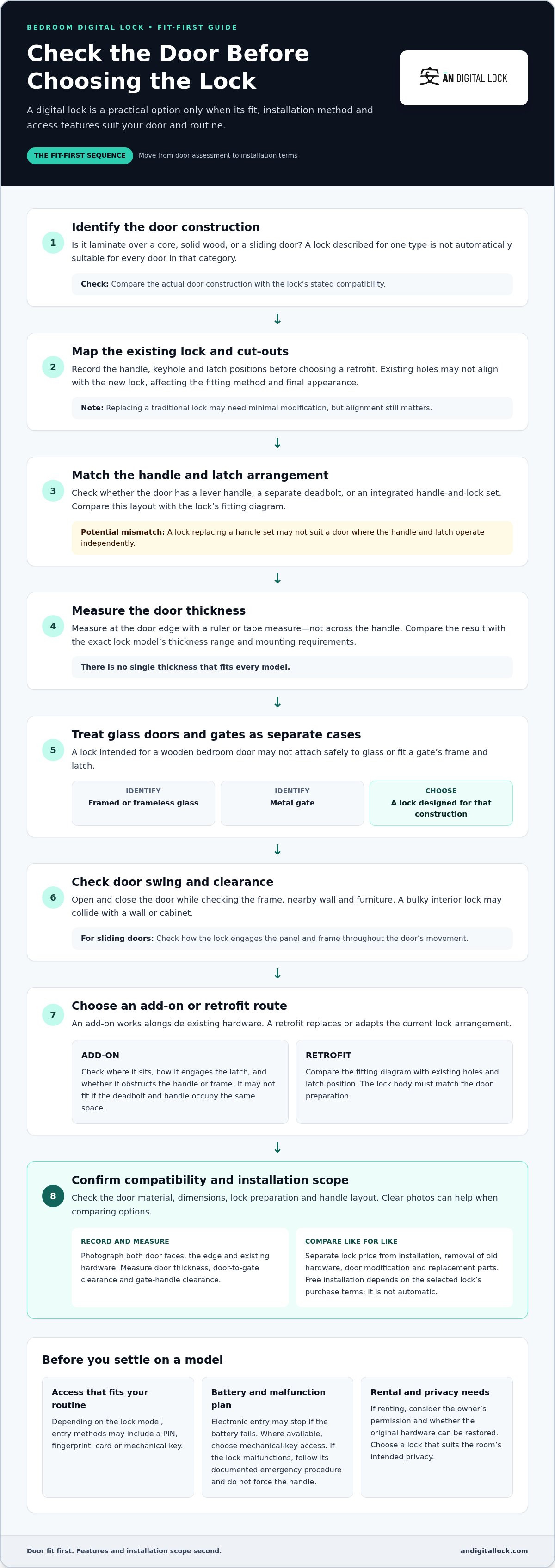
- Check the door material first. Digital locks described for laminate bedroom doors, solid wooden doors and selected sliding doors aren’t automatically suitable for every door in those categories. For example, note whether your bedroom door is laminate over a core or solid wood, then compare that construction with the lock’s stated compatibility.
- Inspect the existing lock and cut-outs. Record the handle, keyhole and latch positions before choosing a retrofit. Replacing a traditional lock may require minimal modifications, but existing holes may not align with the new lock. That alignment affects the fitting method and final appearance.
- Check the handle and latch arrangement. Note whether the door has a lever handle, a separate deadbolt or an integrated handle-and-lock set. Compare these parts with the digital lock’s fitting diagram. A lock that replaces a handle set may not suit a door where the handle and latch operate independently.
- Measure the door thickness against the lock’s range. Use a ruler or tape measure at the door edge, not across the handle. Compare the result with the lock’s stated thickness compatibility and mounting requirements. No single thickness fits every model, so use the exact specification for the lock being considered.
- Treat glass doors and gates as separate compatibility cases. A lock intended for a wooden bedroom door may not attach safely to glass or fit a gate’s frame and latch. Identify whether the surface is framed glass, frameless glass or metal, then choose a lock designed for that construction.
- Consider the door swing and clearance. Open and close the door while checking the frame, nearby wall and furniture. A bulky interior lock may collide with a wall or cabinet. For a sliding door, check how the lock engages the panel and frame throughout its movement.
- Assess compatibility before installation. AN Digital Lock offers digital locks and bedroom doors, and compatibility depends on the door material, dimensions, lock preparation and handle layout. Take clear photos of both door faces, the edge and existing hardware when comparing options. Measure the door thickness, door-to-gate clearance and gate-handle clearance before purchasing.
- Confirm what installation means in the offer. Separate the lock price from installation inclusion, door modification and any replacement hardware. Free installation should be treated as an offer term, not an assumed feature. A written description of the included work helps you compare like-for-like and understand the planned fitting method.
Can I put a smart lock on my bedroom door?
Yes, a digital lock for a master bedroom door in Singapore can suit the room if it matches the door and your privacy needs. For HDB and condominium homes, distinguish an interior bedroom-door change from work affecting the flat entrance or shared areas.
-
Explore Add-On and Retrofit Options
Compare an add-on lock with a full retrofit before choosing a model. An add-on works alongside existing hardware, while a retrofit replaces or adapts the current lock arrangement. Check where each option sits, how it engages the latch and whether it obstructs the handle or door frame.
For example, an add-on may not fit if the existing deadbolt and handle occupy the same space. A retrofit can create a more integrated arrangement, but its lock body must match the door preparation. Compare the fitting diagram with the existing holes and latch position before deciding.
-
Compare Lock Options and Prices
Compare the complete lock type and installation scope, not just the advertised product price. The total depends on the lock design, included hardware, fitting requirements and door modifications. For a digital lock for a master bedroom door in Singapore, compare quotations in Singapore dollars and check what each includes.
An add-on lock and a full mortise replacement involve different hardware and fitting work. Check whether the stated price includes installation, removal of the old lock and necessary adjustments. Don’t compare a hardware-only price with an installed price, since they cover different work.
-
Check HDB or Condo Restrictions
Separate an interior bedroom door from the flat’s main entrance when considering HDB or condominium requirements. An interior lock affects the room door itself; work involving shared areas, common property or an external-facing door raises different considerations.
Identify the proposed work before altering the door. A like-for-like interior retrofit differs from drilling into shared structures or changing a common-area fitting. In a rental, get the owner’s permission and consider whether the original lock can be restored. Don’t assume entrance-door requirements automatically apply to bedroom doors.
-
Match mortise and deadbolt designs to your routine. A mortise lock places its lock body inside a door cut-out, while a deadbolt uses a separate bolt. Check whether the bedroom door already has a mortise cavity, separate bolt or simple latch. Changing the arrangement can affect fitting work, handle operation and appearance.
Choose based on how you use the room. A separate deadbolt may suit someone who wants to keep the existing handle. A mortise option may suit a door designed for an integrated lock body. Compare each design with the actual door preparation before buying.
-
Plan installation around the door. Check the clearance for the interior panel, latch alignment and door swing. A bulky lock may collide with a nearby wall or cabinet. Compare the model’s fitting instructions with the door’s material and existing lock layout.
Keep photos of both door faces and the lock edge for reference. These details help you compare a retrofit with a replacement and spot possible conflicts with the existing handle.
Choosing a lock by door type and installation method
Suitable options include digital locks made for laminate bedroom doors, solid wooden doors and selected sliding doors. Match the model and installation method to the actual door, not just its room or appearance.
-
Identify the door construction. Check whether the door is laminate, solid wood or a sliding panel. These are distinct compatibility categories, and a lock suitable for one isn’t automatically suitable for another. A sliding-door lock, for example, must engage the panel and frame without obstructing movement.
Record the door type before comparing models. A clear photo of the door’s edge and both faces can help show its construction and existing hardware.
-
Match the lock to the existing preparation. Inspect the current handle, latch and cut-outs, then compare their positions with the new lock’s fitting diagram. If the lock body needs different holes, installation may require modifications. Replacing a traditional lock may involve minimal modifications, but existing hardware still affects the fit.
For example, a new lock may cover an old keyhole differently from a model designed for the same handle position. Check the layout on both sides of the door before selecting a retrofit.
-
Check sliding-door engagement. Open and close the panel while observing how its edge meets the frame. The bolt or latch must align with its receiving point when the door is closed. A lock that fits the panel but misses the frame won’t secure the door correctly.
Compare the lock’s intended use with the sliding door’s track and closing direction. Don’t assume a lock designed for a hinged wooden door will work on a sliding panel.
-
Choose access functions for the bedroom routine. Depending on the model, access may use a fingerprint, PIN code, Bluetooth, WiFi, RFID card, mobile app or mechanical key. Select methods that suit the people using the room. For example, a PIN code may be convenient for shared access, while a mechanical key offers a separate entry method.
Check the model’s listed functions before deciding. Extra access methods are useful only when they suit the household’s daily routine and the door’s installation requirements.
-
Plan professional installation in Singapore. A professional consultation is recommended for an existing door upgrade. The installer can assess the material, lock preparation and alignment together. This is especially useful when a laminate finish, unusual handle position or sliding mechanism affects where the lock can sit.
Prepare photos of the door faces, edge and current lock. These details help you compare installation options for your actual door rather than relying on a generic product description.
-
Test the completed fit before relying on it. Operate the handle and lock with the door open, then close the door and test the latch. Check that the panel moves freely, the bolt aligns with the frame and the inside release works smoothly.
For a PIN-code lock, test code entry and confirm the door secures and opens as intended. Checking both sides can reveal rubbing, misalignment or obstructed handle movement.
Digital and smart lock functions
Choose functions based on daily access, privacy and emergency exit. Digital locks vary by model, so compare the actual controls before deciding.
-
Review Digital and Smart Lock Functions
List the access methods you’ll use, then compare them with each lock’s specifications. Bedroom models may offer fingerprint, PIN code, Bluetooth, WiFi, RFID card, mobile app or mechanical-key access. A PIN entry may support up to 20 digits, depending on the model.
For example, choose a PIN if household members need separate, familiar access. A card may suit someone who prefers not to use an app. Avoid paying for functions that won’t fit your routine, and check how the lock operates from inside.
-
Assess Smart Lock Data Security
Review how the smart lock handles app accounts, PINs and shared access before connecting it. Use a unique password for the lock account rather than reusing your email password. If the app supports separate user access, give each household member their own credentials instead of sharing one login.
Check how to remove a PIN, card or app user when access changes. For example, delete a former occupant’s credentials instead of relying on a changed door routine. Keep the app and lock instructions available, and avoid sharing access codes in group chats.
-
Check Emergency Access and Fire Evacuation Safety
Choose a lock that can be opened from inside without relying on a phone, network or external power. Bedroom digital locks are suitable for emergency access only when their interior release works as needed. Test the inside handle or release with the door closed, and learn the model’s manual override procedure.
Keep the exit path clear of furniture, and show every occupant how to open the lock. A phone app or fingerprint reader should not be the only way out. Follow the lock’s instructions for battery failure and emergency operation.
-
Match smart features to the bedroom’s privacy needs. A bedroom lock may be used differently from a main entrance lock. Decide who needs access and whether app control adds practical value. A PIN or RFID card may be enough for household access without connecting the lock to Wi-Fi.
Check whether the model’s access options remain usable when a phone is unavailable. Keep any mechanical key in an accessible backup location, and make sure each user understands how to operate the interior release.
-
Test the selected functions before regular use. Enter the PIN, try each assigned card or fingerprint, and test the inside release. If the model uses Bluetooth, WiFi or a mobile app, test access under the conditions you expect at home. Confirm that the lock indicates successful locking and unlocking.
Review the instructions with everyone who uses the bedroom. A quick practice run can reveal confusing steps, such as an unfamiliar release button or an app login only one person knows.
Digital locks for master bedrooms and rental rooms
A master bedroom and a rented room have different access needs. Decide who should unlock the door, manage access and restore the hardware before choosing a lock.
-
Define the room’s privacy needs. For a master bedroom shared by a couple, consider whether both occupants need separate access methods. For a rented room, focus on the occupant’s independent access and the household’s agreed entry arrangements. Choose a lock that supports privacy without creating confusion about who can enter.
Write down who needs access, such as the tenant, room owner or household member. This simple list helps narrow the choice between PIN, fingerprint, card or key access.
-
Agree on access before installation. In a rental, discuss the proposed lock with the property owner before changing the door hardware. Agree who keeps any mechanical key and how authorised access works. For example, decide whether the occupant manages their own PIN or shares access with the owner.
Put the arrangement in writing, including how access codes are removed when occupancy changes. Clear expectations help prevent disputes about privacy, entry and responsibility for the lock.
-
Choose access that suits each occupant. A PIN may suit someone who doesn’t want to carry a card. Fingerprint entry may suit a regular occupant who prefers hands-free access. Depending on the model, a mechanical key can provide a separate way to unlock the door.
For a shared master bedroom, choose a method both occupants can use comfortably. Avoid making one person the sole keeper of the only working access method.
-
Plan for changes in occupancy. A rented room may have a new occupant later, while a master bedroom’s users may change less often. Check how the lock handles PIN deletion, card removal or user changes. Removing a departing tenant’s access should not require handing over the current occupant’s personal credentials.
Keep a simple access handover record. Note which PINs or cards were added or removed, without recording sensitive codes somewhere exposed.
-
Protect the original door condition. Before installing a lock in a rental, photograph the door, handle and existing lock. Compare the new lock’s fitting method with the original hardware, and agree whether removed parts should be stored. A retrofit using existing preparation may make restoration simpler than a major alteration.
Check the door material, thickness and lock layout first. A digital lock must suit the actual door, not just the room’s intended use.
-
Make a practical choice for your household. A master bedroom lock can prioritise simple daily entry for its occupants. A rental-room lock also needs a clear plan for permission, access changes and restoring the door. Choose a model only after these needs are agreed.
For a bedroom-door option that fits your use, explore digital door locks and compare the available access methods with your room’s arrangement.
AN Digital Lock: Digital Door Locks
AN Digital Lock sells digital locks for homeowners comparing bedroom lock options, along with bedroom doors and other entrance products. Narrow your choice by door type, installation method and access functions your household will use. If the existing door also needs replacing, compare a suitable lock with a bedroom door so the hardware and door work together.
A digital lock may suit a master bedroom when its fit and everyday operation align with the room’s needs. For rental rooms, consider access handover and restoring the original door hardware. AN Digital Lock also sells metal gates and safe boxes for other home security needs, though these serve different purposes from a bedroom lock.
Visit AN Digital Lock’s website to explore its offerings.
Make your bedroom upgrade the right fit
Before choosing a digital lock for your master bedroom door in Singapore, consider how the room may be used in the future. A change in occupancy, a replacement door or a different access routine can affect which option remains practical. Choose with today’s needs and future flexibility in mind.
AN Digital Lock offers digital locks, wooden doors and metal gates. If you’re planning more than a bedroom upgrade, comparing the door and related home entrance products together can help you plan the project.
Share your door type and priorities to discuss suitable options. Contact AN Digital Lock for advice and take the next step towards a bedroom setup that feels right for your home.
Frequently Asked Questions
Is it easy to upgrade from a traditional lock to a digital lock?
Often, yes. Replacing a traditional lock may require only minimal modifications, especially when the new lock aligns with the existing cut-outs and latch. A replacement that uses the current handle position may need less alteration than a different lock layout. Compare the existing lock’s position and door preparation with the new model’s fitting requirements to understand whether it’s a simple retrofit or a more involved replacement.
So How To Choose?
Start with the door, then decide how you want to unlock it. Note the door material, existing handle arrangement and who needs access. Next, choose practical functions, such as a PIN for shared household use or a mechanical key as backup. For a rental room, include the owner’s approval and the door’s return condition in your decision. This order keeps convenience, privacy and compatibility in view before you compare designs.
How much do digital locks for bedroom doors cost in Singapore, including installation?
The total depends on the lock model, fitting requirements and any door modifications. Standard delivery and installation are included unless the product page, quotation or promotion states otherwise. Compare the same scope across options: hardware, removal of the existing lock, installation and adjustments. A model that fits the existing preparation may involve different work from one requiring new cut-outs, so assess the door alongside the lock.
Are digital locks compatible with common bedroom door types and thicknesses in Singapore?
Some models suit laminate bedroom doors, solid wooden doors and selected sliding doors. Compatibility depends on the specific lock and door construction, not just the room type. The stated compatible door thickness is approximately 35 mm to 60 mm. Measure the door edge and compare it with the selected lock’s requirements. A sliding panel also needs a lock that engages correctly with its frame.
How do PIN, fingerprint, card, app, and mechanical-key access compare for bedroom digital locks?
A PIN is easy to share but should remain private. Fingerprint entry avoids carrying a token, while an RFID card can be given to an authorised user. App access depends on a compatible phone and the model’s supported connection. A mechanical key offers a separate physical entry method. Since functions vary by model, choose an access mix your household can use reliably, including a backup for times when a phone or card isn’t available.
How is a digital lock installed on a master bedroom door in Singapore?
Installation usually involves removing the existing hardware, fitting the lock body and exterior unit, then testing the latch and access methods. It typically takes 1 to 4 hours. Installation is scheduled Monday to Saturday, excluding Sundays and public holidays. Building-management drilling limits also apply: no drilling after 5 pm on weekdays or after 12 pm on Saturdays. Plan the appointment around these restrictions and the door’s fitting needs.