


Imagine reaching your HDB front door with heavy grocery bags in both hands, only to realize your keys are buried at the bottom of your backpack. It's a common frustration that makes a simple homecoming feel like an obstacle course. You've likely considered upgrading, but maybe you're worried about sensor failure or whether a fingerprint door lock can actually withstand Singapore's intense humidity.
We understand that choosing the right security for your family is a big decision. You want a system that's reliable, fast, and fully compliant with the latest fire safety regulations. This guide will help you discover how biometric technology provides unparalleled security and convenience for every Singaporean household. We'll cut through the confusion surrounding premium brands like Philips, Solity, and Zigbang to find your perfect match.
You'll learn about the latest 2026 sensor advancements, the importance of Certificate of Conformity (COC) standards for fire-rated doors, and how to track every entry right from your smartphone. We're also diving into the best BTO bundles to give your main door and metal gate a sleek, modern aesthetic that enhances your home's value.
Key Takeaways
- Eliminate the hassle of lost keys by understanding why biometric access is the new security standard for modern Singaporean households.
- Compare semiconductor and optical sensors to find a fingerprint door lock that offers 0.3-second recognition and long-term reliability.
- Learn how to navigate Singapore's strict fire-safety regulations and Certificate of Conformity (COC) requirements for HDB main doors.
- Discover the benefits of matching your main door lock with a digital gate lock through specialized BTO bundles for a seamless entry experience.
- Identify why authorized dealers for brands like Philips, Zigbang, and Solity provide the best long-term maintenance and support for your investment.
Why Fingerprint Door Locks are the New Standard for Singapore Homes
The era of fumbling for metal keys is finally ending. For decades, mechanical locks were the only option for homeowners, but they carry inherent risks like unauthorized duplication and the constant threat of loss. Modern smart lock technology has replaced these physical vulnerabilities with biological certainty. A fingerprint door lock uses high-resolution sensors to map the unique ridges of your skin, converting your biology into a secure digital key that cannot be stolen or misplaced.
Singaporean homeowners are shifting toward biometrics because they offer a level of personalized security that keys and PINs cannot match. It's about more than just high-tech aesthetics; it's about creating a frictionless lifestyle. Whether you are living in a new BTO flat or a luxury condominium, the transition to biometric access represents a significant upgrade in both safety and daily convenience.
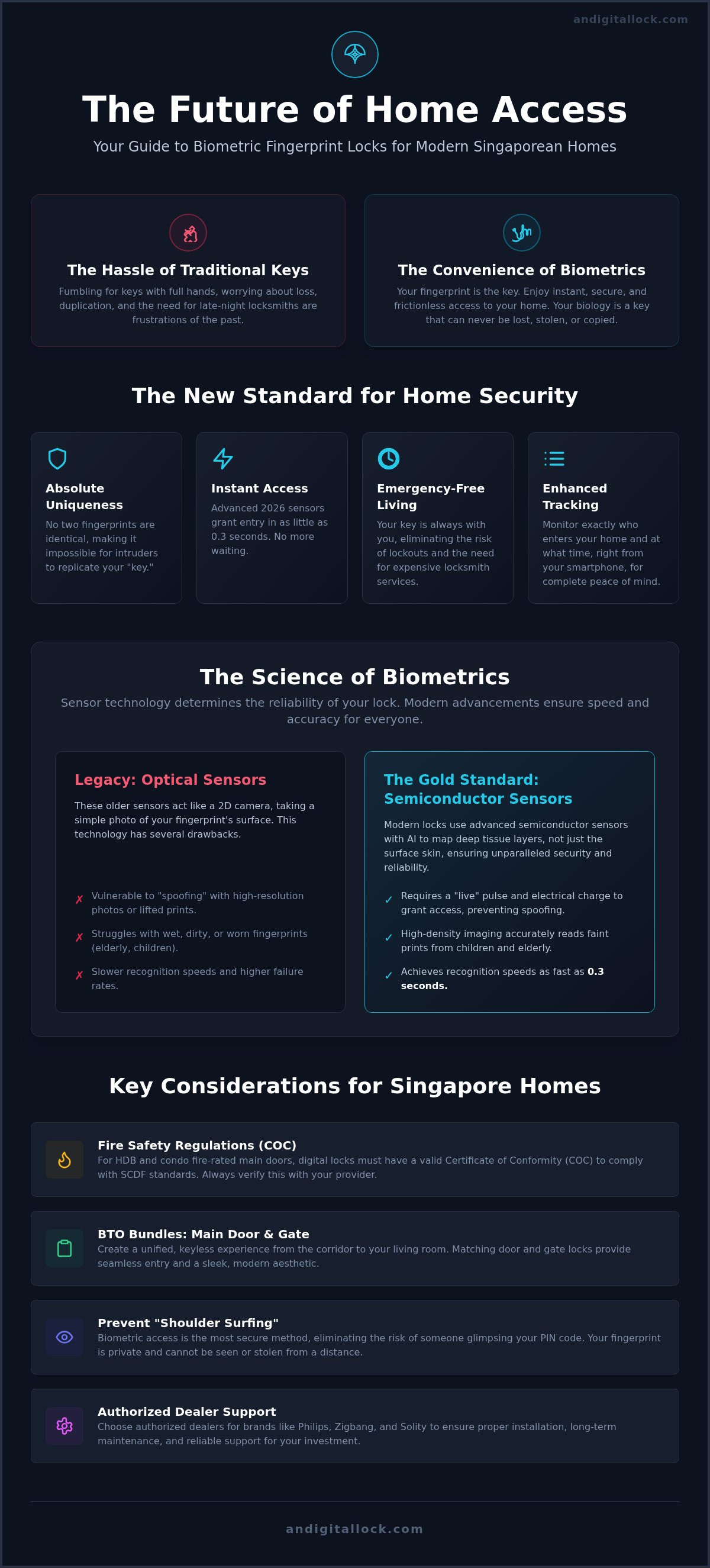
- Absolute Uniqueness: No two fingerprints are identical, making it impossible for intruders to replicate your "key."
- Instant Access: Modern 2026 sensors allow you to enter your home in under 0.5 seconds.
- Emergency-Free Living: Your key is always with you, which effectively eliminates the need for expensive late-night locksmith services.
- Enhanced Tracking: Most biometric systems allow you to monitor exactly who enters your home and at what time.
The Convenience of Keyless Living in 2026
In 2026, home security is increasingly focused on preventing "shoulder surfing." This occurs when someone glimpses your PIN code as you enter it. Biometric authentication is the most secure consumer access method available today. It streamlines entry for busy professionals and families carrying groceries or managing young children. You simply touch the sensor and walk in. This technology removes the mental load of remembering codes or managing multiple sets of keys for family members and domestic helpers.
Addressing the 'Singapore Context': HDB and Condo Requirements
Living in Singapore brings specific technical requirements, especially regarding fire safety regulations. For HDB owners, any digital lock installed on a fire-rated door must have a valid Certificate of Conformity (COC) to meet SCDF standards. We often recommend matching your main entrance with a digital lock singapore for your metal gate. This creates a unified, keyless experience from the common corridor to your living room. Localized support from experts like AN Digital Lock ensures your installation complies with all building management rules while providing long-term maintenance peace of mind.
The Science of Biometrics: How Modern Sensors Ensure Reliability
Not all biometric systems are built the same. When you choose a fingerprint door lock, the internal sensor technology determines whether you'll enjoy seamless entry or face constant rejection errors. Understanding how fingerprint scanners work is essential for selecting a model that actually improves your daily life. While older optical sensors simply took a 2D photo of your finger, 2026 models utilize advanced semiconductor technology and Artificial Intelligence to ensure total accuracy.
Modern locks now achieve recognition speeds as fast as 0.3 seconds. This isn't just about speed; it's about the machine learning algorithms running in the background. These systems analyze deep tissue layers rather than just the surface skin. This prevents "spoofing," where an intruder might try to use a lifted print or a high-resolution photo to bypass your security. A high-quality lock requires a "live" pulse and electrical charge to grant access.
Traditional sensors often struggled with the faint fingerprints of young children or the worn ridges of elderly family members. The latest 2026 sensors solve this "reliability gap" by using high-density imaging. These sensors capture more data points per square millimeter, allowing the system to reconstruct a clear map even from a partial or faint print. This ensures that every member of the household, from toddlers to grandparents, enjoys the same frictionless experience.
Semiconductor Sensors: The Gold Standard for Security
Semiconductor sensors are the preferred choice for Singapore's high-security residential market. Unlike optical versions, these sensors use tiny capacitors to measure the electrical charge of your finger. This technology ensures "live" detection, meaning the lock won't trigger unless a real human finger is present. These sensors are also much more resilient to Singapore’s intense humidity. They don't suffer from the "ghost image" issues that often plague cheaper optical glass sensors in tropical climates.
Solving the Reliability Issue: Wet or Sweaty Fingers
We've all experienced the frustration of a smartphone sensor failing because of a damp thumb. Leading brands have addressed this by integrating Live Finger Detection that remains functional even with sweaty hands. Ergonomic sensor placement also encourages a natural finger position, which reduces read errors. Adaptive AI helps the lock learn your fingerprint over time, adjusting its internal map as your skin changes or heals from minor cuts. If you want to experience this precision firsthand, you can browse the latest models at AN Digital Lock to find a sensor that fits your lifestyle.
Comparing Fingerprint Access to PIN, RFID, and Wi-Fi Methods
Choosing a fingerprint door lock often means you're looking for the fastest way to enter your home. While biometrics lead the way, most premium models in 2026 offer a hybrid approach. This flexibility ensures that every family member has a method that works for them, whether they prefer high-tech scanning or traditional physical tokens. Understanding how these methods stack up against each other is the key to creating a truly secure home environment.
Biometrics vs. PIN: Which is More Secure?
PIN codes have been the standard for years, but they come with hidden risks. "Smudge attacks" occur when oily residue on the keypad reveals your most-used digits to a clever intruder. In contrast, biometric identification technologies offer a significantly higher level of protection because they rely on unique biological traits rather than a memorized number. This technology prevents "code sharing," where a temporary guest might accidentally or intentionally pass your password to someone else. Biometrics also create a clear audit trail. You can see exactly when a domestic helper or a renovation contractor entered the house, providing accountability that a shared PIN code simply cannot offer. For those seeking maximum protection, many Zigbang and Philips models support dual-factor authentication. This requires both a fingerprint and a PIN to grant entry, effectively doubling your security wall.
The Power of Wi-Fi Connectivity in 2026
Modern home security is now a connected ecosystem. By integrating your lock with a home network, you gain control from anywhere in the world. You can receive real-time notifications on your smartphone the moment your children return from school or when the battery runs low. If a visitor arrives while you're out, you can generate a one-time password (OTP) through the app. This allows them entry without you ever needing to share your permanent fingerprint data. If you are exploring the best digital lock singapore has to offer, look for models with built-in Wi-Fi for the most stable connection.
While biometrics and apps are convenient, physical backups remain essential for peace of mind. RFID tags and key fobs are perfect for elderly residents who might find smartphone apps confusing. Finally, every reliable digital lock must include a mechanical key backup. This is your ultimate fail-safe. If the batteries die or the electronic system faces a rare malfunction, a physical key ensures you are never locked out of your own home. It's the professional standard for any high-quality installation in Singapore.
Selecting the Right Fingerprint Lock for Your Property Type
Every home in Singapore has unique structural requirements that dictate which security hardware will work best. For HDB residents, the most critical factor is fire safety. Since March 1, 2024, all digital locks installed on fire-rated doors must be certified and listed in the door's Certificate of Conformity (COC). Beyond regulations, you must also consider the material of your hdb main door. Whether your door is finished in veneer, laminate, or solid wood, the fingerprint door lock must be compatible with the door's thickness and internal structure to ensure a flush, secure fit.
Condominium owners often face different challenges, such as balancing high-tech aesthetics with strict building management rules. You want a lock that looks modern but doesn't violate any renovation guidelines. Landed property owners, however, should prioritize weather resistance. If your gate or door is exposed to the elements, you need a biometric sensor with a high IP rating to prevent water damage. Choosing a fingerprint door lock with specialized waterproofing ensures the electronics remain functional even after a heavy tropical downpour.
Mortise vs. Rim Locks: What Fits Your Door?
The physical mechanism of your lock is just as important as the biometric sensor. A mortise lock is the preferred choice for new HDB BTO main doors. It is an integrated system that replaces your entire handle set, providing a clean and sturdy finish. Rim locks are smaller, non-intrusive units that sit on the surface of the door. These are excellent cost-effective options for bedroom doors or situations where space is limited. Always perform a compatibility check to ensure your existing door handle doesn't interfere with the placement of your new digital unit.
Maintenance Tips for Singapore's Environment
To keep your biometric sensor performing at its peak, you must follow a simple maintenance routine. Singapore's humidity can cause residue buildup on the sensor glass. Clean it regularly with a dry microfibre cloth, but avoid using harsh chemicals that could scratch the protective coating. Battery management is another vital step. Never mix old and new batteries in your lock. This can cause leakage and permanent damage to the internal circuit boards. Use high-quality alkaline batteries and replace the entire set every six to twelve months to avoid unexpected lockouts. You can explore our BTO lock bundles to see which models include professional installation and long-term maintenance support.
Why AN Digital Lock is Singapore's Trusted Choice for Biometrics
Since 2013, AN Digital Lock has established itself as a premier specialist in biometric security for Singaporean households. We understand that a fingerprint door lock is a long-term investment in your family's safety. That's why we don't just sell products; we provide a curated ecosystem of world-class brands and professional services. Unlike retailers who carry limited stock, we offer a diverse range of solutions from global leaders like Philips, Zigbang, Solity, and Hafele.
Choosing the right security shouldn't be a guessing game. We invite you to visit our showroom to experience the latest 2026 sensor technology firsthand. Testing the responsiveness of a fingerprint door lock allows you to find the perfect fit for your family's needs. You can see how different models handle various skin types and environmental factors before making a final decision. This hands-on approach ensures you're confident in your purchase from day one.
Our commitment to excellence extends to the installation process. We never use sub-contractors. Every lock is installed by our own in-house experts who specialize in fire-rated doors and HDB requirements. This ensures your warranty remains valid and your door's integrity is preserved. Whether you're moving into a new BTO flat or upgrading a resale property, our comprehensive bundles provide a seamless solution for your main door and metal gate.
Our Brands: Only the Best for Your Home
- Philips: Known for high-end aesthetics and advanced "Push-Pull" technology, Philips locks offer a premium feel that complements any modern home design.
- Zigbang: Formerly known as Samsung, Zigbang remains a leader in reliable smart home integration. Their sensors are time-tested and offer consistent performance.
- Solity: This brand represents the pinnacle of Korean engineering. Solity focuses on durability and exceptional value, making high-tech security accessible to every household.
The 'AN Digital' Service Guarantee
We pride ourselves on a customer-centric approach that begins the moment you contact us. Our relationship doesn't end when the installation is complete. We provide dedicated post-purchase support to assist with any technical queries or maintenance needs. If you're ready to upgrade your home security, browse our full range of fingerprint door locks and bundles today! We are here to guide you through every step of your journey toward a safer, smarter home.
Secure Your Home with Biometric Innovation
The transition to biometric security is about more than just modern aesthetics. It's a fundamental shift toward a safer, more convenient lifestyle for every Singaporean household. By selecting a high-quality fingerprint door lock, you eliminate the risks of lost keys and compromised PIN codes. You also ensure your home meets the latest fire safety standards with certified, COC-compliant hardware that protects your family and your investment.
Choosing the right partner for this upgrade is just as important as the technology itself. AN Digital Lock brings over 10 years of experience in Singapore home security to your doorstep. As an authorized dealer for global leaders like Philips, Zigbang, and Solity, we provide access to the most reliable 2026 sensor models. Our in-house experts guarantee a professional, mess-free installation that respects your property and your time. We take care of every detail, from the initial showroom demonstration to long-term maintenance support.
Don't let outdated security hold you back. Experience the ultimate peace of mind that comes with knowing your family is protected by the best in biometric tech. Upgrade your home security with a premium fingerprint door lock from AN Digital Lock today! We're ready to help you build a smarter, safer future for your home.
Frequently Asked Questions
Can a fingerprint door lock be hacked or bypassed?
Modern 2026 sensors are designed to be extremely difficult to bypass. High-quality semiconductor sensors require a live pulse and electrical charge to grant access, which effectively prevents intruders from using lifted prints or 2D photos. While no digital system is 100% impenetrable, the advanced encryption levels used by authorized brands like Zigbang and Philips make these locks significantly more secure than traditional mechanical keys that can be easily picked or duplicated.
What happens if the fingerprint lock runs out of battery?
You won't be locked out of your home because these systems provide multiple fail-safes. Most locks emit a low-battery warning weeks before the power fails. If the batteries die completely, you can use a 9V battery or a portable power bank to provide emergency jump-start power via an external port. Additionally, every fingerprint door lock we install includes a mechanical backup key as a final physical fail-safe for your peace of mind.
Will the lock recognize my finger if I have a cut or if it's very dry?
Modern Adaptive AI algorithms help the sensor learn your fingerprint over time, even as your skin changes or heals from minor cuts. However, extremely deep wounds or severe dryness might occasionally cause a read error. We recommend registering at least two different fingers per person during the initial setup. This ensures you always have a backup entry point if one finger is temporarily injured or unable to be scanned properly by the system.
Is it difficult to register new fingerprints for family members?
Registering new users is a simple and intuitive process. Most 2026 models from brands like Solity or Philips feature voice-guided setup menus or dedicated smartphone apps that walk you through the steps in seconds. You don't need technical expertise to manage your household's access. You can add or delete fingerprints instantly, which is perfect for managing temporary access for domestic helpers or renovation contractors without ever needing to share a PIN code.
Are fingerprint locks waterproof and suitable for outdoor gates?
Only specific models are designed for the full exposure of outdoor metal gates. While many main door locks are moisture-resistant, gate-specific models feature higher IP ratings to withstand Singapore's heavy tropical rain. We offer specialized fingerprint door lock options for metal gates that include waterproof gaskets and protected internal electronics. Always check the specific weatherproofing specifications if your gate is not sheltered from direct rainfall or intense sunlight to ensure long-term reliability.
How many fingerprints can a typical digital lock store?
A typical high-performance digital lock can store up to 100 unique fingerprints. This high capacity is more than enough for large families, multi-generational households, and even small office environments. Having this many slots allows you to register multiple fingers for every family member, ensuring a higher success rate if one finger is dirty or injured. The system manages these records efficiently, allowing for near-instant recognition regardless of how many prints are currently stored in the memory.
Do I still need a physical key if I have a biometric lock?
Yes, you should always keep your mechanical backup key in a safe, accessible place outside of your home. While you likely won't use it for months at a time, it's the ultimate fail-safe for electronic malfunctions or complete battery failure. Most premium models hide the keyhole behind a sleek cover to maintain their modern aesthetic. Having a physical key provides an essential layer of reliability that complements the high-tech convenience and speed of biometric access.
What is the difference between an optical and a semiconductor fingerprint sensor?
Optical sensors work like a digital camera, taking a 2D image of your fingerprint, which is generally less secure and easier to fool. Semiconductor sensors are the gold standard for 2026 security. They use electrical capacitors to create a precise 3D map of your fingerprint's ridges and valleys. This technology only recognizes live skin, making it much harder to spoof and significantly more reliable in Singapore's humid conditions compared to older optical glass sensors.