


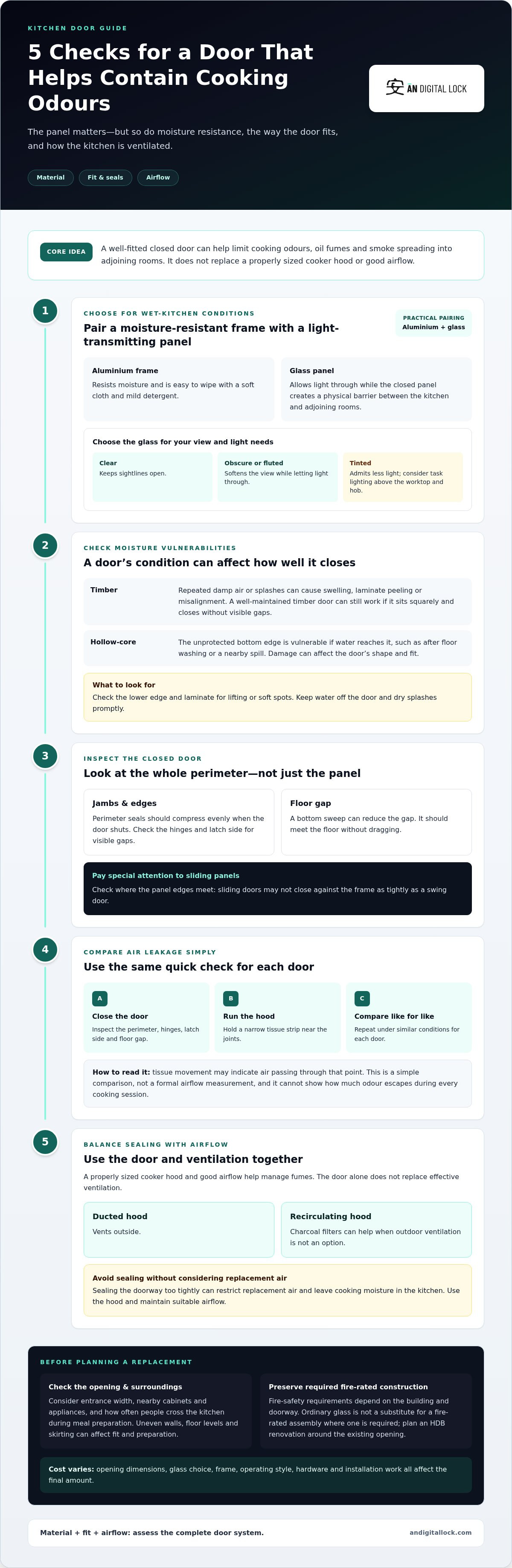
An aluminium-framed glass door is a practical choice for helping contain cooking smells in a Singapore kitchen. When choosing the best door material to block cooking smells from the kitchen, consider the complete door and how it closes, not just the panel. A well-fitted door can help limit odours, oil fumes and smoke spreading into living areas, but it won’t replace good kitchen ventilation.
It’s frustrating when the smell of frying or strong spices lingers beyond the kitchen, and a door can help create a useful separation without making the space feel closed off. Glass lets light pass through, while timber and hollow-core doors can be more vulnerable to kitchen moisture and may not contain odours well if gaps let air through.
This comparison explains how aluminium-framed glass doors can help, where timber and hollow-core doors may fall short, and why fit and airflow matter. Use these practical points to choose a kitchen door that suits your layout, cooking habits and need for light.
Key Takeaways
- An aluminium-framed glass door can help contain cooking odours while allowing light into the kitchen.
- Compare how each door closes and fits at the edges, since gaps can let cooking fumes pass through.
- Repeated moisture exposure can cause timber doors to swell or become misaligned, while hollow-core doors are vulnerable at unprotected bottom edges.
- Choose a door style that suits your kitchen entrance, nearby appliances and cooking routine.
- Pair a kitchen door with effective ventilation; a door alone won’t replace a properly sized cooker hood and good airflow.
1. Glass panels and containing cooking odours
An aluminium-framed glass door can help keep oil fumes, smoke and cooking odours from drifting into a Singapore living or dining area. The glass admits light, while the closed panel creates a physical barrier between the kitchen and adjoining rooms. When weighing the best door material to block cooking smells from the kitchen, consider the frame, fit and closing style alongside the glass.
Aluminium suits a wet kitchen because it resists moisture, and a smooth frame is easy to wipe with a soft cloth and mild detergent. Clear glass keeps sightlines open; obscure or fluted glass softens the view while still letting light through. Tinted glass admits less light, so consider task lighting above the worktop and hob. If you often fry food or cook with strong spices, choose surfaces with fewer deep grooves and hard-to-reach joints.
Fire safety depends on the building and the specific doorway. A kitchen door does not replace a fire-rated assembly where one is required, so preserve any required fire-rated construction rather than treating ordinary glass as fire-rated. For an HDB renovation, plan the replacement around the existing opening and avoid changes that affect required fire-rated construction. Also consider the entrance width, nearby cabinets and appliances, and how often people cross the kitchen during meal preparation.
There is no single cost for an odour-controlling interior door in Singapore. The final amount depends on the opening dimensions, glass choice, frame, operating style, hardware and installation work. A made-to-measure system must also account for uneven walls, floor levels and skirting, all of which affect the fit and preparation needed.
Seals along the jambs and a bottom sweep can reduce gaps around a closed door. The sweep should meet the floor without dragging, while perimeter seals should compress evenly when the door shuts. Sliding panels need particular attention where their edges meet, as they may not close against the frame as tightly as a swing door.
Ventilation helps manage odours alongside the door. A properly sized cooker hood and good airflow reduce fumes. A ducted hood vents outside, while a recirculating hood with charcoal filters can help when outdoor ventilation isn’t an option. While residential setups rely on domestic hoods, commercial kitchens facing heavier extraction requirements often consult specialists like Air Flow M&E Pte for exhaust system alterations. Sealing the doorway too tightly can restrict replacement air and leave cooking moisture in the kitchen. Use the hood and maintain suitable airflow rather than relying on the door alone.
For Singapore wet kitchens, an aluminium-framed glass door is a practical choice: aluminium resists moisture and glass allows light through. Together, they offer a moisture-resistant frame and a light-transmitting panel. Consider the frame and glass as a pair when choosing a door for wet-kitchen conditions.
Obscure glass offers visual privacy without the heavy feel of a fully solid door. It suits households that want less visibility through the doorway without choosing an opaque panel. Decide between clear and obscure glass based on how much privacy you want, while keeping the light-transmitting quality of glass.
2. Timber and hollow-core door vulnerabilities
Timber doors can provide a substantial barrier when they sit squarely in the frame and close without visible gaps. In a kitchen, moisture exposure is often a bigger concern than the material name. Repeated damp air or splashes can make wood swell, peel its laminate or become misaligned. A door that once closed neatly may then leave a gap along the jamb or bottom edge.
Hollow-core doors need particular care around the bottom edge. Their lightweight construction leaves an unprotected edge vulnerable if water reaches it, such as after a floor wash or a spill beside the sink. Damage can affect the door’s shape and fit. If the panel no longer meets the frame evenly, odours can escape around the opening rather than through the door material.
Singapore kitchens combine cooking moisture with frequent cleaning. Steam from boiling pots, splashes near the sink and damp mopping can repeatedly expose the lower door area to moisture. Timber may swell, while water reaching an exposed hollow-core edge can cause damage. Keep water off the door, dry splashes promptly, and check the lower edge and laminate for lifting or soft spots.
To compare air leakage, close each door and inspect the perimeter, hinges, latch side and floor gap. Then hold a narrow tissue strip near those joints while the kitchen hood runs. Movement may indicate air passing through that point. Repeat the check under similar conditions for each door. This is a simple comparison, not a formal airflow measurement, and it won’t show how much odour escapes during every cooking session.
Singapore’s warm, humid conditions make a stable fit and durable edge treatment especially relevant. Temperature and moisture changes can affect timber and the seals around a door; repeated damp exposure may cause the panel to swell or sit out of alignment. Check whether the door closes fully after cooking and cleaning, and look for consistent gaps. Don’t judge sealing performance by the panel material alone.
For a kitchen opening where moisture resistance and visibility both matter, an aluminium-framed glass door is another option to compare with timber. Whichever material you consider, check how the door meets the frame and floor, and keep water away from vulnerable edges. A well-maintained timber door can still work in a kitchen, but swelling, peeling laminate, or a poor fit can reduce its ability to contain cooking odours.
For a hollow-core door, check the bottom edge even when the rest of the panel looks intact. These doors are particularly vulnerable to water damage if it reaches an unprotected bottom edge. A quick visual check after cleaning or a nearby spill can show whether the area has been exposed. Inspect the edge itself, not just the visible face of the door.
If the bottom edge is exposed or damaged, avoid letting water collect there and dry splashes promptly. Also check the door’s fit: a panel that no longer meets the frame evenly may leave a route for odours. Care for the vulnerable edge, but don’t let that replace checking how the door closes.
3. Which door materials block cooking smells most effectively?
The door’s fit usually matters as much as its material. Cooking odours move with air through gaps around the panel, frame and floor. A heavy door with a poor fit can leave a clear route, while a lighter panel that closes neatly may create a more complete barrier. Compare the whole assembly: panel, frame, edges, threshold and closing action.
For a Singapore kitchen, aluminium-framed glass combines a moisture-resistant frame with a panel that spans the opening. When closed, the glass can help limit oil fumes, smoke and odours entering living or dining areas. It also lets light into the kitchen, unlike an opaque door. Obscure or fluted glass softens the view while retaining that light, making it useful when privacy matters.
Timber can also act as a barrier when its panel stays flat and meets the frame evenly. Repeated moisture exposure may cause wood to swell, peel laminate or become misaligned. For example, a timber door beside a frequently mopped kitchen floor may develop a bottom gap if its edge gets wet repeatedly. That gap can undermine its ability to contain odours.
Hollow-core doors need extra attention at the bottom edge. Water reaching an unprotected edge can damage the panel, affecting its shape and fit. A damaged or uneven door may let air pass around it, regardless of the material at its centre. A solid-looking panel is not automatically better if it leaves gaps at the frame or floor.
Use these practical comparisons when assessing materials:
- Aluminium-framed glass: Consider it when the kitchen needs light and the frame must handle moisture.
- Timber: Inspect the lower edge, finish and alignment, especially near a sink or wet floor.
- Hollow-core: Check whether the bottom edge is protected from splashes and cleaning water.
- Any material: Close the door and inspect the perimeter for visible gaps or uneven contact.
A household that fries often may prioritise a close-fitting door and easy-to-clean surfaces, while a dim kitchen may benefit from glass that admits light. Check how the door closes in everyday use, not just how the sample panel looks. A swing door’s positive closing action can help contain odours; a sliding door’s fit depends on how its panel meets the frame when shut.
There is no material-only shortcut to containing cooking smells. Choose a panel suited to kitchen moisture, then assess its edges, frame and closing action together. Pair the door with good airflow and a properly sized cooker hood. A closed panel can reduce odour spread, but it cannot replace ventilation.
4. How airtight must a kitchen door be to prevent cooking odours from spreading?
A kitchen door should close closely enough to reduce air movement around its edges, but it shouldn’t be treated as an airtight seal. Cooking odours travel with air, and gaps around the door can provide a route into living or dining areas. A door can reduce the spread of cooking fumes, but it doesn’t replace a properly sized cooker hood and good airflow.
Start by inspecting the closed door at the top, sides and floor. Look for uneven gaps, a panel that catches before the latch engages, or light visible around the edges. These clues can show where air passes. Check again after ordinary use, since repeated opening, closing or moisture exposure can affect how the panel sits in its frame.
The closing style affects how the doorway is covered. A swing door can help contain odours through its positive closing action. A standard sliding door leaves part of the kitchen entrance uncovered when open, and its closed panel meets the frame differently. Choose based on how people move between the hob, sink and dining area, not just the panel’s appearance.
Perimeter seals can reduce air leakage, while a bottom sweep can cover the floor gap. Fit them so the door still closes freely and the sweep doesn’t drag. A seal that bunches at the latch side or leaves a corner exposed won’t close the gap evenly. After installation, close the door and check contact along each edge.
Ventilation affects how air moves through the doorway. A ducted range hood vents air outside; a recirculating hood with charcoal filters can help when outdoor ventilation isn’t an option. Keep the hood running while cooking and maintain good airflow in the kitchen. Opening a window can support ventilation, while a cross-breeze can help move cooking air instead of letting it linger.
- Check the perimeter: Inspect the top, hinge side, latch side and floor gap with the door closed.
- Review the closing action: Confirm the panel reaches its frame without catching or rebounding.
- Match the seal to the gap: Use perimeter seals or a bottom sweep where air can pass.
- Support the barrier: Run the cooker hood and maintain airflow while cooking.
Don’t aim for a seal so tight that it interferes with ordinary door movement or kitchen ventilation. A kitchen needs airflow as well as a barrier, especially when cooking produces smoke, steam or strong odours. Aim for a close, even fit, then use the cooker hood and suitable ventilation to manage what the door cannot contain.
5. Do solid-core, solid-wood, glass, or composite doors block smells best?
No material wins on its name alone. Cooking odours travel with air, so the panel’s condition and how it meets the frame both matter. A solid-core door with gaps around its edges may contain smells less effectively than a well-fitted glass door. Compare the whole closed doorway, including the floor gap, rather than judging only the centre panel.
A solid-core door offers a continuous panel, which can create a substantial barrier when it closes evenly. Check the perimeter and bottom edge for gaps, and make sure the latch draws the panel into place. Even a heavier panel can leave an odour path if it sits crooked or catches before closing. The best door material to block cooking smells from the kitchen is the one suited to the opening and fitted properly.
Solid wood can also separate kitchen air from adjoining rooms. Repeated moisture exposure can affect wood, potentially causing swelling, peeling laminate or misalignment. Inspect the finish and lower edge, especially near a sink or frequently cleaned floor. If the door no longer closes squarely, its changed fit may matter more than its apparent thickness.
Glass works as a barrier when it forms part of a door that closes across the entrance. An aluminium frame resists moisture, while glass allows light through. Obscure or fluted glass softens the view while keeping the room bright. For households seeking separation without a fully opaque panel, this combination balances visibility and a physical divide.
“Composite” can describe doors made from different materials, so assess the actual panel and its edges rather than assuming all perform alike. Check whether the surface is continuous, how the frame supports it, and whether the bottom edge can withstand kitchen cleaning. Use these comparisons as a practical guide:
- Solid-core: Check that the panel closes evenly and doesn’t leave perimeter gaps.
- Solid wood: Inspect for moisture-related swelling, peeling or misalignment.
- Glass: Consider it when light matters, and assess how the frame seals when closed.
- Composite: Examine the construction, edge protection and fit as one assembly.
For frequent frying or strong-spice cooking, prioritise a close-closing door and surfaces that are easy to clean. A smooth frame is simpler to wipe than one with deep grooves. Pair the door with a properly sized cooker hood and good airflow; no panel replaces ventilation. Compare wooden and aluminium-framed glass door options against your kitchen layout, cleaning routine and need for light before choosing.
AN Digital Lock: Digital Door Locks
AN Digital Lock offers Digital Door Locks for homeowners considering an entrance upgrade alongside their kitchen-door choice. A digital lock can add convenient access to a door, but it doesn’t seal gaps or block cooking odours. For smell containment, focus first on the kitchen door’s fit, frame and closing action, then consider access features separately.
If you’re comparing door options, AN Digital Lock also offers Wooden Doors. Match the door to the opening and kitchen conditions, and treat odour control and access security as separate decisions. This helps you choose a practical setup without expecting a lock to solve ventilation or sealing concerns.
Contact AN Digital Lock to discuss your door and digital lock requirements, or visit andigitallock.com.
Plan a kitchen entrance that fits your home
Before choosing a door, consider how the kitchen connects to the rooms around it. Note where cooking smells are most disruptive, how people move between the kitchen and dining area, and whether you want to preserve an open view. These priorities help you compare the best door material for blocking cooking smells from the kitchen with your home’s practical needs.
Think about the doorway as part of a wider entrance plan, too. If you’re updating other areas, AN Digital Lock offers wooden doors, metal gates and digital door locks. Keep the kitchen’s odour-control needs separate from entrance security, then choose products suited to each space.
A clear brief makes the next step easier: describe the opening, the way the kitchen is used, and the finish or level of privacy you prefer. Contact AN Digital Lock for door advice and explore an option that feels right for your home. A thoughtful choice can help your kitchen work more comfortably with the spaces around it.