


What if a lock labelled “weather-resistant” still isn’t right for your gate? For a landed property entrance, rain, humidity and direct sun can expose outdoor hardware to demanding conditions. Choosing a weatherproof digital lock for landed property gate use means looking beyond a marketing label to the lock’s stated protection, placement and fit with the gate.
It’s reasonable to want convenient access without worrying whether moisture, heat or daily use could affect the lock. But the lock and gate need to work as a system: the gate’s material, profile and locking mechanism can affect which options are suitable. Fingerprint, PIN, RFID and Wi-Fi access also suit different household routines, so the most feature-rich choice isn’t always the most practical.
This 2026 buying guide explains how to assess weather exposure, compare outdoor-relevant specifications and check gate compatibility before choosing. You’ll also learn how to weigh access methods, everyday use and maintenance needs, so you can compare options against the conditions at your entrance.
Key Takeaways
- Classify the gate as sheltered, partly exposed or directly exposed before comparing lock specifications.
- Look for documented weather-protection details and match them to the lock’s actual position, not its appearance.
- Check the gate profile and locking mechanism together to narrow down compatible options.
- Choose access methods around your household’s routine, then consider power needs and regular upkeep.
- Assess a weatherproof digital lock for landed property gate use as part of a complete gate and entrance setup.
Weatherproof Digital Locks for Landed Property Gates: What Homeowners Need to Know
A digital lock at a landed property entrance may face very different conditions from one installed behind a sheltered porch. The right choice depends on the lock’s documented suitability for its position, how much rain and sun reach it, and how the gate is built. A product’s appearance or a general “weather-resistant” label can’t answer those questions on its own.
“Weather resistance” is a general description. A verified Ingress Protection rating is a documented classification of how an enclosure resists specified dust and water exposure. Use that distinction when assessing a weatherproof digital lock for landed property gate installation. Neither phrase, by itself, confirms that a particular lock suits every outdoor position.
What does weatherproof mean for a digital gate lock?
Manufacturers may use “weatherproof” and “weather-resistant” differently. Treat these terms as prompts to inspect the product documentation, not as proof of a specific protection level. Look for an IP code and confirm that the stated rating applies to the lock in the configuration you intend to use. The Ingress Protection (IP) ratings reference explains how the code classifies protection against solid objects and water under IEC 60529.
An IP code makes a general claim more specific, but it doesn’t guarantee that a lock will suit every gate or level of exposure. Check which components the documentation covers and what kind of exposure the rating describes. Don’t assume a rating from a product photo, a broad label or a claim about a different model applies to the lock you’re comparing.
Which conditions can affect an outdoor gate lock?
Consider the lock’s position through a typical day and during wet weather. Direct rain can reach an exposed keypad or housing; wind may push moisture beneath an overhang. Persistent humidity can also matter, while heat and strong sun may warm the lock and leave it exposed for long periods. These conditions differ, so one general label may not describe them all.
Assess the entrance itself. A deep porch, nearby wall or substantial overhang may reduce direct exposure, while an open approach may leave the lock more exposed to rain and sun. The gate’s orientation also affects how weather reaches the hardware. Each property is different, so observe the actual mounting position rather than assuming that all landed entrances experience the same conditions.
- Sheltered: The lock sits under cover, with little direct rain or sun reaching it.
- Partly exposed: An overhang or wall offers some protection, but wind-driven rain or sun may still reach the lock.
- Directly exposed: The lock has little overhead or side protection from rain and strong sun.
Record the exposure category before comparing locks. Then review the product’s documented protection and compare it with the lock’s exact location on the gate.
How Rain, Humidity, and Sun Exposure Affect Digital Gate Lock Suitability
A lock can offer fingerprint entry, PIN access or Wi-Fi connectivity and still be unsuitable for an exposed gate. Those features describe how you use the lock, not how its housing and components handle outdoor conditions. Battery-life claims also don’t establish resistance to rain, humidity or heat. Review the full product specification for the intended installation, then compare it with the conditions at your gate.
Assess the gate’s exposure alongside the lock’s documented protection specifications. Neither one alone tells the full weather-readiness story. Humid conditions and seasonal rain make the lock’s position and surrounding structure worth considering, but individual entrances can experience different levels of exposure.
How to interpret an IP rating on a gate lock
An Ingress Protection (IP) rating classifies how an enclosure protects against specified solid-particle and water ingress. Read the complete rating alongside the manufacturer’s installation notes. The key question isn’t simply whether an IP code appears, but whether the documented protection suits the lock’s intended position and exposure. Don’t treat a rating as a promise against every combination of heavy rain, wind, standing water or prolonged outdoor use.
Also distinguish weather protection from mechanical strength. A physical durability grade addresses a different consideration from water and dust ingress. For example, ANSI/BHMA lock grades relate to lock strength and durability, not an IP weather rating. Evaluate each specification according to what it measures.
How gate location changes the weather-readiness assessment
A gate beneath a covered entrance may receive little direct rainfall. Wind can still drive moisture beneath the shelter, and damp air can linger around the lock. A gate directly exposed to wind-driven rain faces a different pattern of water contact. Strong sun can also heat the surface and expose it to repeated warming and cooling. These conditions aren’t interchangeable, so don’t use a sheltered installation as a reason to overlook the product’s documented suitability.
Look beyond the roofline. Check whether nearby walls shield the lock or channel rain towards it. Notice how water drains around the mounting point: runoff, splashing or water that collects nearby may keep the area damp for longer. Placement can reduce exposure, but it doesn’t replace suitable specifications. Assess a weatherproof digital lock for landed property gate use in its actual installed position, not just by its feature list or appearance.
For a coordinated entrance decision, compare the gate structure with digital locks for gates and consider how each lock’s documented conditions align with the location.
Compare Digital Gate Locks by Protection, Access, and Gate Compatibility
Compare a lock against your gate and household routine, not by counting features. A weatherproof digital lock for landed property gate use needs documented protection suited to its position, a specified fit for the gate, and access options your household will actually use. The IP rating system describes protection against dust and water ingress. It doesn’t establish gate compatibility or explain how every access feature will perform.
| What to compare | What to record | Why it matters |
|---|---|---|
| Weather rating | The documented IP rating and the components it covers | Helps you compare stated protection with the lock’s intended installation. |
| Exposure | Sheltered, partly exposed or directly exposed | Different positions can face different combinations of rain, wind and sun. |
| Gate fit | Material, thickness, locking points and mounting space | The lock must suit the gate’s construction and mechanism. |
| Access | Fingerprint, PIN, RFID or Wi-Fi functions | The best options depend on who uses the gate and how. |
| Power and care | Documented power requirements and maintenance guidance | Helps you plan routine use and upkeep without assuming performance. |
Which access method suits your household and gate routine?
Fingerprint access can be convenient for regular users who prefer not to carry a card or remember a code. A PIN may suit household members who don’t use fingerprint access, while RFID offers a straightforward option for people comfortable carrying a tag or card. Wi-Fi functions vary by product and may depend on connectivity and supported features. Consider who needs regular access, how access is shared and whether household members need different methods.
More access methods don’t automatically mean better outdoor suitability. Check weather documentation and gate fit separately from the feature list. For a broader overview of digital lock choices, read Digital Lock Singapore: The Ultimate 2026 Buying Guide for Your Home.
How to check gate structure and lock compatibility
Start with the gate itself. Note whether it’s metal or another material, measure its thickness, and identify the existing locking points, handle layout and clear mounting space. Compare those details with the lock’s stated fit requirements. A mechanism designed for a particular gate arrangement may not suit another, even if the access methods seem ideal.
Assess the gate and lock as one setup. If the dimensions or locking arrangement don’t align with the product’s specifications, features alone won’t resolve the mismatch. Automated entrance specialists like Gate Tech Pros routinely highlight that aligning physical gate fabrication with access control hardware from the start prevents costly compatibility issues. Keep your measurements and exposure notes together as you compare options, so your choice accounts for protection, access and physical fit.
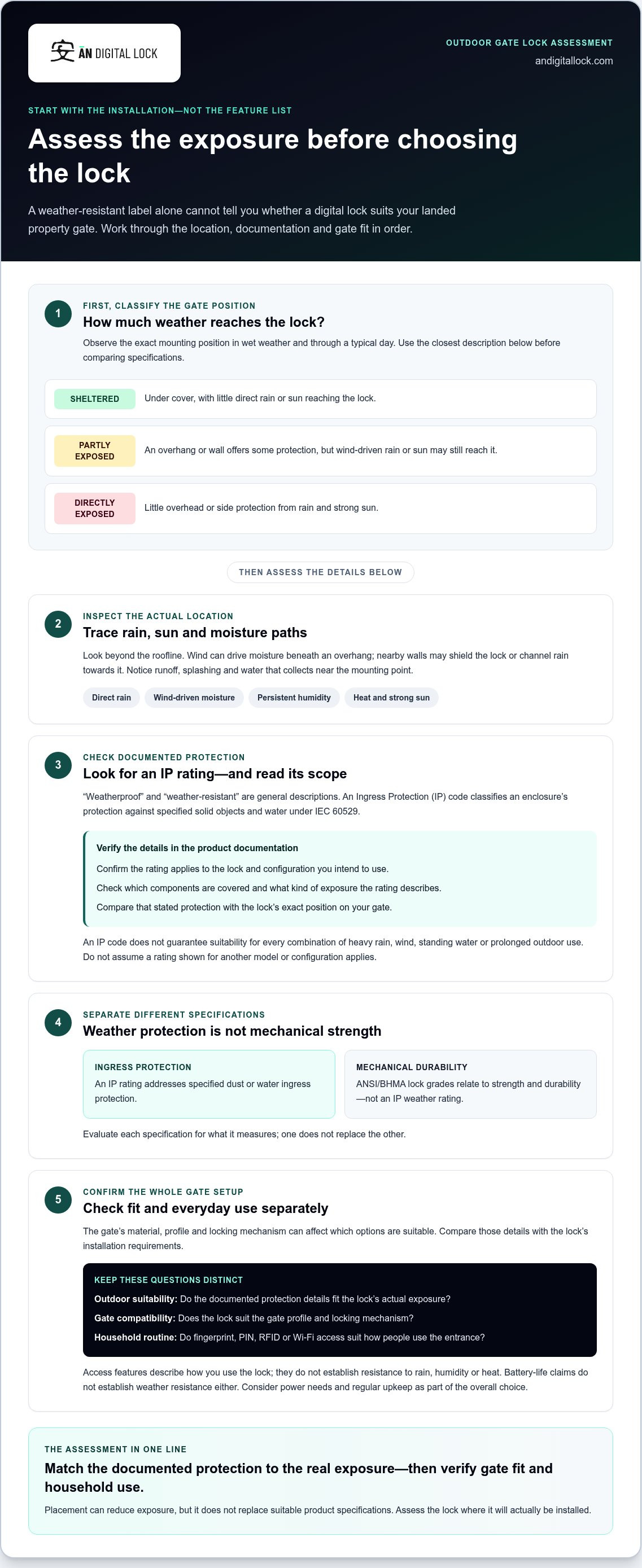
Use This Checklist to Assess an Outdoor Digital Gate Lock
Turn your observations into a simple record before comparing options. This keeps documented product details separate from assumptions and helps you judge whether a weatherproof digital lock for landed property gate use fits both the entrance and household routine.
A five-step weather-readiness and compatibility check
- Map the exposure. Record whether the lock is sheltered, partly exposed or directly exposed. Note where direct rain, wind-driven moisture and sunlight reach the mounting position, including the effect of nearby walls and overhangs.
- Read the documentation. Find the manufacturer’s stated IP rating, the parts it applies to and any intended-use or installation guidance. Don’t treat “weatherproof” or “outdoor-ready” wording as a verified rating.
- Compare the gate and lock. Record the gate material, thickness, locking points, handle arrangement and space available for mounting. Compare these details with the lock’s stated dimensions and fit requirements.
- Match access to daily use. Decide who needs regular entry and which methods they’ll use. Consider a practical alternative for a household member if their preferred method isn’t available.
- Plan routine care. Note the manufacturer’s instructions for cleaning, battery replacement and maintenance, then consider whether they suit the way the gate is used.
Use this table to separate evidence from impressions:
| Check | Verified specification or observation | Assumption or marketing wording |
|---|---|---|
| Exposure | Lock position recorded as sheltered, partly exposed or directly exposed | “The porch should keep it dry” without observing rain or wind exposure |
| Protection | Documented IP rating and applicable installation guidance | “Weatherproof” stated without a rating or supporting detail |
| Gate fit | Measured gate and mounting details compared with specified requirements | “Fits most gates” without dimensions or a matching configuration |
| Access and care | Supported access methods and care instructions in product documentation | Assuming every feature works in all conditions or needs no upkeep |
What to consider for daily use and ongoing care
Think through an ordinary day: who arrives first, whether visitors need access, and what happens if a preferred method can’t be used. Then follow the product’s cleaning, battery and maintenance guidance. Avoid harsh cleaners or improvised covers unless the manufacturer permits them, since they may interfere with the lock or its intended installation.
Ready to compare the gate and lock as one entrance setup? Explore digital locks and metal gates for your home.
Choose a Complete Gate-and-Lock Setup with AN Digital Lock
A confident choice starts with the entrance, not the feature list. Assess where the lock will sit, what its documented protection covers, whether it fits the gate, and how people in your household will use it. Then consider regular care. This weather-first approach helps you compare digital locks and metal gates as connected parts of a home entrance, rather than unrelated purchases.
Match entrance priorities to the right product considerations
For an exposed gate, begin with the manufacturer’s documented weather-suitability information and the gate’s construction. Compare the stated product requirements with the actual mounting position and gate structure. Don’t infer outdoor suitability from appearance, access features or a general “weatherproof” label.
For a multi-user household, compare fingerprint, PIN, RFID and Wi-Fi access with everyday routines. Fingerprint access may appeal to regular users who want to enter without carrying a tag, while PIN or RFID may suit household members who prefer other methods. Wi-Fi functions depend on the supported features and may involve connectivity. Choose methods that make sense for the people who will use the gate, not simply the longest feature list.
If you’re refreshing the entrance, consider the gate and lock together. Their fit, layout and intended use should align. AN Digital Lock sells digital locks for gates alongside metal gates, so you can compare the products as parts of a coordinated entrance setup.
Prepare for a confident product decision
Before comparing options, gather a few useful details:
- Gate measurements: Record thickness, available mounting space, handle layout and locking points.
- Gate material: Note the construction so you can compare it with the lock’s specified fit.
- Exposure: Mark the position as sheltered, partly exposed or directly exposed, and note where rain and sun reach it.
- Access needs: List the methods that suit household members and regular visitors.
- Care considerations: Keep the product’s documented cleaning and maintenance instructions in view.
Use those notes to compare documented specifications rather than relying on broad claims. For broader guidance on selecting a lock for your home, read How to Choose the Right Door Lock for Your Singapore Home. A suitable choice should make sense for both the gate’s physical structure and the household’s routine.
Ready to explore entrance options? View digital locks and metal gates and use your measurements and exposure notes to guide your comparison.
Choose an Entrance Setup That Fits Your Home
A suitable outdoor lock choice starts with the conditions at your gate. Match its exposure to documented protection, check that the lock suits the gate structure, and choose access methods that work for your household. These practical checks matter more than a long list of features when selecting a weatherproof digital lock for landed property gate use.
AN Digital Lock sells digital locks and metal gates, along with other home entrance products. Its digital locks include access methods such as fingerprint, PIN, RFID and Wi-Fi, giving you options to compare against your daily routine. Consider the gate and lock together to assess fit, access and care as parts of one entrance setup.
Ready to explore options for your home? Explore digital locks and gate options for your home. Use your measurements, exposure notes and access priorities to guide your choice.
Frequently Asked Questions
Is every digital gate lock weatherproof?
No. Weather suitability varies by product, enclosure, installation conditions and manufacturer specifications. Check documented outdoor-use guidance and any stated IP rating instead of relying on a general “weatherproof” label. Consider whether the gate is sheltered or directly exposed to rain and sun. Fingerprint, PIN and Wi-Fi features describe access methods, not weather protection, so they can’t establish whether a weatherproof digital lock for landed property gate use is suitable.
Can a digital lock be installed on an outdoor metal gate?
Some digital locks are designed for gate use, but compatibility depends on the specific lock and gate construction. Compare the product’s mounting arrangement and dimensions with the gate’s material, thickness, locking points and available space. Metal gates can have different layouts, so a lock that fits one gate may not suit another. Use the product specifications and the gate’s actual measurements as the basis for comparison.
What IP rating should an outdoor digital gate lock have?
There isn’t one IP rating that suits every gate and exposure condition. IP codes classify specified protection against solid particles and water ingress, so read the complete rating alongside the manufacturer’s intended-use guidance. Consider whether the lock faces direct rain, wind-driven moisture or some shelter. Don’t treat a rating as a guarantee against every weather condition, or use an unverified marketing description instead of product documentation.
How do I protect a digital gate lock from rain?
Choose a lock whose documented specifications suit the gate’s actual exposure. Check whether an existing overhang or shelter reduces direct rain while allowing the lock and gate to operate as intended. Follow the manufacturer’s cleaning and care instructions. Don’t add a cover, sealant or other modification unless the product guidance permits it, as an alteration could affect operation or differ from the tested installation conditions.
Will humidity or sunlight affect an outdoor digital lock?
They may, depending on the product, its materials, installation and exposure. Review the manufacturer’s outdoor-use information and any relevant environmental limits. Consider direct sunlight, heat, persistent humidity and airflow around the lock. Don’t infer durability from appearance or access features. A battery-life statement alone also doesn’t show how a lock handles weather unless the product documentation specifically connects that claim to the relevant conditions.
How can I tell whether a digital lock fits my landed-property gate?
Compare the lock’s documented dimensions and mounting requirements with the gate’s material, thickness, handle layout and locking points. Check that the product is intended for gate use and that its guidance suits the gate’s exposure. Metal gates can differ in construction and available mounting space, so don’t assume a lock will fit based on photographs or a similar-looking gate. Use measurements and specifications to assess compatibility.
What should I compare when choosing a weatherproof digital gate lock?
Compare documented weather suitability, gate compatibility, access methods, power requirements and care instructions. Then consider the gate’s location and the household’s entry habits. A long feature list doesn’t replace weather documentation or a suitable physical fit. A comparison table can help separate stated specifications from broad terms such as “weatherproof” or “outdoor-ready,” making it easier to see what the product information actually supports.