


The most feature-packed smart lock isn’t always the easiest one to manage between tenancies. For landlords searching “smart lock for landlords singapore,” the real test is whether access stays secure and simple for each new occupant.
Coordinating key handovers, collecting spare keys and arranging replacements can turn a tenancy change into extra work. It’s also understandable to wonder whether tenants will find a digital lock easy to use, or whether its features will add more upkeep than convenience. The right choice depends on who needs access, how they prefer to enter and what the door can support.
This guide compares common access methods, including PIN, fingerprint and RFID, alongside management features that vary by lock model. You’ll learn how to match them to different occupants, plan an access-change process for each tenancy and consider door compatibility and everyday usability before choosing. AN Digital Lock offers digital locks from brands such as Philips, Zigbang, Solity, Hafele and Igloohome, making it easier to compare options for different entrances and access preferences.
Key Takeaways
- Choose a smart lock for landlords singapore by matching access methods to the occupants and how you’ll manage tenancy changes.
- Compare PIN, fingerprint, RFID and Wi-Fi access, then check how each model handles adding or changing credentials.
- Separate practical essentials, such as familiar entry methods and door fit, from optional connected features.
- Before selecting a lock, review the door, tenancy agreement, owner permissions and applicable building rules.
- Use AN Digital Lock’s multi-brand range to compare options for main doors, metal gates and glass doors, while assessing compatibility for the specific property.
Why landlords in Singapore consider smart locks for rental access
Every tenancy change can bring another round of key coordination: arranging a handover, tracking spare copies and deciding what to do if keys aren’t returned. A keyless lock can reduce reliance on physical keys, but it won’t automatically remove the work of managing access. Functions differ by model, so focus on how a lock handles everyday entry and changes in authorised users.
At a basic level, a smart lock uses electronic components to control a door’s locking mechanism. For a useful overview of what a smart lock is, including how some systems use virtual keys, see Wikipedia. Don’t assume every lock supports temporary PINs, remote administration or the same process for removing access. Check the specific model’s functions and consider whether they suit your rental routine.
The best smart lock for landlords singapore property owners choose should balance four needs: secure entry, manageable access changes, an interface tenants can use confidently and a suitable fit for the door. A feature is useful only if it works with the property and doesn’t make daily access confusing.
What landlords need from a rental-property smart lock
Start with everyday entry and a straightforward way to manage authorised users. Think about who will use the lock: one tenant, a family or a shared household may have different access needs. Consider how often occupants change, too. A familiar PIN pad may suit tenants who prefer a simple routine, while another household may value fingerprint or RFID access. Compare the actual process for adding and removing credentials instead of assuming every method is equally easy to update.
Where smart locks fit Singapore rental homes
HDB flats, condominiums and landed homes can have different entrance layouts and property requirements. In a flat with both a main door and a metal gate, treat them as separate access points. Each may need its own compatible lock and user-management plan. A lock for one door type won’t necessarily fit another. Before changing hardware, review the tenancy terms, owner permissions and applicable building requirements, especially where the door or gate is shared or subject to property rules.
These checks keep the decision practical. Identify which entrance needs keyless access, who will use it and how access should be handled when occupants change. Then compare suitable digital door locks against the door itself and the tenants’ everyday preferences. The goal isn’t to choose the lock with the longest feature list. It’s to make authorised entry clear and convenient without adding avoidable complexity.
How landlord access control works with PIN, fingerprint, RFID, and Wi-Fi
Landlord access control means managing who can enter a rental property and how their access is granted, updated or removed. A smart lock may provide one entry method or combine several. The keypad or reader handles entry; the lock’s settings determine how credentials are enrolled and managed.
Access methods and credential-management functions vary by lock model, so compare both before choosing a smart lock for landlords singapore. This distinction matters at tenancy changeover: a PIN pad, fingerprint reader or RFID reader doesn’t automatically mean a landlord can change access remotely or set credentials to expire.
Compare PIN, fingerprint, and RFID access for tenants
- PIN: Tenants enter a code on the keypad, so there’s no physical key or card to carry. It’s easy to explain, but don’t assume a code expires automatically or can be changed remotely. Check how the particular lock lets an authorised user manage PINs.
- Fingerprint: A tenant uses an enrolled fingerprint to unlock the door. This avoids remembering a code or carrying a credential, but enrolment and removal steps differ between models. Consider whether the process is clear enough for each move-in and move-out.
- RFID: The tenant presents a registered card, tag or other compatible credential to the lock’s reader. It offers a familiar tap-to-enter routine, but the user needs to carry the credential. Check how the model handles a lost or unreturned credential.
For shared households, consider how each option works for every authorised occupant, not just the person signing the tenancy agreement. Also review the tenancy terms and respect the tenant’s rights. SingaporeLegalAdvice.com explains quiet enjoyment and exclusive possession; a lock’s access-management features don’t determine when a landlord may enter.
What Wi-Fi or connected access can add
Wi-Fi and app features may add ways to manage a lock, but only when the specific lock and its companion system support them. A keypad can allow local PIN entry without the tenant using an app, while connected functions may rely on an internet connection, app setup or other system requirements.
Before treating connectivity as a tenancy-management solution, verify whether the exact model supports the functions you need, such as remote credential changes, entry records or temporary access. These capabilities aren’t universal, and a connected lock doesn’t necessarily offer all of them. Compare digital door locks with PIN, fingerprint, RFID and Wi-Fi access through AN Digital Lock’s range, then prioritise the access and management functions that suit your rental routine.
Compare smart locks for Singapore landlords by access, control, and compatibility
A useful comparison looks beyond the number of entry methods. Check how each credential is managed, whether the lock depends on connectivity for selected functions and whether it suits the actual door. Use this table to shortlist options for a smart lock for landlords singapore rental property, then verify the details against the exact model.
| Access method | Credential-change process | Connectivity | Door fit | Tenant familiarity |
|---|---|---|---|---|
| PIN keypad | Check how PINs are added, changed or removed; expiry isn’t automatic on every model. | Keypad entry may work locally; connected management depends on the model. | Confirm the lock is made for the intended door type. | Often straightforward to explain, though users must remember the code. |
| Fingerprint | Review fingerprint enrolment and removal steps. | Check whether any user management relies on an app or connection. | Confirm compatibility with the door and existing hardware. | No code or card to carry, but each user may need enrolment. |
| RFID credential | Find out how credentials are registered and managed if one is lost or unreturned. | Management features vary; don’t assume remote control. | Check reader and lock compatibility with the entrance. | Simple to present, but occupants need to carry the credential. |
| Wi-Fi or app-connected features | Verify whether the model supports remote changes, temporary access or entry records. | Connected functions may rely on the lock’s companion system and connectivity. | Confirm the lock is designed for the specific door. | Depends on app setup and each occupant’s comfort with connected tools. |
Which access method suits different rental arrangements?
PIN access can suit a household that wants one familiar shared entry routine. RFID may work better for occupants who prefer carrying a dedicated card or tag. Fingerprint access offers a personal credential, but understand how occupants are enrolled and how their access is removed at turnover. Match the method to the household, not just the feature list.
Treat essential requirements separately from optional connected features. First prioritise everyday entry, manageable credentials and door compatibility. Then decide whether app-based functions add value to your rental routine. A feature you don’t need can add setup steps without making access easier.
Check the door and entrance before comparing features
Identify whether you’re selecting a lock for a main door, metal gate or glass door. Door construction, existing hardware and the lock’s intended door type can narrow the suitable choices. A model that fits one entrance may not suit another, even within the same home. For wider residential selection context, see the Singapore digital lock buying guide and Singapore door lock selection guide.
Use the comparison as a shortlist, not a guarantee of universal compatibility. Actual functions depend on the exact lock model, its installation and the supported door type.
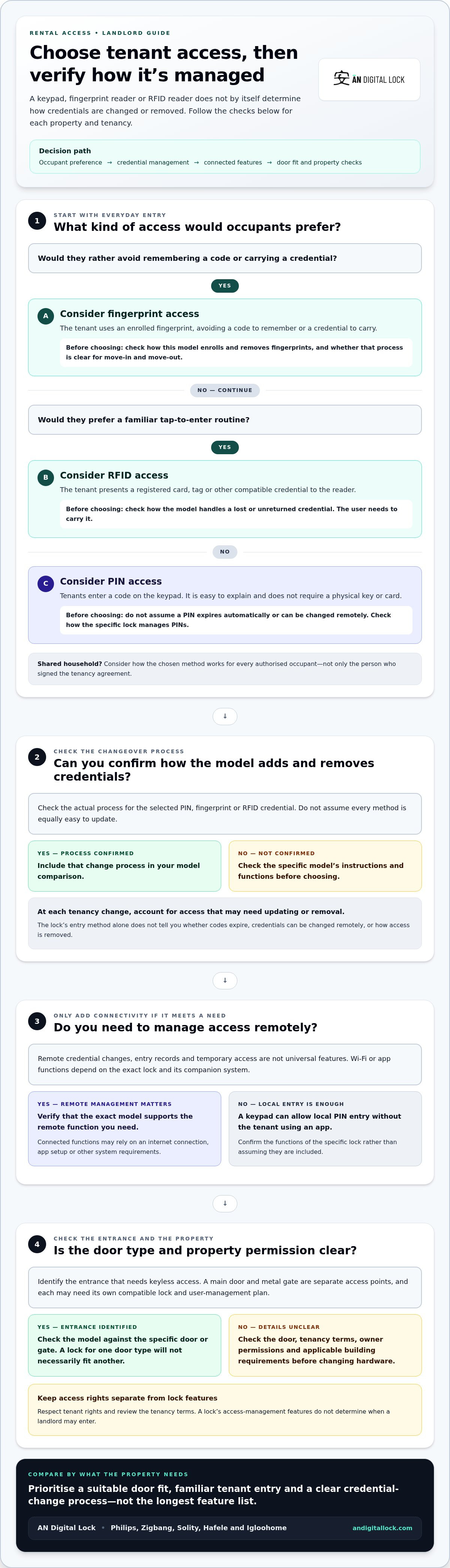
Use this landlord checklist to choose and manage a smart lock
A good selection process starts with the rental arrangement, not the lock’s longest feature list. Define what the property needs, then use the same routine for each tenancy change.
- Define the occupants. Note how many people need authorised entry, their preferred access method and how often occupancy may change. A shared household may need a clear way to provide access to each resident.
- Inspect the entrance. Identify whether the lock is for a main door, metal gate or glass door. Record the existing hardware and door type so you can compare locks designed for that entrance.
- Prioritise access needs. Decide which functions are essential for daily use and credential changes. Treat Wi-Fi, app control, temporary access or entry records as optional unless the specific lock supports them and they serve a clear purpose.
- Compare suitable models. Review how PINs, fingerprints or RFID credentials are added and removed. Check the product documentation for model-specific functions, connectivity needs and supported door types.
- Plan for turnover. Set a repeatable handover routine for explaining entry, recording authorised users, collecting physical credentials and updating or removing access when occupants change.
Before changing hardware, review the tenancy agreement, owner permissions and applicable building rules. Treat these as property-specific considerations rather than assuming one process applies to every rental home.
Plan tenant onboarding and move-out access changes
At move-in, explain the agreed entry method and provide clear instructions only to authorised occupants. Record who has been given access and which physical cards or tags were issued. At move-out, collect returned credentials and update or remove user access using functions supported by the selected lock. Don’t assume every PIN, fingerprint or RFID credential can be managed in the same way.
Review compatibility, privacy, and practical upkeep
Match the lock to the property’s main door, gate or glass entrance, then review the product documentation for supported functions and routine upkeep. If the lock creates digital records or uses connected features, understand what the exact model records and who can access that information. Check relevant tenancy, building and privacy requirements for the property before making changes.
Once you’ve identified the entrance type, occupant needs and preferred access method, explore digital lock options for your entrance. A clear checklist makes it easier to compare models and maintain a consistent process from one tenancy to the next.
Choose a landlord-ready smart lock from AN Digital Lock's range
Once you’ve defined who needs access, how you want to manage credentials and which entrance needs a lock, compare options against those requirements. AN Digital Lock is a Singapore-based company established in 2013, offering digital locks from brands including Zigbang, Philips, Solity, Hafele and Igloohome. Its range includes different access methods, so landlords can compare options for their rental routine instead of choosing by feature count alone.
Match AN Digital Lock options to your rental property's entrance
Start with the entrance and its existing hardware. A lock for a main door may not suit a metal gate or glass door, so identify the exact door type before narrowing your shortlist. Compatibility depends on the specific lock and door; don’t assume one model works across every entrance.
Then compare the access method offered by each model. PIN entry may suit tenants who prefer a code, while fingerprint or RFID access may better match other household routines. Wi-Fi access is another option on supported models. Consider how occupants will use the lock each day, and review the product specifications for the exact credential-management functions you need. Don’t assume features such as remote changes or temporary access are supported by every model.
This approach keeps the decision grounded in the property. For example, if your priority is straightforward shared entry, a connected feature may be less important than a keypad tenants find easy to use. If managing access between tenancies is your main concern, compare how each model handles adding, changing or removing credentials.
Take the next step with a clear shortlist
Before browsing, write down four essentials:
- Occupants: who needs authorised entry and how many people may use the lock.
- Entrance: whether you need a lock for a main door, metal gate or glass door.
- Access: which methods tenants can use confidently, such as PIN, fingerprint, RFID or Wi-Fi where supported.
- Management: which credential changes you need to make at move-in and move-out.
Use that shortlist to compare relevant specifications across AN Digital Lock’s multi-brand selection. Focus on the lock’s supported door type and the functions documented for that particular model. A clear match can make tenant entry easier to explain and access changes easier to plan, without giving priority to features that don’t serve the property’s needs.
Ready to compare options for your rental entrance? Browse digital locks for your property and use your shortlist to guide the selection.
Choose a lock that makes every tenancy change clearer
A well-chosen smart lock can simplify tenant access, but the best fit depends on the people using it, the entrance and how you’ll manage authorised users. Compare PIN, fingerprint, RFID and Wi-Fi options by their everyday usability and supported credential-management features. Then check that the specific lock is suitable for your main door, metal gate or glass door.
For a smart lock for landlords singapore property owners can manage with confidence, keep your turnover process simple: explain access at move-in, record authorised users and update or remove credentials using the functions the model supports. A practical match matters more than choosing the longest list of features.
AN Digital Lock was established in 2013 and offers a multi-brand digital-lock range that includes Zigbang, Philips, Solity, Hafele and Igloohome. Use your shortlist of occupant needs, entrance type and access priorities to compare relevant options. Explore digital locks for your rental property and take the next step toward simpler, more organised tenant access.
Frequently Asked Questions
Is a smart lock suitable for a rental property in Singapore?
Yes, a smart lock can suit a rental property if it fits the door and meets the occupants’ access needs. For a smart lock for landlords singapore, compare how tenants will enter and how authorised access can be managed when occupancy changes. Features vary by model, so check the product specifications rather than assuming every lock supports the same functions. Before changing hardware, review the tenancy agreement, owner permissions and applicable building requirements.
Can landlords change a smart-lock PIN between tenants?
Often, but the process depends on the specific lock’s supported credential-management functions. Changing a PIN is not the same as deleting other credentials: fingerprints, RFID cards or tags may need separate removal steps. During turnover, follow the product instructions and check which credentials remain active after a PIN change. Don’t assume the lock supports remote changes or temporary access; these capabilities vary by model and may require supported connectivity.
What is the best access method for a landlord: PIN, fingerprint, or RFID?
There isn’t one access method that suits every rental property. A PIN can be familiar and easy to explain, but sharing a code affects how you manage access. Fingerprint entry offers a personal credential, with enrolment and removal steps to consider. RFID lets tenants present a card or tag, which they must carry. Choose based on the occupants, property use and the exact lock’s supported features.
How much does a smart lock for a rental property cost in Singapore?
The total depends on the selected lock, the entrance type and the requirements for that property. A lock for a main door may differ from one intended for a metal gate or glass door, and features also vary by model. Compare specifications against your access and management needs, then review current product details through the retailer’s shopping journey. Avoid comparing options by price alone if their functions or door compatibility differ.
Do smart locks work with every HDB, condominium, or landed-property door?
No, compatibility isn’t universal. It depends on the door’s construction, existing hardware and the type of lock. First identify whether you’re securing a main door, a gate or a glass entrance. Then compare the exact lock’s specifications with that door and its hardware. A model suitable for one entrance may not fit another, even within the same property. Don’t select a lock based only on the home’s property category.
What happens if a tenant loses an RFID card or forgets a PIN?
Recovery and credential replacement depend on the lock’s documented functions. Check the model’s instructions for its reset process and how to register or change credentials. Losing an RFID card may require a separate step from changing a PIN; remove a lost credential if the lock supports that function. Keep access instructions available to authorised users, but store PINs and other sensitive access details carefully.
Can a landlord monitor when tenants enter using a smart lock?
Only if the specific lock supports entry records or connected monitoring. These features aren’t universal, so review the exact model’s specifications and documentation before relying on them. Also consider tenant privacy and any applicable requirements before collecting or using access records. Don’t assume a digital lock provides monitoring simply because it connects to Wi-Fi or an app; connected functions differ between models.