


Does a resale flat security upgrade mean replacing the whole entrance? Not necessarily. The best place to start is with the door and gate you already have, then consider how everyone at home comes and goes.
It’s reasonable to feel unsure about compatibility. A digital lock that suits one entrance may not fit another, and features that sound convenient may not match your household’s routine. The right setup should feel secure and simple to use, whether you prefer fingerprint, PIN or RFID access.
This 2026 guide will help you compare practical entrance-security choices before selecting products. You’ll learn what to consider about your existing door and metal gate, how access methods can fit different daily habits, and when a coordinated upgrade may make sense without assuming every component needs replacing.
Start with your entrance as it is today. A few practical checks can help you narrow the choices and plan an upgrade that works for your home, not just the product brochure.
Key Takeaways
- Use the Ang Mo Kio Court resale flat security upgrade guide to prioritise the entrance changes that matter most to your household.
- Compare main-door locks, gate locks and coordinated changes by purpose, fit and day-to-day convenience.
- Check how a digital lock’s supported access methods and features align with the people who will use it.
- Follow a five-step checklist to assess your entrance, map access needs and narrow down a suitable configuration.
- Explore digital locks, wooden doors and metal gates, including options from brands such as Zigbang, Philips, Solity, Hafele and Igloohome.
Why a resale-flat security upgrade starts with your existing entrance
A resale flat may come with a main-door lock, a gate lock, a door and a metal gate that have all seen different levels of use. One component may still suit your household, while another may no longer match how residents enter and leave. Start by looking at the entrance as a whole, but don’t assume every part needs replacing.
For an Ang Mo Kio Court resale flat security upgrade, the decision should balance four things: who needs access, how the lock and entrance fit together, what your household finds convenient, and the visible condition of existing hardware. A digital lock is an electronic way to control entry through supported authentication methods. For background on the category, see What is a Smart Lock? The specific functions vary by model, so focus on the access methods your household would actually use.
What to assess before comparing security products
Make a quick entrance inventory before browsing. Record the type of lock on the main door and gate, note what you can see about their condition, and consider whether both are used every day. This gives you a practical starting point for comparing digital door locks, gate locks, doors and metal gates without treating them as one all-or-nothing purchase.
- Record: Note the existing main-door lock and gate lock, plus visible wear or changes in how each operates.
- Map access: List who needs to enter, including residents, family members and regular visitors, and how often they come and go.
- Prioritise: Separate useful conveniences from essential requirements such as a suitable fit with the existing entrance and a dependable way for the household to gain access.
For example, a household with different arrival times may value an access method that avoids coordinating a shared key. Another household may prefer a familiar, straightforward routine. Write down the need first, then compare features against it.
When one upgrade may be enough
Changing a lock is different from changing a door or metal gate. If the door and gate remain suitable for your needs, comparing a lock that fits the existing setup may be enough. A door or gate change is a separate decision about the entrance component itself, not an automatic requirement that comes with choosing a digital lock.
Look beyond the lock if the door or gate appears damaged, no longer closes or latches as expected, or has visible changes that affect how the entrance operates. These observations are reasons to assess the wider setup, not proof of a structural or security defect. Appearance alone can’t establish the cause or severity, so avoid drawing a diagnosis from a quick visual check.
A useful upgrade matches the entrance condition and the household’s access needs. Use that as your filter: improve only what supports a better-fitting, more convenient entrance.
How digital door locks work in a resale-flat entrance
A digital door lock is an electronic lock that grants access when a user presents an authentication method the lock supports. Depending on the model, that may mean entering a PIN, using a fingerprint or presenting an RFID credential. The lock processes the selected method and releases the mechanism when access is accepted. The exact methods and functions differ between models, so compare what each one supports rather than assuming every digital lock works the same way.
For an Ang Mo Kio Court resale flat security upgrade, separate two questions: how people will unlock the door, and whether the lock physically suits the door or gate. An access method that sounds convenient doesn’t establish that a particular lock fits your existing entrance. Consider the lock’s intended use and fit alongside the door and gate configuration.
Compare PIN, fingerprint and RFID access
A PIN lets an authorised user enter a code on the lock’s keypad. A fingerprint method uses a registered fingerprint, while RFID access relies on a compatible credential that the lock can read. Each can offer a different everyday experience: a PIN may suit people who prefer a code, fingerprint access may appeal to those who want to unlock without carrying a separate credential, and RFID may work for households that like having a physical access token.
PIN access uses a code, fingerprint access uses a registered finger, and RFID access uses a compatible credential. Supported methods vary by model. Match the method to who will use the entrance and what feels easy for them, including household members who may prefer not to rely on a phone or remember a code.
What Wi-Fi-enabled lock features can add
Some Wi-Fi-enabled models may offer connected controls or information through an app, but these are model-dependent features, not standard functions of every digital lock. They may appeal to households that value connected access management. If your priority is simply a straightforward way to unlock the entrance, added connectivity may be unnecessary. Consider how often you would use connected functions and whether they make daily entry easier.
For a wider feature comparison, explore this digital lock buying guide. A roundup such as CNET’s Top Smart Locks for Home Security can also introduce features seen in the broader smart-lock market, but a feature list alone won’t determine whether a lock suits your entrance.
Use a simple shortlist: preferred access method, useful everyday features, and fit with the intended door or gate. Then compare digital lock options at AN Digital Lock with those priorities in mind. That keeps the focus on a setup your household can use comfortably, rather than choosing features you may never need.
Compare resale-flat lock, door and gate upgrade options
Each entrance component has a different job. A digital main-door lock controls access through the flat’s door; a gate lock controls access through the metal gate. Coordinated entrance changes may involve considering locks alongside a door or gate, but they don’t automatically require replacing every component.
Use this comparison to narrow your Ang Mo Kio Court resale flat security upgrade to the parts that suit your entrance and routine. Fit depends on the existing door or gate and the selected model, so no single configuration is right for every home.
| Option | Purpose | Fit considerations | Everyday convenience | May suit when |
|---|---|---|---|---|
| Digital main-door lock | Controls entry through the flat’s main door. | The selected lock must suit the door and its existing lock position and configuration. | Residents use the chosen supported access method at the main door. | The door remains suitable, and the household wants to change how it unlocks. |
| Digital gate lock | Controls entry through the metal gate. | Fit depends on the gate’s design and the selected model. | Can change the access routine at the gate, which may be used before the main door. | The gate is part of the household’s regular entry routine and a compatible option suits it. |
| Coordinated entrance changes | Considers locks, door and gate together. | Each component needs to work with the others and the actual entrance layout. | May help align the entry routine across both the gate and main door. | The household is reviewing more than one component or wants a joined-up comparison. |
Digital main-door lock or digital gate lock?
Think about where people usually stop and unlock. If residents open the gate and then unlock the main door, each is a separate access point with its own fit requirements. Some households may prioritise the door; others may want to consider access at both points. Compare the routine first, then explore the HDB main-door guide for door-focused selection context.
When to consider a new door or metal gate
Replacing a lock changes the access hardware; replacing a door or metal gate changes the entrance component itself. Consider a door or gate comparison if its condition or intended use has changed, or if the lock options being considered don’t align with the existing setup. Wooden doors and metal gates are distinct product categories, and the suitable choice depends on the entrance and selected products.
Visible wear can prompt a closer look, but it doesn’t prove a defect or establish that replacement is necessary. Compare the component’s condition and use separately from lock features. A digital lock that suits one door or gate may not suit another, so assess the complete configuration rather than assuming that a coordinated upgrade is inherently more secure or convenient.
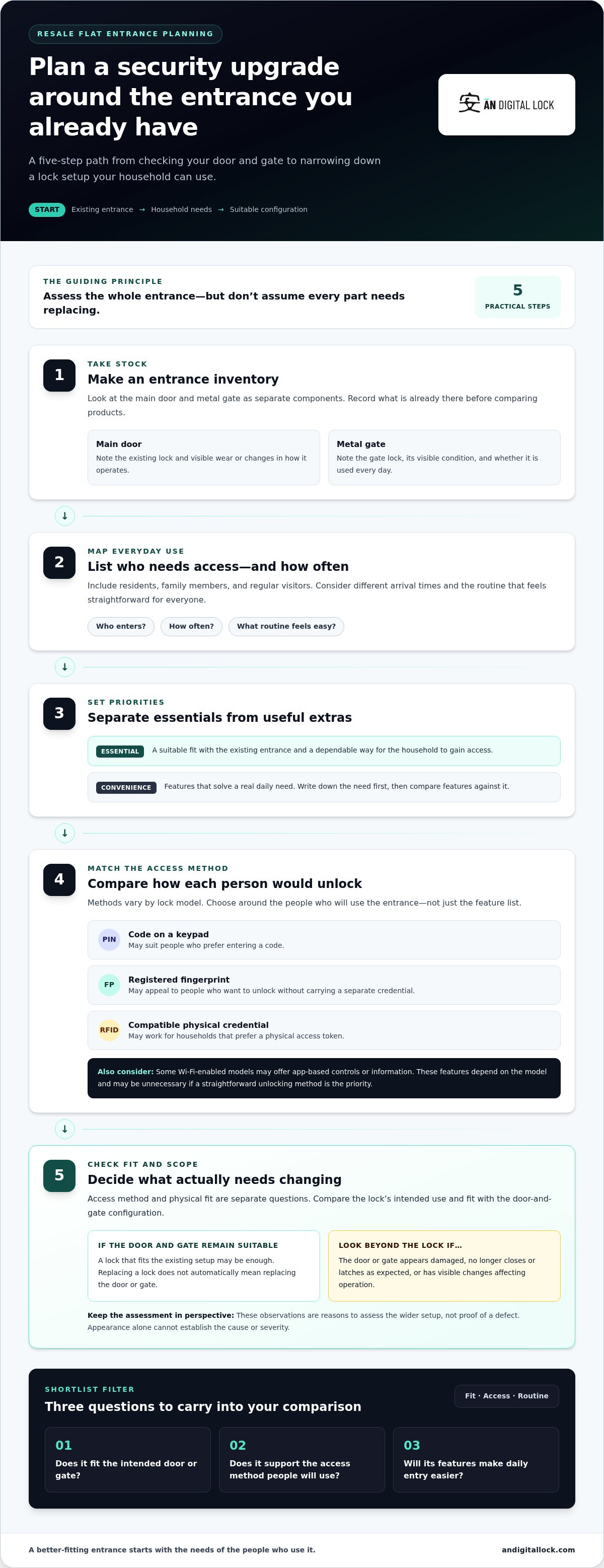
Plan your resale-flat security upgrade in five practical steps
A short checklist helps turn product browsing into a clear decision. For an Ang Mo Kio Court resale flat security upgrade, move from inspecting the entrance to selecting a configuration, and keep the needs of everyone using the door in view.
Build a clear entrance and household checklist
Start with what you have and how your household uses it. A note on the door, gate, locks and access routine makes it easier to compare products on relevant details instead of feature lists alone.
- 1. Inspect: Record the existing door and gate hardware, current locks and visible condition. Note how the entrance is used and any changes in how it operates.
- 2. List access needs: Write down who uses the entrance, how often they enter, and which access methods would be practical for residents and regular visitors.
Compare products without overlooking compatibility
Separate essential functions from optional extras. The door-lock selection guide offers broader comparison criteria; apply them to your specific door or gate rather than assuming one lock suits every entrance.
- 3. Compare options: Compare each lock’s supported access methods, intended door or gate use, and stated product specifications. Prioritise features your household expects to use.
- 4. Check fit: Compare the selected model with the actual entrance configuration. A lock designed for one door type shouldn’t be assumed to fit another, and door and gate suitability are separate considerations.
- 5. Choose a configuration: Decide whether to change a lock, consider a door or gate, or coordinate more than one component. Choose only what addresses your household’s needs.
Keep a short list of product-fit questions as you compare. Include the type of door or gate, the existing hardware and the specifications that matter for your intended use. This gives you a clearer basis for comparing options and reduces the chance of choosing by appearance or features alone.
Before making changes, check applicable requirements for the work and products you’re considering, especially where rules may apply to an HDB entrance. Requirements can depend on the type of change, so use current relevant guidance rather than relying on assumptions.
Inspect, list access needs, compare options, check fit, then choose the configuration. This five-step process keeps the decision practical and focused on your home. Explore digital locks, doors and metal gates as you compare entrance choices against your checklist.
Choose an entrance-security setup with AN Digital Lock
A practical shortlist makes it easier to compare entrance products without assuming you need to replace everything. For an Ang Mo Kio Court resale flat security upgrade, start with the component you want to address, then compare the access method and product specifications against your existing entrance. A lock, door and gate can be considered together, but each has a distinct role.
Match product categories to the entrance you have
AN Digital Lock offers digital door locks for main doors, metal gates and glass doors. These are different intended uses, so don’t treat a lock suited to one entrance type as automatically suitable for another. Compare the selected product’s stated specifications with the door or gate it is meant for, and base any compatibility decision on the relevant product information.
If the entrance component itself is part of your project, wooden doors and metal gates are separate categories to consider alongside locks. That can make it easier to compare a lock-only change with a broader entrance update, without assuming the door or gate must be replaced. Keep the existing configuration in view as you consider each option.
AN Digital Lock stocks brands including Zigbang, Philips, Solity, Hafele and Igloohome. These are brands carried by the business, not AN-owned product collections. Their models and specifications can differ, so compare the details for the particular lock rather than relying on brand names alone.
A useful way to organise the comparison is to group products by where they would be used:
- Main door: Compare digital door locks intended for the flat’s main door with the existing door setup and your preferred access method.
- Metal gate: Consider a gate lock as a separate access point, checking the intended use and stated specifications against the gate.
- Glass door: Compare locks intended for glass doors against the specific door configuration and product information.
- Door or gate change: If the entrance component itself is under consideration, compare wooden doors or metal gates separately from the lock choice.
Take the next step with a shortlist
Before comparing products, keep three points at hand: the entrance component you want to address, your preferred access method, and fit considerations tied to the existing door or gate. This gives you a focused way to compare suitable categories and product details, while keeping optional features secondary to everyday use and fit.
AN Digital Lock has been established in Singapore since 2013. If you’re ready to compare options, explore AN Digital Lock’s entrance products and use your shortlist to narrow the categories that fit your plans. Take your time, and choose a setup that makes sense for the entrance you have and the routine you want.
Make your next entrance choice with confidence
The best next step is to turn your shortlist into a shared household decision. Talk through who will use the entrance, which access method feels comfortable, and whether your needs may change as household routines shift. A setup that everyone understands can make everyday entry feel simpler, not just more modern.
For an Ang Mo Kio Court resale flat security upgrade, keep your choice focused on the entrance component you actually want to address. Compare suitable products against your household’s priorities, and take time to consider how the setup will work in daily life. There’s no need to change every part of the entrance just because one component is due for an update.
Explore the available options at your own pace. Explore digital locks, doors and entrance products and find a direction that feels right for your home. A considered choice can bring greater ease to coming and going, while helping you feel more settled at the door.
Frequently Asked Questions
Can I install a digital lock on an existing resale-flat door?
Often, a digital lock can be considered for an existing door, but suitability depends on the door and the specific lock model. Compare the product’s stated requirements with details such as the door’s dimensions, existing lock layout and available clearance. For example, a lock body that doesn’t match the existing preparation may not be a straightforward choice. Use model-specific specifications to assess fit rather than relying on appearance alone.
Should I upgrade the main-door lock or the gate lock first?
Start with the access point that matters most to your household’s daily routine. If everyone opens the gate before reaching the main door, consider how each lock contributes to that sequence. If the gate is usually left open while residents are home, the main-door lock may be the more frequently used point. There’s no universal order; assess how the entrance is actually used and compare each component separately.
Are fingerprint, PIN and RFID digital locks equally suitable?
No. The best fit depends on who uses the entrance and what feels convenient. A PIN can suit users comfortable entering a code, fingerprint access may appeal to people who prefer not to carry a separate credential, and RFID requires a compatible credential to be presented. Consider the needs of every household member, including anyone who may find a keypad, biometric reader or small token less convenient.
Can I use a digital lock on both my main door and metal gate?
Yes, a household can consider digital locks for both points, but each lock must be intended for its particular door or gate and suit that entrance. Don’t assume one model fits both. Also think through the entry sequence: using two locks may mean managing separate access methods or credentials, depending on the products. Compare the stated functions for each lock before deciding whether a two-lock setup works for your routine.
Do I need to replace the door when upgrading its lock?
No, changing a lock doesn’t automatically mean replacing the door. If the existing door remains suitable for your needs, compare lock options intended for its configuration. A door change is a separate decision, perhaps considered if you’re already planning a broader entrance refresh. Avoid deciding based only on surface appearance; look at how the door functions and compare the proposed lock against the product’s stated fit requirements.
What should I check before choosing a digital lock for a resale flat?
For an Ang Mo Kio Court resale flat security upgrade, check the intended door or gate use, the lock’s stated fit requirements, supported access methods and features your household will use. Note the existing hardware and how residents enter, then compare those details with the specific model information. If your project changes more than the lock, check applicable requirements for the work before making changes to the entrance.
Is a Wi-Fi digital lock necessary for a resale-flat security upgrade?
No. Wi-Fi is an optional consideration, not a requirement for every household. Decide whether the connected functions offered by a particular model would be useful in your routine, such as managing access through an app if that model supports it. If your priority is simply convenient entry at the door, compare the lock’s direct access methods first. Choose connected features only when their stated functions meet a real need.