


Choosing a padlock seems simple-until you are faced with a wall of options. Is that budget lock strong enough for your HDB gate, or is it only suitable for a gym locker? The fear of picking a lock that can be easily broken is real, and confusing jargon like 'shackle material' and 'security grades' only makes the decision harder. Your property and personal belongings deserve reliable protection, and making the right choice is the first step towards achieving it.
This simple security staple is a crucial line of defence, and selecting the correct one is essential for your peace of mind. A high-quality padlock is more than just a piece of metal; it’s the trusted guard for your storeroom, bicycle, or main gate. To ensure you feel confident in your choice, we’ve created this complete guide to demystify the entire process and put the power of security back in your hands.
In this article, you will discover the different types of padlocks available in Singapore, learn how to identify the key features that deliver outstanding security, and gain the confidence to select the perfect lock for any situation. Get ready to protect your assets with certainty.
The Anatomy of a Padlock: Understanding the Core Components
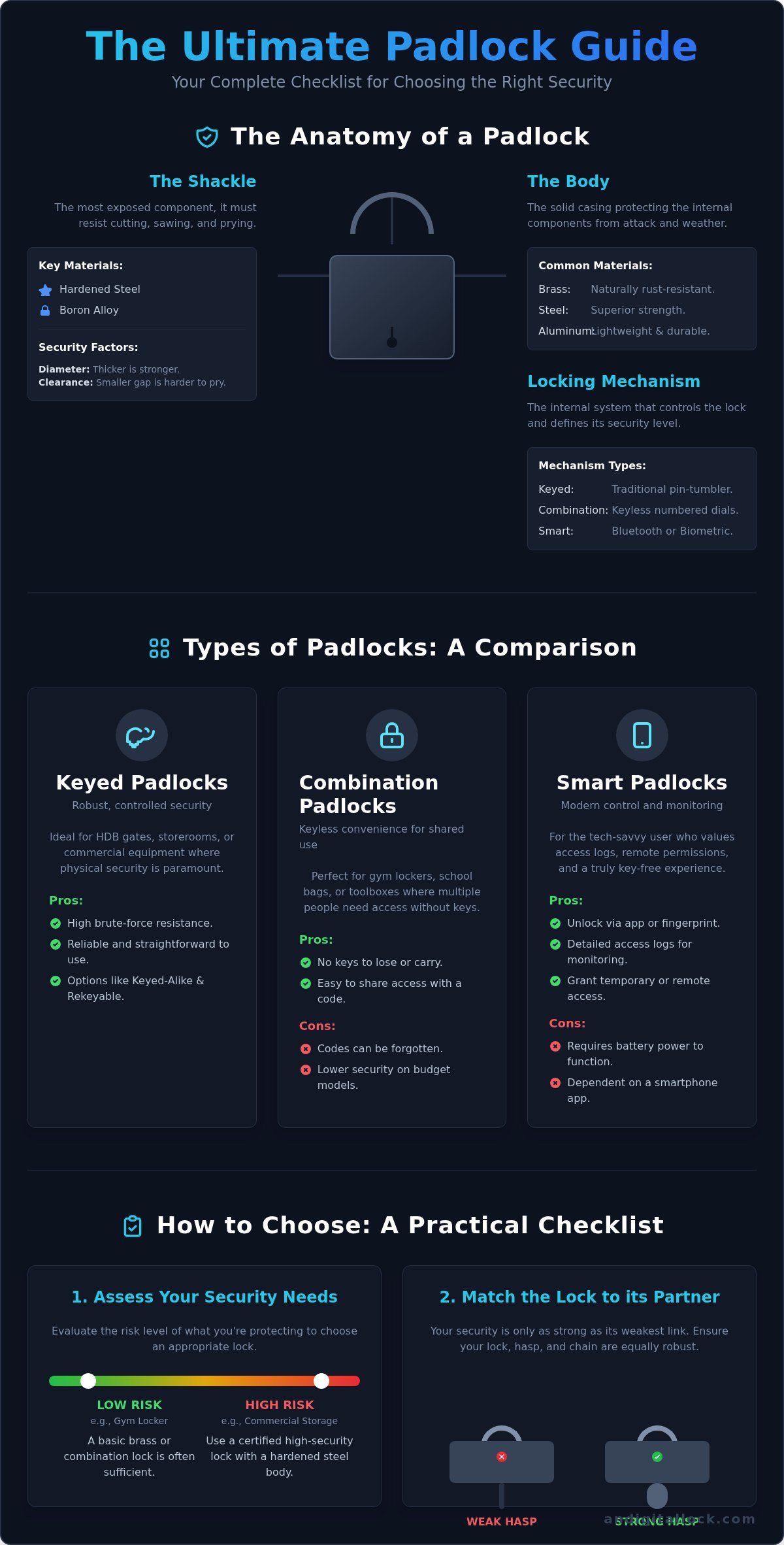
The padlock is a timeless icon of portable security, trusted for generations to secure everything from HDB gates to personal lockers. Its strength lies in a simple, effective design. To choose the right lock and achieve ultimate peace of mind, it's essential to understand its core components. The basic Anatomy of a Padlock consists of three key parts working in seamless harmony: the body, the shackle, and the locking mechanism.
Understanding how these elements work together is the first step in selecting a reliable security solution tailored to your specific needs, ensuring your valuables are always protected.
The Body: The Heart of the Lock
The body is the solid casing that houses the internal locking mechanism, protecting it from brute force and environmental damage. The material it's made from directly impacts its strength and durability, especially in Singapore's humid climate.
- Brass: Naturally resistant to rust, making it a trusted choice for outdoor use.
- Steel: Offers superior strength and resistance to physical attacks.
- Aluminum: A lightweight yet durable option that resists corrosion.
Construction also matters. Solid body locks are machined from a single piece of metal for maximum strength, while laminated locks are built from stacked steel plates, providing a strong and cost-effective alternative.
The Shackle: The First Line of Defense
The shackle is the U-shaped metal loop that passes through an item to secure it. As the most exposed component, its resilience is critical. Look for materials like hardened steel or premium boron alloy, which are engineered to resist cutting, sawing, and prying. Two key factors determine its security level: diameter (thicker is stronger) and clearance (a smaller gap leaves less room for tools). While standard shackles offer a snug fit, long shackles provide greater flexibility for larger items.
The Locking Mechanism: The Brains of the Operation
This is the internal system that controls the shackle. The type of mechanism defines how you operate the padlock and its level of security.
- Keyed Mechanisms: The traditional choice, typically using pin tumbler or high-security disc detainer systems.
- Combination Mechanisms: Provide keyless convenience through numbered dials or wheels.
- Smart Mechanisms: The next evolution in security, offering access via Bluetooth, fingerprints, or digital keypads for a truly modern, hassle-free experience.
Types of Padlocks: From Keyed Classics to Smart Solutions
Choosing the right padlock is crucial for securing your assets and achieving ultimate peace of mind. The market offers a wide range of options, each with a unique locking mechanism designed for different needs. From the time-tested reliability of keyed locks to the seamless convenience of smart technology, understanding these categories will help you make a confident, informed decision for your security.
Keyed Padlocks
The traditional keyed padlock remains a top choice for robust, controlled security. Ideal for securing HDB gates, storerooms, or commercial equipment, these locks offer a physical barrier that is both reliable and straightforward. For maximum protection, look for models built with hardened steel shackles and pick-resistant cylinders that meet stringent high-security padlock standards. Key options include:
- Keyed-Different: Each lock opens with its own unique key, offering the highest level of individual security.
- Keyed-Alike: Multiple locks can be opened with a single key for streamlined access to several areas.
- Rekeyable: Allows a locksmith to change the cylinder to work with a new key without replacing the entire lock.
Combination Padlocks
For situations demanding keyless convenience and multi-user access, combination padlocks are the perfect solution. They eliminate the risk of lost keys, making them ideal for gym lockers, school bags, or toolboxes shared among staff. While incredibly practical, it's important to note that entry-level models may not offer the same brute-force resistance as high-security keyed locks. They are best suited for low-to-medium security applications where convenience is the priority.
- Pros: No keys to lose; easy to share access by simply providing the code.
- Cons: Codes can be forgotten; lower-end models can be less secure against determined attacks.
Smart Padlocks
Bridging the gap between traditional security and modern technology, smart padlocks offer unparalleled control and convenience. Using Bluetooth or biometric (fingerprint) technology, you can unlock your assets with your smartphone or a simple touch. These are perfect for the tech-savvy homeowner or business owner who values detailed access control. You can grant temporary access remotely, track who opens the lock and when, and enjoy a truly key-free experience. Just be mindful of battery life and app requirements.
- Pros: Keyless entry, detailed access logs for monitoring, and remote sharing capabilities.
- Cons: Requires battery power to function; dependent on a smartphone app for full functionality.
How to Choose the Right Padlock: A Practical Checklist
Selecting the right padlock goes beyond just picking one off the shelf. To achieve true peace of mind, your choice must be a perfect match for your specific needs. The most important rule is simple: your lock should always be as strong, or stronger, than the hasp or chain it secures. This practical checklist will guide you to the ideal security solution, ensuring a seamless and secure experience.
Assess Your Security Needs
First, evaluate the risk. Securing a gym locker in Singapore has very different requirements than protecting a high-value commercial storage unit. For low-risk, everyday use, a basic brass or laminated padlock is often sufficient. For high-risk applications, look for a certified high-security padlock. Many premium locks use the CEN (Central European Norm) grading system, from Grade 2 (standard security) to Grade 6 (maximum security). High-security models feature:
- Hardened Steel or Boron Alloy Shackles: Highly resistant to cutting and sawing.
- Ball-Bearing Locking Mechanisms: Prevents prying and shimming attacks.
- Pick-Resistant Cylinders: Complex keyways that foil lock-picking attempts.
For the most critical assets, some organizations even follow stringent guidelines like the DoD padlock security standards, which dictate precise material and design specifications for ultimate protection.
Consider the Environment: Indoors vs. Outdoors
Where you use your padlock is critical. An indoor lock will quickly fail when exposed to Singapore’s rain and humidity. For outdoor applications, weather resistance is non-negotiable. Choose materials designed to resist corrosion, such as stainless steel, brass, or marine-grade coated steel. Look for premium features like rubber shackle seals and a keyway cover, which protect the internal mechanism from dust, grime, and moisture, ensuring reliable operation for years to come.
Measure for a Perfect Fit
A poorly-fitting padlock is a security vulnerability. A shackle that is too long or too thin provides ample room for bolt cutters or other tools to gain leverage and break the lock. To ensure a snug, secure fit, take two key measurements:
- Shackle Diameter: Measure the diameter of the hole on your hasp or chain link. The padlock’s shackle should be just thick enough to fit through without excessive play.
- Shackle Clearance: Measure the height and width the shackle needs to clear to lock properly. Choose the shortest shackle clearance that will fit to minimise exposure.
Taking a moment to measure guarantees you buy the right size the first time, providing a stronger defence against physical attacks.
Common Padlock Applications: Where They Shine (and Where They Don't)
A padlock is an incredibly versatile security tool, but its effectiveness depends entirely on using the right type in the right situation. Understanding where this classic lock excels-and where it falls short-is crucial for securing your property effectively. Let's explore the ideal applications to ensure you get the protection and peace of mind you deserve.
Everyday & Low-Risk Uses
For daily, low-security needs, convenience is key. Think of school lockers, gym lockers, or securing a simple toolbox. In these scenarios, a basic combination or keyed padlock is the perfect solution. Its primary role is to act as a deterrent, preventing casual theft and keeping personal items private without the need for a high-security, heavy-duty lock.
Outdoor & Medium-Risk Uses
When securing assets outdoors in Singapore's climate, durability is paramount. For garden sheds, HDB gates, or outdoor storage units, you need a lock that can withstand constant exposure to rain and humidity. We recommend choosing a weather-resistant, solid-body padlock. When paired with a heavy-duty chain, this type of padlock is also an excellent choice for securing bicycles and other valuable equipment against theft.
Limitations: Securing Your Home's Main Entrance
While useful in many areas, a padlock is not the right tool for your home's main entrance. A padlock and hasp system is a separate attachment, making it a weaker and more obvious target for intruders than an integrated lock. It lacks the seamless convenience needed for daily use and fails to provide the robust security required for your family's primary line of defence.
For ultimate security and modern convenience for your HDB or condo, an integrated system is always superior. For your home's main entry, consider a dedicated digital door lock. It offers enhanced security features, keyless access, and a sleek aesthetic that provides true peace of mind.
Beyond the Padlock: When to Upgrade to Integrated Digital Locks
A reliable padlock is an excellent first line of defence, but true home security is about creating a complete, seamless system. While a simple lock secures a single point, it's just one component of a larger strategy. When you're ready to move beyond basic protection and embrace superior convenience and control, it's time to consider an integrated digital lock system for your home.
The Weakness of a Padlock on a Gate
For many HDB residents in Singapore, securing the metal gate with a separate lock is a familiar routine. However, it represents a daily inconvenience. Juggling keys while carrying groceries or rushing to get indoors is a hassle you can live without. A dedicated digital gate lock integrates directly into your gate, offering a sleek, keyless solution that unlocks with your fingerprint or a PIN, providing a much smoother and more secure entry experience.
Unlocking True Convenience and Security for Your Door
Imagine returning home and never fumbling for keys again. That’s the everyday reality with a premium digital door lock. Instead of a key, you have multiple, more secure ways to access your home:
- Instant Fingerprint Access: Your finger is your key-fast, unique, and impossible to lose.
- PIN Codes: Set a master code for yourself and temporary codes for guests or delivery personnel.
- RFID Cards: A simple tap provides quick and easy access for family members.
Beyond convenience, smart locks provide ultimate peace of mind. Features like real-time audit trails allow you to see exactly who entered your home and when, all from your smartphone. This level of control and visibility is something a traditional lock simply cannot offer. It’s time to upgrade your home's security to a modern, trusted solution.
Ready to experience a new standard of home security? Explore our range of smart locks for ultimate home security and find the perfect fit for your door and gate today.
Beyond the Padlock: Upgrade Your Security with Confidence
Understanding the world of locks is the first step toward better security. From grasping the core components to choosing between keyed, combination, and smart models, you now have the knowledge to select the perfect lock for your needs. While the right padlock is an excellent tool for many situations, your home's main entrance-the primary shield for your family and valuables-demands a more advanced solution for ultimate peace of mind.
When you're ready to upgrade, trust the experts. As Singapore's leading supplier, AN Digital Lock is trusted by homeowners across the island, a fact supported by over 3,700 5-star reviews. We ensure a seamless experience with professional installation and dedicated after-sales support. Ready to secure your home's main entrance? Browse Singapore's top digital locks. Take the next step in protecting what matters most today.
Frequently Asked Questions About Padlocks
What is the most secure type of padlock?
The most secure padlocks are typically high-security models with a shrouded shackle made from hardened steel or boron alloy. These designs protect the shackle from bolt cutters. Look for locks with advanced mechanisms like disc detainers or high-pin-count cylinders, which offer superior resistance to picking and bumping. For ultimate peace of mind in Singapore’s HDB or condo environments, investing in a premium, tested brand ensures your assets are protected with the highest level of security available.
Are combination padlocks less secure than keyed ones?
While convenient, standard combination padlocks are often less secure than their keyed counterparts. Many basic models can be decoded or shimmed open with simple tools. However, high-quality combination locks with more complex internal mechanisms can offer reliable security. For critical applications, a premium keyed padlock with a restricted keyway or a high-pin-count tumbler system almost always provides a more robust and tamper-resistant solution for your security needs, giving you greater confidence.
Can all padlocks be cut with bolt cutters?
No, not all padlocks can be easily cut with standard bolt cutters. High-security padlocks feature shackles made from hardened materials like boron carbide or boron alloy, which are extremely tough to break. Furthermore, padlocks with a "shrouded" or "closed" shackle design leave very little of the shackle exposed. This makes it nearly impossible for bolt cutters to get a grip, providing a powerful deterrent against this common form of forced entry and ensuring your property remains secure.
How do I maintain my outdoor padlock to prevent rust?
To protect your outdoor padlock from Singapore's humid climate, start by choosing a weatherproof model with a stainless steel body and shackle. Regularly wipe the lock clean of dirt and moisture. Every few months, spray a dry lubricant like a graphite or PTFE-based spray into the keyway and shackle holes. Avoid using oil-based lubricants like WD-40, as they can attract dust and gum up the internal mechanism over time, compromising your security and smooth operation.
What does it mean if a padlock is 'anti-drill' or 'anti-pick'?
These terms describe specific security features that provide enhanced protection. An 'anti-drill' padlock contains hardened steel pins or plates that protect the locking cylinder from being destroyed by a drill bit. An 'anti-pick' padlock uses complex internal components, such as spool or serrated pins, which are designed to frustrate and trap a lock picker's tools. Choosing a lock with these features offers a superior defence against common attack methods, ensuring your security is not easily bypassed.
Is a smart padlock worth the extra cost?
For many users, a smart padlock is a worthwhile investment. While the initial cost, often starting from S$80 and up, is higher than a traditional lock, the convenience is unmatched. You gain keyless entry via your smartphone, the ability to grant temporary access to others remotely, and a log of who accessed the lock and when. This modern solution is perfect for managing access to property or gates, offering a seamless and tech-savvy security experience for your home or business.