


What if the most secure spot for your valuables isn't behind a heavy steel door, but hidden in plain sight? If you're living in a compact Singaporean HDB or condo, you've probably realized that traditional hiding spots are limited. You likely worry that a burglar could just pick up a small safe and walk out, or that you'll struggle to access your documents when you actually need them. Knowing how to hide a safe box at home effectively in 2026 requires a mix of smart hardware and psychological trickery.
We understand that modern flats don't offer much secret floor space. This guide promises to help you master the art of discreet security by using creative camouflage tailored for local homes. We'll preview the best ways to integrate safes into custom furniture, the strategic use of decoy units, and why professional bolting is your best defense against physical crime. You'll learn to protect your assets while maintaining the contemporary refinement of your living space.
Key Takeaways
- Learn how the "Three-Minute Rule" makes the placement of your safe just as critical as its locking mechanism.
- Understand the essential bolting techniques required for Singaporean structural concrete. This prevents intruders from simply carrying your assets away.
- Discover creative ways for how to hide a safe box at home using overlooked areas like kitchen pantries and false wardrobe floors.
- Use psychological camouflage and decoy safes to distract burglars. This strategy ensures they stop searching before finding your primary unit.
- Select the right hardware for discreet locations, focusing on compact designs and biometric sensors for quick access in low light.
Why Hiding Your Safe Box is as Important as the Lock
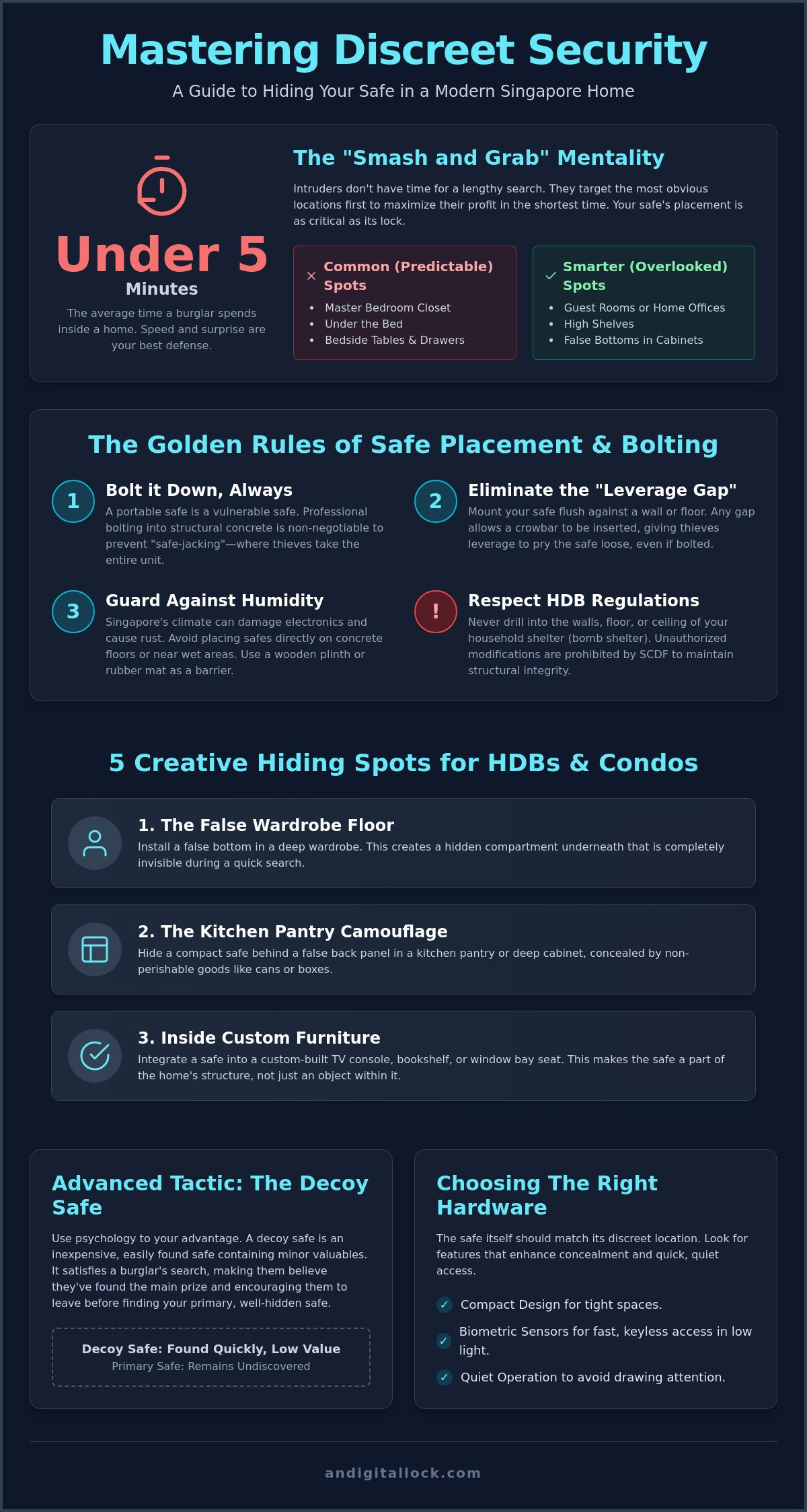
Most residential burglaries are "smash and grab" operations. Statistics show that intruders usually spend less than five minutes inside a home. They prioritize the master bedroom because that's where most people store jewelry, cash, and luxury watches. If your safe is sitting at the bottom of a generic closet or pushed under the bed, you've handed them a map to your most valuable assets. These common mistakes make "safe-jacking" far too easy. This is a scenario where the entire unit is pried from its mountings and carried away to be opened in a more secure, private location.
The Psychology of a Burglary
Burglars target obvious spots first. They check bedside tables, top drawers, and the floor of the main wardrobe. Visual camouflage buys you the most valuable asset in any security situation: time. By the time an intruder realizes the bedroom doesn't contain an easy win, their window of opportunity is already closing. While there are different types of safes designed for various levels of resistance, the ones that remain undiscovered are the most successful. Modern homeowners are increasingly choosing digital models for faster access, but the physical location remains your primary line of defense.
Balancing Accessibility and Secrecy
- Avoid the Master Bedroom: Consider guest rooms or home offices instead.
- Utilize Height: High shelves are rarely the first place a thief looks.
- Think Bottom-Up: False floors in cabinets provide excellent concealment.
The Golden Rules of Safe Placement and Bolting
Physical crime in Singapore saw a 4.4% increase in 2025, emphasizing that even the safest cities require vigilance. Hiding your safe is only the first step. If an intruder discovers your concealment, the only thing stopping them from walking out with your entire life's savings is a physical anchor. This is why bolting is a non-negotiable requirement. Even when you've mastered how to hide a safe box at home, a portable safe is a vulnerable safe. Every strategy regarding how to hide a safe box at home must prioritize physical stabilization to be truly effective.
To prevent "safe-jacking," you must eliminate the "Leverage Gap." This is the space between the safe and the wall or floor. If a crowbar can fit behind the unit, even a bolted safe can be pried loose. Ensure your safe is mounted flush against a solid surface. Additionally, consider the environment. Singapore’s tropical humidity is a silent enemy. Never place a safe directly on a concrete floor if you live in a ground-floor unit or near a bathroom. Moisture can seep through the metal, leading to rust or damage to electronic components over time. Use a small wooden plinth or rubber mat if floor mounting is necessary to create a protective barrier.
Bolting Constraints in Singapore Homes
Most Singaporean homes feature high-strength structural concrete. This provides an excellent anchor point but requires the right tools. When installing digital safe boxes, use heavy-duty expansion bolts. These bolts expand inside the pre-drilled hole, making it nearly impossible to pull the safe out without heavy machinery.
Be mindful of HDB regulations. While you can drill into standard bedroom walls or floors, you must never drill into the walls, floor, or ceiling of your household shelter (bomb shelter). SCDF prohibits any unauthorized modifications to these structures to ensure they remain fire and blast-resistant. For a secure and compliant setup, we recommend choosing professional safe box installation to avoid damaging hidden pipes or electrical conduits.
Optimal Height and Light
Height plays a dual role in security and convenience. Safes hidden at eye level are easier for you to operate daily but are more likely to be spotted during a quick sweep. Conversely, a safe bolted at floor level is harder to find but requires you to kneel every time you need your passport or cash.
Look for models with internal LED lighting. This is crucial for dark hiding spots like the back of a wardrobe. It allows you to see your items clearly without needing a separate torch. Finally, always check the door swing radius before drilling. You don't want the safe door hitting a cabinet frame or a bedroom door, as this limits access and can damage your furniture.
5 Creative Hiding Spots for Singapore HDBs and Condos
Most international security guides suggest hiding valuables in attics or crawl spaces. In Singapore, these areas don't exist. Our high-density living requires more localized strategies for how to hide a safe box at home. You need to look for "dead space" that burglars typically ignore during a high-speed search. Here are five creative locations specifically for HDB and condo layouts:
- Inside the Kitchen Pantry: Burglars rarely spend time in the kitchen because it's loud and messy. Hide a compact safe behind heavy, non-perishable goods like 5kg rice bags or stacked canned food.
- The False Wardrobe Floor: Many built-in wardrobes have a 5-10cm gap at the very bottom. A carpenter can create a removable floor panel, allowing you to bolt a slim safe to the actual concrete floor beneath.
- Behind the Kickboard: The removable plastic or wooden panels under your kitchen or bathroom cabinets are perfect for small safes. This area is rarely checked and provides a solid floor for bolting.
- Hollowed-Out Furniture: Custom-built ottomans or storage benches in the living room offer a discreet sanctuary. These items look like standard decor, making them invisible to someone looking for a metal box.
- The Service Yard: Tucked away behind the washing machine or inside a cleaning cupboard, this area is often overlooked. It's an unconventional but highly effective spot.
Maximising Wardrobe Space
The wardrobe is the most popular spot for a safe, which also makes it the most obvious. To stay ahead, integrate your security setup with a BTO lock bundle to ensure your bedroom door is also secured. When placing a safe inside a cabinet, use your clothes as natural acoustic dampening. This muffles the sound of the safe door opening or the keypad beeping. Always bolt the safe through the back of the wardrobe directly into the structural concrete wall to prevent it from being pried out with the cabinet wood.
The "Laundry Room" Secret
Burglars are focused on "high-value" rooms like bedrooms and home offices. They almost never spend time in the service yard or laundry area. You can master how to hide a safe box at home by camouflaging the unit with detergent boxes, spare pails, or utility supplies. If you choose this location, ensure the area is well-ventilated. High humidity in service yards can lead to electronic safe failure if the circuit boards aren't protected. Keeping your safe behind a cabinet door in this zone provides an extra layer of psychological camouflage that most intruders won't bother to penetrate.
Advanced Tactics: The Decoy Strategy and Camouflage
Professional security is often a game of psychological warfare. While your primary goal is to keep your valuables out of reach, a secondary goal is to satisfy an intruder's search as quickly as possible. This is the core of the decoy strategy. When you are planning how to hide a safe box at home, consider including a "sacrificial" unit. A decoy safe is a cheap, mass-market safe placed in an obvious location, such as the master bedroom closet or under a bedside table. It's designed to be found.
The "Psychological Win" is a powerful deterrent. Once a burglar discovers a safe, they usually assume they have hit the jackpot. They stop their invasive search of your home and focus all their energy on opening or carrying away that specific box. By providing a decoy, you protect the rest of your property from being ransacked. You also ensure your actual, well-hidden safe remains undiscovered. For smaller items like spare keys or backup USB drives, "Diversion Safes" that look like household pantry items or books provide an extra layer of low-tech camouflage.
Modern security also allows you to hide the interface itself. Many high-end digital safes feature flat fronts that can be covered with a magnetic panel. This panel can be painted or textured to match your wall or cabinet interior, making the safe look like a standard utility or electrical access point. This reduces the visual footprint of the device significantly.
Implementing the Decoy Strategy
A decoy safe must look convincing to work. It should be locked, but it shouldn't be impossible to carry away. If an intruder can't open it or move it, they might resume their search of the house. Follow these tips for an effective decoy:
- Placement: Keep the decoy in the master bedroom closet. This is the first place an intruder will look.
- Contents: Fill it with a small amount of cash, some old, non-functional electronics, or costume jewelry. It needs to feel "heavy" and valuable.
- Weight: Add a few bricks or heavy weights inside so it feels like a high-security unit when lifted.
High-Tech Camouflage
Technology has changed how to hide a safe box at home by removing the need for bulky keypads. Biometric safes use fingerprint sensors that are often flush with the safe door. This makes them much easier to hide behind furniture or false panels. Furthermore, integrating your safe into a wider smart home security network allows you to receive instant alerts on your phone if the safe is even touched. This real-time monitoring gives you the advantage of surprise, allowing you to contact the authorities before the intruder even realizes they've been detected.
Explore our range of high-security safe boxes to find the perfect model for your discreet security plan.
Choosing the Right Safe for Your Hiding Spot
Selecting the perfect hardware is the final piece of the security puzzle. Once you've identified the ideal location, you must ensure the safe physically fits and provides the specific protection you need. Many homeowners make the mistake of buying a safe first and then realizing it's too deep for their wardrobe or too tall for their kitchen kickboard. When you are planning how to hide a safe box at home, every millimeter of clearance matters. Measuring your largest valuables, such as laptops or property deeds, is the first step in determining the internal capacity you require.
You also need to understand the difference between fire-rated and theft-rated models. A fire-rated safe is designed to keep internal temperatures low during a blaze, protecting paper documents and digital media. However, these models often have thinner steel walls that are easier to puncture. Theft-rated safes prioritize thick, reinforced steel and complex locking bolts to resist prying and drilling. In 2025, residential fires in Singapore increased by 8.6%, making a dual-rated safe the smartest investment for local HDB and condo owners. This ensures your assets are protected from both intruders and environmental disasters.
Features to Look For in 2026
Modern technology has made safes more user-friendly and harder to detect. Look for these essential features when browsing for a new unit:
- Biometric Scanners: Fingerprint access is the gold standard for 2026. It allows for near-instant entry in low-light conditions without the need to fumble for keys or remember complex PIN codes.
- Tamper Alarms: Advanced safes now include Wi-Fi connectivity. They send an immediate alert to your smartphone if someone enters the wrong code or attempts to move the unit.
- Internal Organisation: High-quality models feature built-in shelving, LED lighting, and velvet-lined jewellery drawers to prevent damage to your delicate items.
Why Professional Installation is Key
Hiding a safe effectively requires more than just tucking it into a corner. DIY bolting in Singaporean flats is a high-risk task. Most HDB walls and floors contain hidden electrical conduits, water pipes, and structural reinforcements. Hitting one of these during a DIY project can lead to expensive repairs and safety hazards. Professional installation ensures your safe is anchored to the most secure point possible without compromising your home's integrity.
At AN Digital Lock, we specialize in discreet security solutions. Our team understands the specific structural constraints of Singaporean residential properties. We ensure your safe is both perfectly hidden and physically immovable, giving you total peace of mind. Ready to secure your home? Explore our range of digital safes today and find the perfect fit for your discreet security plan.
Take Control of Your Home Security Today
Mastering how to hide a safe box at home is about more than just finding a dark corner. It's a strategic combination of psychological decoys and professional physical anchoring. By utilizing unconventional spaces like kitchen kickboards or service yards, you stay one step ahead of traditional search patterns. Remember that even the best hiding spot requires a high-quality safe and expert bolting to be truly effective against modern threats.
Secure your peace of mind with a partner you can trust. AN Digital Lock has been serving Singapore as security experts since 2013. As an authorized dealer for global brands like Philips and Zigbang, we provide the latest smart safe technology paired with professional installation tailored for HDB and Condo structures. Our team ensures your security setup is both discreet and immovable, protecting what matters most to you.
Secure your valuables with a professional Digital Safe from AN Digital Lock. Your safety is our priority; let's build a more secure and refined home together.
Frequently Asked Questions
Is it better to hide a safe in the floor or the wall?
Floor mounting is generally superior for heavy units because it provides the strongest structural support. Wall safes are excellent for concealment but are limited by the thickness of Singaporean internal walls. In an HDB environment, floor bolting into structural concrete is the most reliable way to prevent an intruder from prying the unit loose.
Can I install a safe in an HDB flat without drilling?
No, you shouldn't rely on a safe that isn't physically anchored to your home. While you might want to avoid drilling, a safe that isn't bolted can be easily carried away by an intruder. Professional installers use high-strength expansion bolts to ensure your safe stays put. This is the only way to guarantee the security of your valuables.
Where do burglars check first for a safe?
Intruders almost always head straight for the master bedroom. They prioritize wardrobes, bedside tables, and the space under the bed because these are the most common spots for valuables. Knowing how to hide a safe box at home involves avoiding these high-traffic areas. Consider placing your unit in a laundry room or a guest bedroom instead.
How do I hide a large safe box that cannot fit in a cabinet?
Large safes are best camouflaged using custom-built furniture. You can integrate a heavy unit into a reinforced ottoman, a storage bench, or even a fake utility cabinet in the service yard. If the safe looks like a standard piece of furniture, most burglars will walk right past it without a second glance.
Should I hide my safe in the master bedroom?
Avoid the master bedroom if possible. Since this is the first place a burglar searches, placing your safe there increases the risk of discovery. Moving your safe to a home office or a kitchen pantry provides a layer of psychological protection. It forces an intruder to search rooms they typically ignore during a quick "smash and grab."
Can a digital safe be hacked if it is connected to Wi-Fi?
Modern digital safes from reputable brands like Philips use advanced encryption to prevent hacking. While no system is 100% foolproof, the risk of a digital hack is significantly lower than the risk of physical theft. Wi-Fi connectivity actually improves security by sending real-time tamper alerts to your phone if someone tries to access the safe.
What is the best way to hide the keypad of a safe?
Magnetic panels or sliding picture frames are the most effective ways to hide a safe's interface. You can place a piece of art or a utility panel over the keypad to make the safe blend into the wall. This hides the "visual footprint" of the device, making it much harder for an intruder to find the unit in the first place.
Do I need a fire-rated safe if I am only hiding cash?
Yes, a fire rating is essential for protecting cash. Paper currency is extremely flammable and can be destroyed in seconds during a residential fire. Since residential fires in Singapore increased by 8.6% in 2025, choosing a safe with at least a one-hour fire rating ensures your money survives both a break-in and a fire.