


Could a new lock weaken the fire protection you already have? A fire rated digital lock is not suitable just because a product page calls it “fire-rated”. Whether it can be fitted depends on verified compatibility with the complete door assembly, including the door, frame and hardware, as well as the fitting method.
It’s sensible to want keyless convenience without risking your door’s fire-safety performance. You don’t have to guess: check the door’s label and supporting documents, confirm whether they cover the proposed lock configuration, and find out whether fitting requires drilling or other changes.
This guide explains what to check before choosing a digital lock for a fire-rated door in Singapore, which questions to ask about documentation and fitting, and why a “fire-rated” marketing claim alone may not settle the question. You’ll learn how to assess the door and lock together before discussing options with a seller. AN Digital Lock sells digital door locks and fire-rated doors, but compatibility for a particular combination should be confirmed, not assumed.
Key Takeaways
- A fire rating applies to the door assembly, not just the lock. Check the door’s documentation before choosing digital hardware.
- Photograph the door label and note the manufacturer or model details to help verify which lock configurations are supported.
- Check documented compatibility before comparing a fire rated digital lock’s fingerprint, PIN, RFID or Wi-Fi access features.
- Don’t drill, cut or modify the door until you’ve confirmed that the proposed changes are permitted for that specific door and lock.
- AN Digital Lock sells digital locks and fire-rated doors in Singapore. Ask about the specific combination you’re considering, and confirm compatibility rather than assuming it.
What Does a Fire Rated Digital Lock Setup Actually Mean?
A fire-rated door is intended to resist fire for a specified period when correctly specified, installed and maintained. It forms part of a passive fire protection system, helping limit the spread of fire and smoke. The door’s rating is not established by adding a lock described as “fire-rated”. For any proposed fire rated digital lock, verify that the exact lock and fitting method are suitable for that specific door configuration.
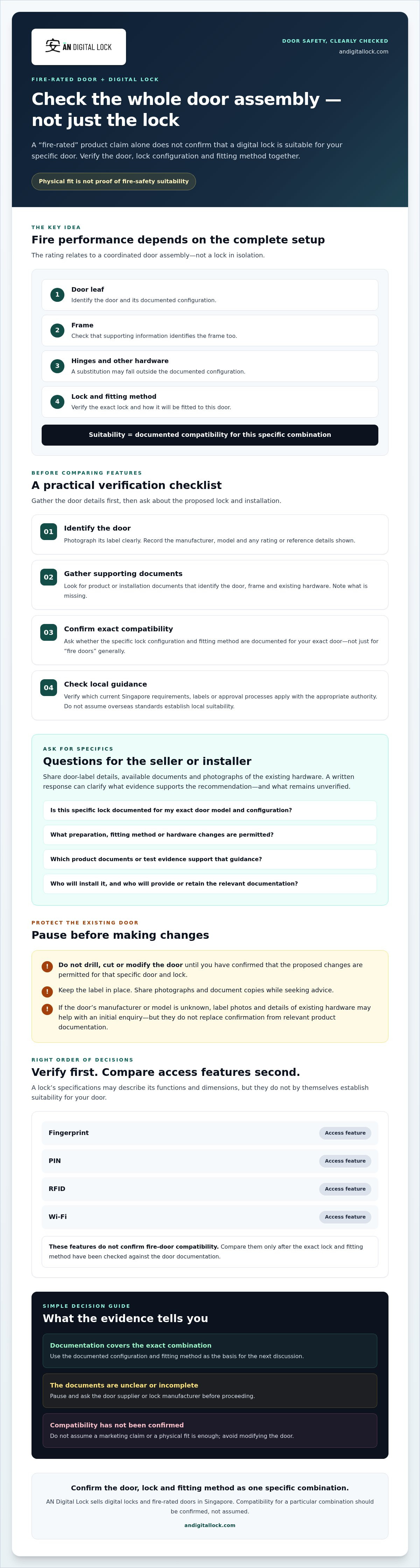
Think of the door as a coordinated assembly, not a single panel. The door leaf, frame, hinges, other hardware and installation details work together. Changing a component may take the setup beyond the configuration covered by its supporting documents. A label on the door or a feature claim on a lock’s product page is not enough on its own to confirm compatibility.
What does a fire rating apply to: the lock or the door assembly?
The relevant evidence should relate to the door assembly and the components it is intended to use. A digital lock’s specifications can describe its functions and physical dimensions, but they do not automatically show that it has been assessed for your particular door. Check the door’s label and documentation, then look for product-specific information covering the proposed lock and fitting method.
Be cautious about substitutions. A fire-rated label does not mean every replacement lock, handle or fitting is approved for that door. If the documents do not clearly say whether a change is allowed, ask the door supplier or lock manufacturer before proceeding.
Can a digital lock be fitted to every fire-rated door?
No. Suitability depends on the exact door and whether reliable documentation supports the proposed lock configuration. A lock may appear to fit the door’s thickness or existing opening, yet still lack evidence that it is appropriate for that assembly. Physical fit is necessary, but it does not prove fire-safety suitability or verified approval.
A lock that fits the door is not necessarily suitable for its fire-rated assembly.
Before buying or modifying anything, identify the door and ask what evidence applies to that specific combination. If the door’s manufacturer or model is unknown, photographs of its label and details of the existing hardware may help a seller make an initial enquiry. They do not replace confirmation from relevant product documentation. Keep the decision focused on the door, lock and fitting method together, rather than a broad claim that a lock works with “fire doors”.
How to Verify a Digital Lock for a Fire Rated Door
Before comparing access features, identify the door and collect information about its documented configuration. A product description or a lock that appears to fit cannot confirm suitability for your particular fire-rated door. Use this checklist before you buy, and verify any Singapore-specific requirements with the appropriate authority before proceeding.
Which door details and documents should you check?
- Identify the door. Photograph its label clearly and record the manufacturer, model and any rating or reference details shown.
- Gather supporting documents. Look for product or installation documents that identify the door, frame and existing hardware. Note any details that are missing.
- Keep the door intact. Don’t remove the label, drill, cut or alter the door while seeking advice. Share photographs and copies of the documents instead.
- Check local guidance. Ask which current Singapore requirements, labels or approval processes apply to your door and proposed lock. Don’t assume overseas standards establish local suitability.
For context, iDigHardware discusses hardware labeled for use on a fire door assembly in relation to US fire-door practice. Treat it as an industry reference, not as confirmation of Singapore requirements or approval for your specific door.
What should you ask the lock seller or installer?
Share the door label details, available documents and photographs of the existing hardware. Ask for an answer about the exact combination, not a general assurance that a lock is “fire-rated”. A written response helps you understand what evidence supports the recommendation and what remains unverified.
- Is this specific lock documented for my exact door model and configuration?
- What preparation, fitting method or hardware changes are permitted?
- Which product documents or test evidence support that guidance?
- Who will carry out the installation, and who will provide or retain the relevant documentation?
If the guidance refers to a standard or approval, ask which jurisdiction it applies to and whether it covers your door-and-lock combination. If the answer relies only on the lock’s dimensions, features or marketing description, request clearer evidence before buying or modifying the door.
With the door details in hand, you can ask AN Digital Lock about fire-rated door and digital lock options. The company sells both categories, but suitability for a particular combination should be confirmed rather than assumed.
Fire Rated Door Lock Options: Compare Fit, Access, and Evidence
Choose a lock in two stages. First, confirm that the exact lock model and proposed fitting are supported for your door. Then compare access methods and everyday convenience. Fingerprint, PIN, RFID and Wi-Fi describe ways to unlock a door; none of these features alone proves that a fire rated digital lock is suitable for a particular fire-rated door.
How do fingerprint, PIN, RFID, and Wi-Fi options differ?
Consider who uses the door and how they prefer to enter. The options below relate to everyday access, not fire-safety performance. Check the exact model and configuration against the door documentation before treating any option as suitable.
| Access option | Everyday use | What to verify |
|---|---|---|
| Fingerprint | Unlock using a registered fingerprint, without entering a code or carrying a card. | Check that the specific lock and fitting are documented for your door. |
| PIN | Enter a code to unlock. Consider whether household members will find keypad entry convenient. | Confirm compatibility for the exact lock model, not just its keypad function. |
| RFID | Use a compatible card or tag as an access credential. | Check the documented lock configuration and any associated hardware requirements. |
| Wi-Fi | Some configurations offer connected functions. Their use may depend on connectivity and the selected lock setup. | Verify the exact model, configuration and door suitability separately from app or network features. |
These access methods are not interchangeable proof of approval. Some locks may also require different preparation or hardware changes. Before buying or arranging installation, ask whether those specific changes are allowed for your door.
Should you choose a lock by features or compatibility evidence?
Use documented suitability as your first filter. Set aside any option if the evidence does not address your door and proposed installation. Once you have a supported shortlist, compare access methods against your household’s routine: who needs entry, whether PIN sharing is practical, and whether fingerprint or RFID access better fits your needs. Wi-Fi features may appeal if connected functions matter, but they do not establish compatibility.
For broader everyday selection factors, consult the guide How to Choose the Right Door Lock for Your Singapore Home (HDB & Condo Guide). Keep the decision sequence clear: verify the door-and-lock combination first, then choose access features that suit your household.
Installation Checks That Help Protect a Fire Rated Door
Even a suitable lock can create problems if it is fitted in a way the door’s documentation does not allow. Don’t drill, cut or modify a fire-rated door based only on a general recommendation or the lock’s dimensions. Before work begins, match the proposed lock and fitting method to the specific door, then confirm any Singapore-specific requirements or approval processes using current guidance.
What should happen before installation begins?
Agree on the work before anyone starts. The installer should review the door identification and available supporting documents alongside the lock manufacturer’s instructions. Ask them to explain what preparation is permitted, including whether existing holes or hardware can be reused and whether any changes are needed. If the evidence does not clearly cover the proposed setup, pause and seek clarification from the relevant supplier or manufacturer.
Keep a clear record. Save the written confirmation, installation instructions and any product or installation documents provided. Ask the installer to identify the exact lock model and hardware configuration covered by their guidance. These records give you a reference if the lock later needs attention and help avoid relying on memory or a broad verbal assurance.
Lock-body dimensions may affect whether a lock physically fits, but fit alone does not establish suitability for a fire-rated door. For background on lock-body styles, see What Is a Mortise Lock? A Complete Guide for Singapore Homeowners. Check any proposed lock-body changes against the door’s supporting information before installation.
What should you check after the lock is fitted?
Ask the installer to demonstrate the door’s operation and explain what to do if something feels wrong. Check that the door closes and latches as intended, without forcing it or encountering an obstruction. For additional insights on door closing hardware and door technology solutions, check out JADE Safety. This basic check does not certify fire performance, but it can reveal an immediate fitting or operation issue that needs attention.
- Keep the door label visible, legible and available with the supporting documents.
- Retain the lock instructions and any written confirmation about the door-and-lock configuration.
- Ask whom to contact about faults and what steps to take before any adjustment or repair.
- Don’t drill, cut or make unapproved changes to resolve a problem yourself.
Choose an installer familiar with the door documentation and the lock manufacturer’s instructions, and confirm who will provide the relevant records. If you’re comparing options, explore digital locks and fire-rated doors from AN Digital Lock, then confirm the suitability of the specific combination before proceeding.
Choose a Fire Rated Door and Digital Lock with Confidence
You don’t need to choose access features first. Start by identifying the door and gathering its available documents. Then verify the specific lock and fitting against that information before comparing access methods for your household. This approach keeps convenience in the decision without treating it as evidence of suitability.
Considering the door and lock together can help you raise compatibility questions before purchase, especially when choosing a door for a new home. Share the door requirements before settling on a lock, and ask what documentation supports the exact combination. For guidance on choosing a wooden door, see Choosing the Best Wooden Door Supplier in Singapore: The 2026 Homeowner’s Guide.
What information should you prepare before asking for help?
A few details can make the discussion more specific. Gather what you have and be clear about anything you cannot identify:
- Photos of the door and its label. Keep the label intact and readable.
- The door manufacturer or model details, if available.
- Product or installation documents, including details about the frame and existing hardware.
- Your preferred access methods, such as fingerprint, PIN, RFID or Wi-Fi.
- The digital lock model you’re considering, if you’ve already shortlisted one.
Ask whether the proposed lock and installation have supporting compatibility information for that particular door. If the answer is general, request details about the exact model, hardware configuration and any preparation required. Don’t treat a broad claim that a lock suits fire-rated doors as confirmation for your own setup.
When is it helpful to consider the door and lock together?
Planning both at the same time gives you an opportunity to check the documentation and permitted fitting details before committing to either product. This is especially useful if you’re buying a fire-rated door and digital lock as part of the same home project. A fire rated digital lock is suitable only when the specific combination is supported, so confirm current product availability and compatibility rather than assuming every door and lock can be paired.
AN Digital Lock sells digital door locks and fire-rated doors in Singapore. You can explore both categories with the company, but that does not mean every available combination has been verified. Prepare your door details and preferred access method, then ask about the specific options and supporting information before deciding.
Ready to compare? Contact AN Digital Lock to discuss your fire-rated door requirements and digital lock options. Share the door details you have, and ask for clarification wherever compatibility evidence is unclear.
Choose Your Door-and-Lock Combination with Confidence
A suitable fire rated digital lock is about more than convenient access. Start by identifying your door and reviewing its documents, then confirm that the exact lock and fitting method are supported for that door. Once compatibility is clear, choose an access method that suits your household, whether that’s fingerprint, PIN, RFID or Wi-Fi.
AN Digital Lock has operated since 2013 and sells digital door locks and fire-rated doors in Singapore. Its range includes the access options above, but suitability depends on the specific door-and-lock combination. Confirm current availability and ask what supporting compatibility information applies before committing.
Explore digital locks and fire-rated doors with AN Digital Lock, and share your door details and preferred access method when asking about options. With the relevant information in hand, you can make a considered choice that balances everyday convenience with care for your door’s fire-safety performance.
Frequently Asked Questions
Can you install a digital lock on a fire-rated door?
Yes, a digital lock may be suitable for a fire-rated door, but compatibility must be confirmed for the specific door, lock and fitting method. Check the door label and supporting documents, then ask the seller or installer for evidence that addresses that exact combination. Don’t choose a lock based only on its features or physical fit. If the documentation is unclear, seek clarification before buying or modifying the door.
Does a digital lock affect a fire-rated door’s fire rating?
It can affect whether the door assembly still matches its documented configuration, especially if fitting involves drilling, cutting or changing hardware. The outcome depends on the door and the specific installation, so don’t assume the rating is preserved or automatically lost. Before making changes, check the door documentation and get product-specific guidance. Keep written confirmation and installation records with the door’s documents for future reference.
How do I know if a digital lock is compatible with my fire-rated door?
Compare the exact lock model and proposed fitting method with the door’s label and supporting documents. Photograph the label, record the manufacturer or model details, and share them with the seller or installer. Ask for written information that specifically covers your door-and-lock combination, including any permitted preparation or hardware changes. A lock’s dimensions or general “fire-rated” description alone do not establish compatibility. The phrase “fire rated digital lock” is not proof by itself.
Can I drill a fire-rated door to fit a digital lock?
Don’t drill or cut the door until you’ve confirmed that the proposed work is permitted for that specific door and lock. Even if a lock seems to fit, making new openings or changing existing hardware could take the door outside its documented configuration. Check the door instructions and request written, product-specific guidance from the relevant seller, manufacturer or installer before work begins. Avoid making adjustments yourself based on a generic installation guide.
What should I check before buying a fire-rated door digital lock?
Start with the door, not the access features. Note its label, manufacturer and model details, and gather available product or installation documents. Then ask whether the exact lock and fitting method are supported for that door, what preparation is allowed, and what records you’ll receive. Once suitability is addressed, compare fingerprint, PIN, RFID or Wi-Fi access based on your household’s needs. Confirm current product availability before committing.
Can any digital lock brand be used on a fire-rated door?
No. A brand name or broad statement that a lock is suitable for fire doors does not establish compatibility with every door. Check the specific model, hardware configuration and fitting method against the door’s documentation. Ask for evidence relevant to your exact setup rather than relying on a general product claim. If the door’s manufacturer or model is unknown, gather its label details and ask what can be verified.
Who should install a digital lock on a fire-rated door?
Choose an installer who is familiar with the door’s documentation and the lock manufacturer’s instructions. Before work begins, ask them to confirm the exact lock configuration and permitted fitting steps, and clarify who will provide and retain the relevant records. Check current Singapore requirements with the appropriate source where needed. After installation, confirm that the door closes and latches as intended, and ask how to report faults without making unapproved alterations.