


The most attractive replacement gate may be the wrong choice if it doesn’t fit your entrance or work smoothly with your lock. Before comparing designs, start with the opening, the existing gate’s layout and how you use your entrance every day.
It’s easy to feel unsure about measurements, materials and whether a new gate will pair well with an existing digital lock. A little planning can make those choices clearer. This guide explains what to assess first, how to compare gate options for appearance and everyday usability, and what to consider when matching a metal gate with a lock. You’ll also learn why fit and access needs deserve as much attention as the design.
From checking the entrance and existing conditions to weighing privacy, visibility and convenient entry, you’ll have practical criteria to guide your decision. The goal is a home entrance that feels secure, looks considered and works simply for your household.
Key Takeaways
- Separate cosmetic wear from damage or operating problems so you can decide whether closer assessment is needed.
- Plan your choice around the entrance opening and surrounding clearances, then consider how you use the gate each day.
- Compare gate materials and designs by appearance, cleaning needs and practical use, rather than style alone.
- Consider the gate and lock together: compare key access with digital options such as fingerprint, PIN or RFID.
- Explore how a mild steel metal gate and a digital lock can work as complementary parts of your home entrance.
When Does a Home Metal Gate Need Replacing? Start with the Signs
A gate can start looking dated long before it causes a practical problem. Faded or worn-looking surfaces may prompt a style refresh, while visible damage, difficult movement or a gate that doesn’t close reliably are reasons to assess its condition more closely. The difference matters: appearance preferences help guide design, but problems with movement or closing can affect everyday access and deserve attention before you choose a replacement.
Note what you see and when it happens. Does the gate feel difficult to move every time, or only at certain points? Does it close fully, and does the issue occur with the lock engaged or disengaged? A short record, supported by photos if useful, can help you distinguish a cosmetic update from a functional concern. If you’re comparing styles, an overview of different types of gates can provide useful background before you focus on options for a home entrance.
Which signs suggest it is time to assess your gate?
Look for visible damage, movement that feels uneven or difficult, and unreliable closing. These observations don’t automatically mean the whole gate needs replacing, but they’re useful starting points for assessing the existing setup. By contrast, a gate that works as expected but no longer suits your preferred appearance may call for a design change rather than a response to an operating issue.
Record the specific sign, where it occurs and how often you notice it. This keeps the decision grounded in your household’s actual experience instead of appearance alone.
What should you check before planning a replacement?
Start with the entrance as a whole. Note the opening’s width and height, the existing frame, hinge positions and the space around the gate as it moves. A new gate needs to suit the opening and its surrounding clearances, so a physical assessment is more useful than relying only on the appearance of a gate in a photo.
Then consider everyday access. Who uses the entrance, how do they open and secure it, and would a different lock method make entry more convenient? Think about bags, mobility needs and whether several household members need straightforward access. These details help you compare gate and lock options as one coordinated setup.
- Record visible wear or damage, and photograph it if helpful.
- Describe any difficulty moving or closing the gate, including when it occurs.
- Note the opening, frame, hinges and movement clearance.
- List who uses the entrance and what makes daily access convenient.
With these observations in hand, you can compare replacement options against the conditions of your entrance and the way your household uses it.
How to Plan a Gate Replacement Around Fit, Access, and Everyday Use
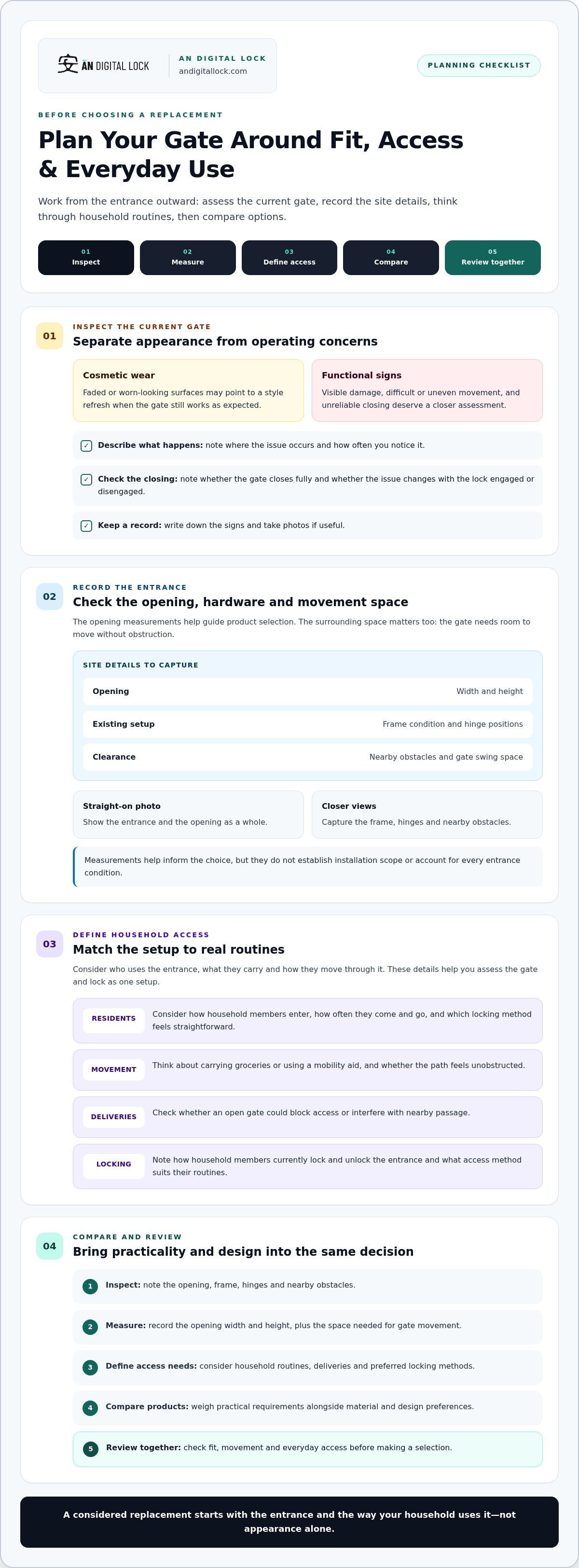
A clear plan moves from the entrance itself to the product choice: inspect the setup, record measurements and clearances, define household access needs, compare products, then finalise your selection. This sequence keeps design preferences in view without letting them overshadow fit and practical use.
Accurate opening measurements guide gate selection by showing what can fit the entrance, while surrounding clearances help you assess whether the gate can move without obstruction.
Which measurements and site details should you record?
Record the opening width and height, the condition of the existing frame, and the hinge positions. Note nearby obstructions and the space the gate occupies as it opens. These observations can help inform product selection, but measurements alone don’t establish installation scope or account for every condition at the entrance.
Keep your notes with clear photographs. Include a straight-on view of the entrance and closer views of the frame, hinges and obstacles. A visual record makes it easier to discuss the setup and compare options accurately. For a visual example of a gate-building project, see This Old House’s guide to building a wooden garden gate.
How do household routines shape the gate choice?
Think about what residents carry and how they move through the entrance. Someone arriving with groceries may need an unobstructed path, while a person using a mobility aid may prioritise comfortable movement and sufficient space. Consider deliveries as well. Check whether an open gate could block access or interfere with nearby passage.
Compare the gate’s swing with the available space and surrounding obstacles. Then factor in how household members lock and unlock the entrance. Who uses it, how often do they come and go, and which access method feels straightforward? These routines can help you compare gate and lock options as parts of one setup.
Use this checklist to keep your planning focused:
- Inspect: Note the opening, frame, hinges and nearby obstacles.
- Measure: Record opening width and height, along with the space needed for gate movement.
- Define access needs: Consider household routines, deliveries and preferred locking methods.
- Compare products: Weigh practical requirements against material and design preferences.
- Finalise: Review fit, movement and everyday access together before making a selection.
Once you have a clear picture of the entrance and its daily use for your Northshore Residences Punggol gate replacement, you can compare metal gate and digital lock options as complementary parts of your home entrance.
Metal Gate Replacement Options: Compare Material, Design, and Practicality
A useful comparison goes beyond colour or pattern. Assess the gate’s material and construction, how its design affects visibility and privacy, how it suits the entrance, and what care the specific product requires. Keep functional needs separate from decorative preferences so an attractive design doesn’t distract from fit and everyday use.
What should you compare when choosing a metal gate?
Mild steel is one metal-gate category to consider. Compare the specific product’s construction and finish rather than assuming every gate in the same material looks or performs alike. Design also changes the feel of the entryway: a more open pattern may preserve sightlines, while a less open design may provide greater visual screening. Weigh these effects against your household’s preferences and entrance conditions.
| Comparison point | What to look at | Why it matters |
|---|---|---|
| Material | Mild steel or another material category described for the specific gate | Understand what the gate is made from before comparing its finish and care guidance. |
| Appearance | Pattern, finish, and how much of the entrance remains visible | Balance the look you want with your preference for openness or privacy. |
| Cleaning needs | Product-specific care instructions and access to surfaces | Choose an option whose upkeep suits the time and effort you can give it. |
| Everyday use | Fit, movement, visibility, and compatibility with your routine | Check that the design works for the entrance, not just in a product image. |
Cleaning requirements and visible wear depend on the product’s finish and construction. Follow the care information for the specific gate rather than assuming a material needs no upkeep or will always look the same. If considering an automatic gate, the U.S. Consumer Product Safety Commission’s alert on safety considerations for automatic gates relates to that type of system; it isn’t a guide to local requirements for ordinary manual gates.
How can you balance appearance with everyday practicality?
Use the entrance and your household’s routine to assess each design. Check that the gate can move comfortably within the available space and supports how residents pass through and secure it. Consider whether the pattern makes surfaces accessible for cleaning and whether the finish suits your tolerance for visible marks or wear. These factors vary by product, so compare the specific descriptions and care guidance.
Choose a gate by matching its material and design to the entrance’s fit and your household’s daily routine. Use this principle to narrow your options before settling on a decorative style.
How to Coordinate a Replacement Gate with Your Entrance Lock
A replacement gate and an entrance lock work as parts of one daily routine. Think through how you approach the entrance, open the gate, reach the main door and secure both on the way out. This helps you choose access methods for the household rather than treating the lock as a last-minute add-on.
Which access methods can homeowners compare?
A familiar key is simple to understand, but household members need access to the physical key and a routine for keeping it available. Digital locks offer other methods, including fingerprint, PIN and RFID. Each suits different preferences: one resident may favour a PIN, while another may prefer fingerprint or RFID access. No option is ideal for every household.
Consider who needs access and how often they use the entrance. Think about children, older residents, regular visitors and anyone who may find one method easier to use than another. Also consider how you’ll manage access if household routines change. For a broader checklist on comparing lock types, read this guide to choosing the right door lock.
How should you think about gate-and-lock compatibility?
Compatibility depends on the gate’s construction and the specifications of the lock. Don’t assume that a lock suited to one part of an entrance will automatically suit another. A digital lock may be intended for the main door, while the gate has its own locking arrangement. Consider how each component operates, where it sits and how you’ll use it in sequence.
Look at the complete entrance setup: the gate, main door, available space and the access methods each household member will use. When planning around a replacement gate, make a note of the existing arrangement and the lock you intend to keep or choose. Then compare that information with the specifications of the gate and lock options, instead of selecting either component in isolation.
For a wider view of how the main door fits into entrance planning, explore this HDB main door selection guide. It can help you think beyond the gate alone.
Choose the setup around real access habits. AN Digital Lock offers digital locks with fingerprint, PIN and RFID access methods, alongside metal gates, so you can compare complementary entrance products in one decision. Explore metal gates and digital locks as you plan a coordinated entrance.
Choose a Metal Gate and Digital Lock Setup with AN Digital Lock
A confident choice starts with the entrance you have, not a product photo. Use your notes on the opening, frame, movement and clearance to narrow the gate options. Then consider how household members enter and secure the home before comparing lock access methods. This step-by-step approach helps keep fit and daily use at the centre of your decision.
What can you explore for a coordinated home entrance?
AN Digital Lock offers mild steel metal gates and digital locks as complementary product categories for the home entrance. The gate affects the entrance’s appearance and everyday movement; the lock contributes to how household members access and secure it. Consider both together so the overall setup suits your entry routine.
Digital lock access methods include fingerprint, PIN and RFID. Each offers a different way to enter, and the right fit depends on household preferences. For example, consider whether residents would rather use a PIN, access by fingerprint or use RFID. Think about who needs access, how frequently they come and go, and which method feels straightforward for the people using it. There’s no single choice that suits every household.
What information helps you make a confident product decision?
Bring together the practical details you’ve gathered and compare them against what matters most at home. A concise checklist can keep the decision focused:
- Entrance details: Note the opening measurements, existing frame and gate arrangement, hinges, and surrounding clearance.
- Everyday use: Consider how the gate moves and who uses the entrance, including household routines and deliveries.
- Appearance: Identify the look you prefer while keeping visibility, privacy and practical access in mind.
- Lock preferences: Compare fingerprint, PIN and RFID based on who needs access and how they’ll use it.
Use these points to compare product categories, then consider the gate and lock as one coordinated entrance rather than separate purchases. For any residential gate replacement, the same planning sequence applies: assess the entrance, define daily access needs, and compare options against both.
AN Digital Lock has been established since 2013 and offers mild steel metal gates and digital locks. Take the next step by reviewing the product range and comparing the categories that match your entrance and household routine. Explore AN Digital Lock products.
Choose an Entrance Setup That Works for Your Home
A confident gate choice starts with the entrance itself. Assess the gate’s condition, record the opening and surrounding clearances, then compare material and design with your household’s everyday needs. Consider the lock at the same time: the right access method should suit the people who use the entrance and the gate-and-door arrangement.
AN Digital Lock has been established since 2013 and offers mild steel metal gates and digital locks, including access methods such as fingerprint, PIN and RFID. Treat these as complementary parts of a coordinated home entrance, and use your measurements, existing setup and access preferences to guide your product comparison.
Ready to explore options for your home? Explore metal gates and digital locks at AN Digital Lock. With a clear plan, you can choose an entrance setup that feels considered and works for your household every day.
Frequently Asked Questions
How do I know when a metal gate needs replacing?
Assess a metal gate if you notice visible damage, difficulty opening or closing it, or unreliable latching. These signs call for a closer look, but they don’t automatically mean the same solution is needed in every case. Cosmetic wear or a style that no longer suits your home may be a separate reason to update the gate. Record what you observe and when it happens before comparing replacement options.
What should I measure before choosing a replacement gate?
Record the opening width and height, the surrounding frame’s condition, available clearance and any nearby obstacles. Note how the existing gate moves and where it meets the frame, too. For a Northshore Residences Punggol gate replacement, these details help guide product selection, but measurements alone don’t determine installation requirements. Keep your notes and photographs together so you can describe the entrance clearly and compare options against the space and arrangement you have.
What material should I choose for a replacement gate?
Compare each gate’s construction, appearance, upkeep guidance and suitability for your entrance. Mild steel is one metal-gate category offered by AN Digital Lock, but material alone doesn’t determine whether a particular product suits your home. Consider how the gate moves, how often it will be used and which finish fits your preferred look. Review product-specific information before relying on claims about performance or maintenance.
Can I use a digital lock with a replacement gate?
A digital lock may be suitable, but compatibility depends on the gate construction and the lock’s specifications. Consider the two products together rather than selecting a lock in isolation. AN Digital Lock offers digital locks with fingerprint, PIN and RFID access methods. Think about who needs entry and how household members use the entrance, then compare those preferences with a suitable product configuration and the complete gate-and-door arrangement.
What should I consider when matching a gate to my home entrance?
Start with the opening dimensions, available clearance and how residents move through the entrance. Then compare the gate’s appearance, visibility and privacy against your preferences and everyday needs. For a Northshore Residences Punggol gate replacement, include lock access and compatibility if you’re choosing a new lock, too. Considering the whole entrance as one setup helps you weigh fit and usability alongside design, rather than focusing on the gate’s appearance alone.
Is mild steel suitable for a home metal gate?
Mild steel is a metal-gate option, and AN Digital Lock offers mild steel metal gates. Whether a particular gate suits your entrance depends on the product, site conditions and your priorities. Compare its construction, finish, dimensions and care guidance using product-specific information. Don’t assume every mild steel gate has identical performance or upkeep needs. Consider its appearance and daily operation alongside the material when narrowing your choices.
What information should I prepare before choosing a gate and lock?
Prepare the entrance measurements, notes on the current gate and frame, available movement space, and a list of who needs access. Consider how household members use the entrance and whether fingerprint, PIN or RFID access best fits their routines. If you’re comparing both a gate and digital lock, record the existing arrangement as well. These details help keep product comparisons focused on fit, access and appearance.